
Spiced with Science will never sell a 'detox' product. The multi-billion dollar market for cleanses and teas is built on a biological fiction. Your body doesn't need a factory reset; it has a sophisticated, self-cleaning system in its liver, kidneys, and skin. True wellness isn't about purging punishment, but about intelligently supporting these systems with what you eat every day.
This isn't just a semantic argument; it’s a foundational principle. The language of 'detox' and 'cleansing' frames your body as dirty, broken, or insufficient. It suggests that modern life leaves behind a sludge that only a special juice, tea, or powder can pressure-wash away. This is medically and biologically untrue, and it sells a cycle of shame, quick fixes, and ultimately, failure [1].
The Anatomy of a Myth
In medicine, a 'toxin' is a specific poison produced by a living organism. Think snake venom or botulinum. An external 'toxicant' is something like lead or mercury. In both cases, exposure is a medical emergency requiring specific, targeted treatment—not a week of lemon water.
The wellness industry co-opted this serious language to describe a vague, unnamed accumulation of 'bad things' from food and the environment. But which toxins, exactly? At what levels? Requiring what specific antidote? The marketing rarely says. This vagueness is a feature, not a bug. If the enemy is an undefined ghost, any expensive potion can be sold as a ghost-trap.
Meet Your In-House Specialists
Fortunately, you already employ a world-class, 24/7 detoxification team. Your liver is the master chemist, performing a two-step process (cleverly named Phase I and Phase II detoxification) to neutralize harmful compounds and make them water-soluble. Your kidneys then expertly filter these waste products from your blood and excrete them in urine. Your skin and lungs play a role, too. This system is robust, evolved, and, for most healthy people, incredibly effective.
It cannot, however, be 'boosted' or 'unclogged' by a seven-day fast or a laxative tea. In fact, many popular 'detox' products do more harm than good, triggering blood sugar crashes, stripping the gut of essential fiber, and creating a disordered relationship with food.
The more interesting, effective, and scientifically sound question is not how to force a detox, but how to support your body’s own brilliant systems.
From Fiction to Food: A Better Way
Instead of chasing fads, we can turn to ancient food wisdom, now being validated by modern science. It’s a gentler, more consistent, and more respectful way of engaging with your own biology. This approach doesn't require a special occasion; it’s built on the power of the pantry.
Consider a few allies:
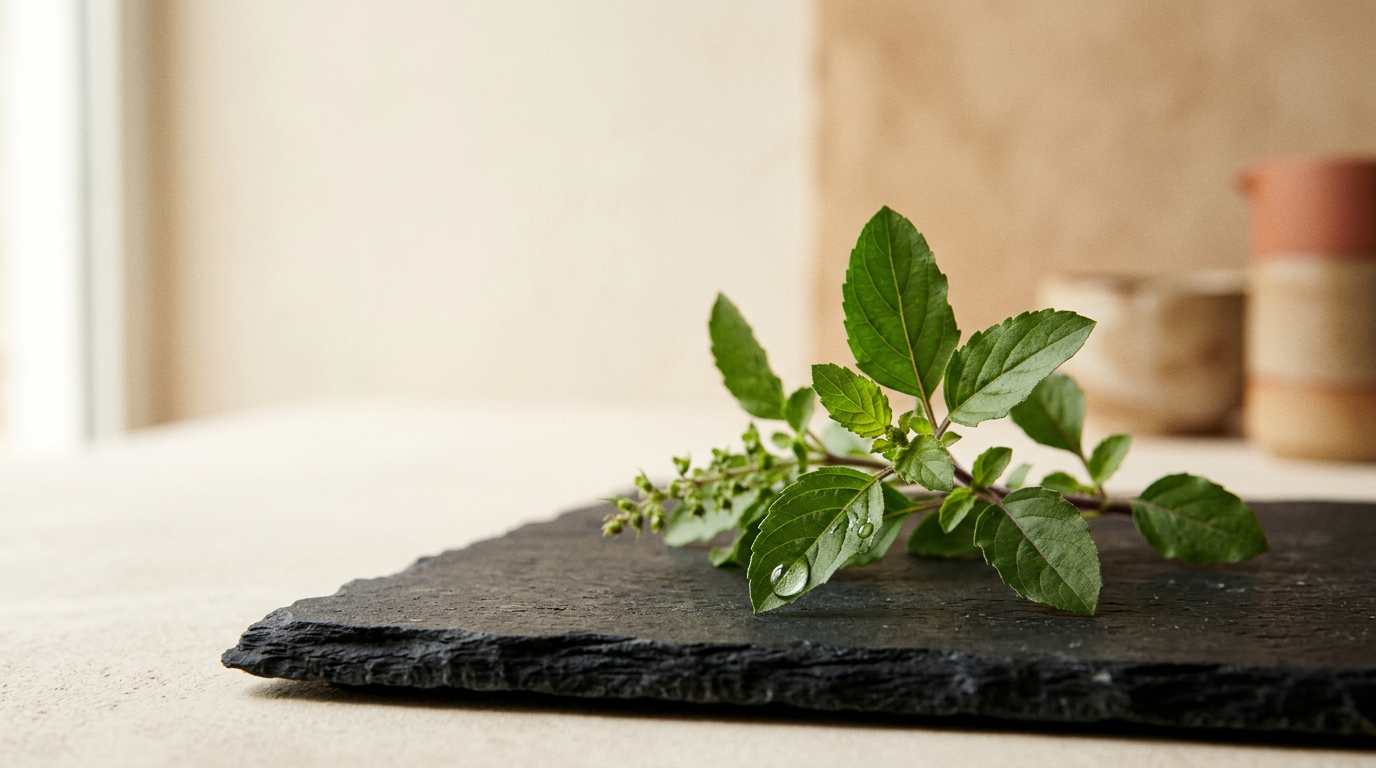
Tulsi (Holy Basil): Revered in Ayurveda as 'The Queen of Herbs,' Tulsi is a potent adaptogen, meaning it helps the body manage stress. But its benefits go deeper. Studies show that compounds in Tulsi, like eugenol and ursolic acid, exhibit significant hepatoprotective (liver-protecting) effects. They help shield liver cells from damage caused by certain chemicals and inflammation, effectively giving your master chemist a better, safer workshop [2].
*Ginger (Zingiber officinale):* Often relegated to a supporting role, ginger is a powerhouse. Its primary active compound, gingerol, is a potent anti-inflammatory and antioxidant [3]. Chronic inflammation is a systemic stress that taxes every part of your body, including your detoxification pathways. By helping to manage inflammation, ginger doesn't 'cleanse' your liver; it simply reduces its overall workload, allowing it to function more efficiently.
*Fennel (Foeniculum vulgare):* Frequently found in 'detox' teas, and for good reason, though not the one on the box. Fennel is a known diuretic. This doesn't mean it 'flushes toxins.' It simply means it encourages your kidneys to excrete more sodium and water [4]. For those feeling bloated or retaining water, this can feel like a 'cleansing.' But it isn't magic; it's just helping a key organ perform its daily filtration duties with a little less hindrance.
Our philosophy is simple. We believe in adding, not subtracting. We believe in supporting the body's innate intelligence, not overriding it. The most radical act of wellness is to quit the cycle of punishment and learn to nourish your body with potent, delicious, and deeply researched foods. No fictions, no fads. Just science, and a little spice.
### Frequently Asked Questions
1. But don't we live in a world with more environmental pollutants?
Yes, and the best defense is a resilient body. A nutrient-dense diet rich in antioxidants, fiber, and compounds like those in Tulsi and ginger helps your body's systems manage that load day in and day out. A short, aggressive 'cleanse' does little to address chronic, low-level exposure.
2. What about juice cleanses for a 'reset'?
Most juice cleanses remove the fiber from fruits and vegetables, serving you a concentrated dose of sugar. This can lead to energy spikes and crashes. While you might lose water weight initially, these are not effective for long-term health and can foster a difficult relationship with whole foods.
3. Are 'detox teas' harmful?
Many commercial 'detox teas' contain senna leaf, a harsh laxative that can irritate the gut lining, cause dehydration, and lead to dependency with long-term use. They create the illusion of 'cleansing' through induced diarrhea, which is not a healthy or sustainable practice.
*4. So what should I do to support my body's detoxification?*
Focus on the basics: stay hydrated, eat a diverse diet full of fiber-rich plants, manage stress, get adequate sleep, and move your body. And yes, incorporate high-quality, potent spices into your daily meals. They are not a quick fix, but a powerful tool for lifelong health.
Sources & citations
- Klein, A. V., & Kiat, H. (2015). "Detox diets for toxin elimination and weight management: a critical review of the evidence." Journal of Human Nutrition and Dietetics, 28(6), 675–686. Sourced via PubMed.
- Cohen, M. M. (2014). "Tulsi - Ocimum sanctum: A herb for all reasons." Journal of Ayurveda and Integrative Medicine, 5(4), 251–259. Sourced via PubMed.
- Bode, A. M., & Dong, Z. (2011). "The Amazing and Mighty Ginger." In Herbal Medicine: Biomolecular and Clinical Aspects. 2nd edition. CRC Press/Taylor & Francis. Sourced via PubMed.
- Wright, C. I., Van-Buren, L., Kroner, C. I., & Koning, M. M. G. (2007). "Herbal medicines as diuretics: a review of the scientific evidence." Journal of Ethnopharmacology, 114(1), 1–31. Sourced via PubMed.