
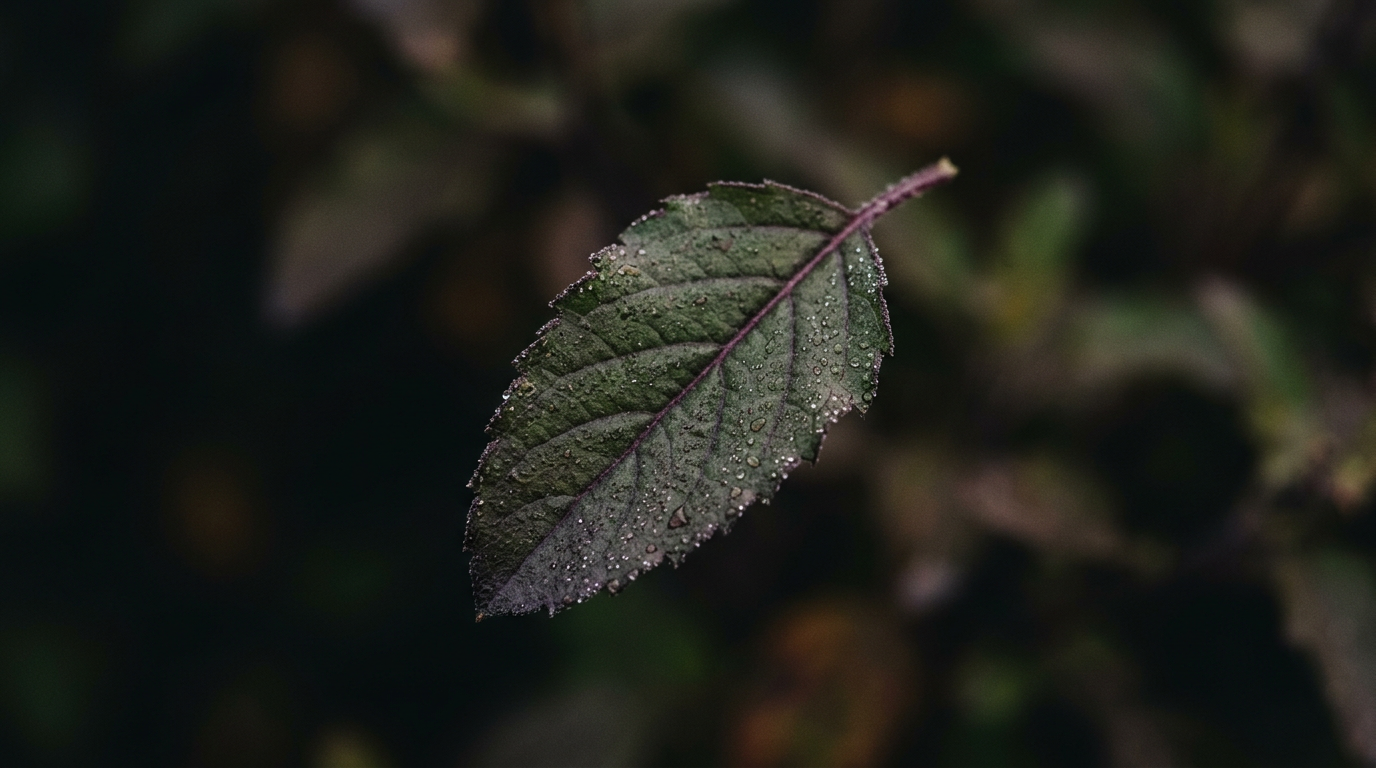
A quiet ritual unfolds in homes from Mysore to Manchester: a handful of fresh leaves, steaming water, a moment of fragrant calm. For centuries, this brew has been the focal point of the morning. While the plant is known globally as Holy Basil, in its native land, it is simply Tulsi. The growing interest in tulsi benefits scientific evidence brings this ancient practice into a new, often confusing, light. Here, we parse the clinical data from the marketing claims, examining what the research as of 2026 really tells us about this revered herb.
[Tulsi](/ingredient/tulsi) (Ocimum sanctum or Ocimum tenuiflorum) is more than an ingredient; it is a sacred plant in the Hindu tradition, a living link between the earthly and the divine. Its journey from revered household deity to a bottled “stress-relief” beverage on a Los Angeles supermarket shelf is a textbook case of a colonised food—its spiritual and cultural significance flattened to fit a commercial narrative. But before we dismiss it as another wellness fad, it’s worth asking: what did those ancient systems of knowledge know? And what can modern science confirm?
The Queen of Herbs: From Courtyard to Capsule
In [/region/ind](India), Tulsi isn't typically found in the spice rack; it's grown in a special planter, the Tulsi Vrindavan, in the central courtyard of traditional homes. It’s worshipped daily, a practice that sees it not as a commodity to be consumed, but as a protective, life-affirming presence [4]. There are three main cultivars, each with a distinct character: the crisp, peppery Krishna Tulsi; the milder, green-leafed Rama Tulsi; and the wild, herbaceous Vana Tulsi.
Contrast this with its life in the West. In a London health shop in Neal's Yard, you might find it as a pricey tincture or in neatly portioned organic teabags, its value articulated in milligrams and percentages. The context is stripped, the ritual replaced by a transaction. This shift from a holistic practice to a productized 'solution' is significant. It begs the question of whether the benefits are purely biochemical, or if they are interwoven with the daily act of nurturing and reverence.
Deconstructing 'Adaptogen': The 2026 Evidence Review
The term that propelled Tulsi into the global wellness spotlight is "adaptogen." Coined by scientists, an adaptogen is a substance that helps the body adapt to stress and exert a normalizing effect upon bodily processes [1]. It’s a compelling idea, but the clinical bar for proof is high. So, what does the tulsi benefits scientific evidence show?
A 2017 systematic review of 24 human studies found that Tulsi shows promise in addressing psychological and immunological stress [2]. The key is its rich supply of phytochemicals like eugenol, oleanolic acid, and rosmarinic acid. These compounds appear to work across multiple body systems, offering antimicrobial, anti-inflammatory, and cardioprotective effects [3].
Where the evidence is particularly compelling is in its effect on markers of metabolic stress. Studies suggest Tulsi can help regulate blood sugar, blood pressure, and lipid levels. The evidence for its direct cognitive and anti-anxiety benefits is promising but based on smaller studies, indicating a clear need for larger, more robust trials to make definitive claims.
To the seasoned eye, the different cultivars offer unique profiles, a detail often lost in mass-market products.
| Variety | Dominant Compound Profile | Traditional Use Focus |
| :--- | :--- | :--- |
| Rama Tulsi | Eugenol | Cooling, Mellow Flavor |
| Krishna Tulsi | High Phenolic Content | Peppery, Respiratory Support |
| Vana Tulsi | Eugenol, Caryophyllene | Wild, Immunity |
This nuance is where real quality lies—not just in that it's Tulsi, but in which Tulsi, and how it was grown.
Beyond The Bench: How Should We Take It?
In the US, you can find Tulsi in $7 canned “calm” drinks at an Erewhon Market, often mixed with fruit juice and sweeteners. While convenient, this is a world away from a simple, hot infusion of whole leaves. The traditional preparation—a decoction or tea—isn't just about extracting a single active compound. It’s about the synergy of the whole plant. The gentle heat and water release a complex array of volatiles and water-soluble compounds that work in concert.
The ritual itself may be part of the mechanism. The five minutes it takes to boil the water and let the leaves steep is a built-in pause, a sensory experience of aroma and warmth that a chilled, sweetened can simply cannot replicate. This is a crucial piece of the puzzle that lab-based analysis of tulsi benefits scientific evidence often misses. The wisdom isn't just in the plant, but in the practice.
Choosing whole-leaf Tulsi, ideally from a source that can tell you which cultivar you're drinking, is how you get closer to the plant’s true character. It connects you not just to its benefits, but to its history.
FAQ: Your Tulsi Questions
1. Is it safe to drink Tulsi every day?
For most people, a daily cup of Tulsi tea is considered safe. However, as it may influence blood sugar and have a mild blood-thinning effect, those on related medications should consult a healthcare provider [2].
2. What’s the difference between Tulsi and culinary basil?
They are related but are different species. Tulsi (Ocimum tenuiflorum) has a more pungent, slightly spicy, and medicinal flavor profile, whereas culinary basil (Ocimum basilicum) is sweeter and used primarily in cooking, like Italian pesto.
3. Can Tulsi help with anxiety?
Human studies suggest Tulsi has anti-anxiety (anxiolytic) properties, likely due to its ability to modulate stress hormones like cortisol [3]. However, it is not a replacement for professional medical treatment for anxiety disorders.
4. When is the best time to drink Tulsi tea?
Traditionally, it is enjoyed in the morning to start the day with clarity and in the evening to unwind. As it is caffeine-free, it can be consumed any time you need a moment of calm.
Sources & citations
- Panossian, A., & Wikman, G. (2010). Effects of Adaptogens on the Central Nervous System and the Molecular Mechanisms Associated with Their Stress-Protective Activity. Pharmaceuticals, 3(1), 188–224. https://www.mdpi.com/1424-8247/3/1/188
- Jamshidi, N., & Cohen, M. M. (2017). The Clinical Efficacy and Safety of Tulsi in Humans: A Systematic Review of the Literature. Evidence-Based Complementary and Alternative Medicine, 2017, 9217567. https://www.hindawi.com/journals/ecam/2017/9217567/
- Cohen, M. M. (2014). Tulsi - Ocimum sanctum: A herb for all reasons. Journal of Ayurveda and Integrative Medicine, 5(4), 251–259. https://www.ncbi.nlm.nih.gov/pmc/articles/PMC4296439/
- Encyclopedia Britannica. (n.d.). Holy basil. Retrieved from https://www.britannica.com/plant/holy-basil