
Effective chai masala quality control is the only way to guarantee a consistently sublime cup of chai. This process involves a multi-step verification of each ingredient, from visual and sensory analysis to laboratory testing of chemical compounds. For a complex blend like chai masala, this rigorous science ensures that the final product delivers its intended aromatic profile, cup after cup, protecting you from the common disappointment of a flat or unbalanced brew.
There are few small rituals as rewarding as a well-made cup of masala chai. It’s a pause, a punctuation mark in the day. The alchemy of dark tea, hot milk, and a fragrant fistful of spices is a daily comfort for millions, from a roadside stall in Mumbai to a high-end cafe in Dubai. But there is also no small disappointment quite like a bad cup of chai. Flat, dusty, muted, or just… off. One dimensional. You’re left wondering: was it me? The water? The milk?
Often, the fault lies in the masala itself. A spice blend is a team sport. If one player is having an off day, the whole performance suffers. This is why our approach to chai masala quality control is less of a step in our process and more of the entire foundation.
The Cardamom Question
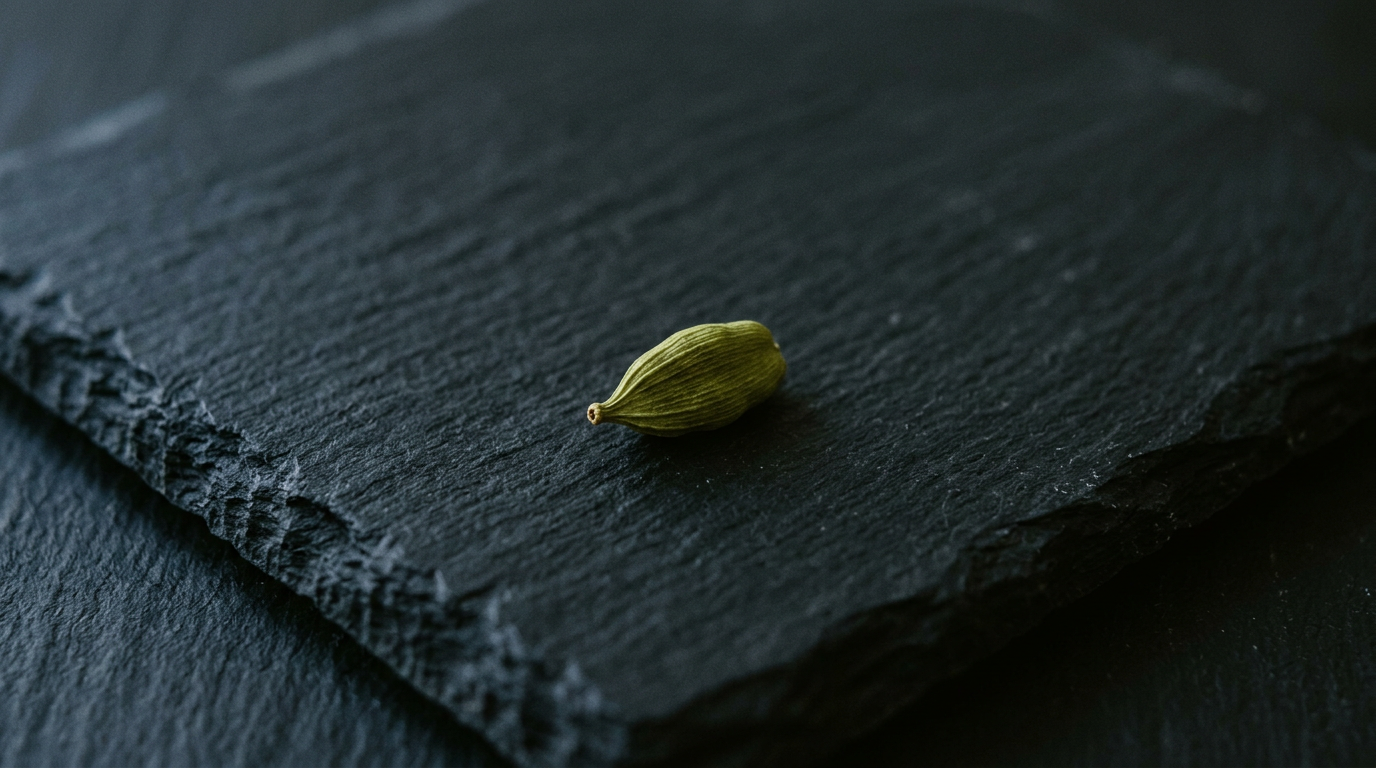
Let's zoom in on one crucial player: Green Cardamom (Elettaria cardamomum), the queen of spices. A great chai masala sings with cardamom’s complex aroma—a bright, floral, eucalyptus-like top note with a warm, resinous body. A bad one just tastes vaguely spicy.
The difference lies in volatile organic compounds. The two most important actors in cardamom's aromatic profile are 1,8-cineole (which provides the piercing, slightly medicinal, camphor-like scent) and alpha-terpinyl acetate (which brings the sweeter, floral, lavender-like notes) [1]. The quality, and indeed the price, of cardamom is directly related to the concentration and ratio of these compounds. This delicate chemistry is determined by a thousand variables: terroir, harvest time (unripe pods lack complexity, overripe pods lose potency), the curing process, and storage.
Most commercial chai masalas use pre-ground spices to cut costs. The problem is that the moment a spice is ground, its surface area explodes, and those precious volatile compounds begin to oxidize and evaporate. A cardamom pod is a perfect little natural container. Grinding it is like pulling the pin on a fragrant grenade; the effect is immediate, but it doesn't last.
This is why our process starts with sourcing whole, high-grade cardamom pods, primarily from the Idukki district in Kerala, IND, a region famed for its high-quality, aromatic varietals [2]. But sourcing is only the beginning.
From Human Sense to Chemical Assay
Before a single pod enters our grinder, it undergoes a two-part evaluation. The first is organoleptic: the rigorous application of the human senses. Our trained tasters know exactly what to look for.
| Sensory Attribute | Spiced with Science Standard | Common Off-Spec Quality |
|-------------------|--------------------------------------------------------------------------------------------------------------------------------|---------------------------------------------------------------|
| Color | Vibrant, uniform green. Known as 'Alleppey Green Cardamom.' | Yellowish, bleached, or unevenly brown-spotted. |
| Size/Feel | Plump, firm, tightly closed pods, 7-8mm. Should feel dense for their size. | Small, shriveled, open/split pods. Feel light and papery. |
| Aroma | On crushing a pod: an intense, complex burst of floral, minty, and resinous notes. | Dusty, weak, or a single dominant note (e.g., musty). |
| Taste (seed) | A single black seed is intensely aromatic, pungent, and leaves a clean, slightly sweet aftertaste. | Bitter, astringent, or flavorless. |
Any batch that doesn't meet these standards is rejected. But we don’t just trust our noses. We trust science.
Select lots are then sent for third-party lab verification using Gas Chromatography-Mass Spectrometry (GC-MS). This technology separates and identifies the precise chemical compounds in a sample, measuring the exact percentage of 1,8-cineole and alpha-terpinyl acetate. It’s an objective, non-negotiable report card. We test to standards that often exceed the benchmarks set by trade bodies like the American Spice Trade Association (ASTA), ensuring our cardamom isn't just good, it's verifiably excellent [3].
This entire obsessive process is repeated for every single ingredient in our blend. The cassia cinnamon, the cloves, the black pepper, the dried ginger (saunth). Each must pass its own specific sensory and scientific muster. Only then are they ground in small, temperature-controlled batches and blended. The final blend itself is then tested one last time to ensure everything is in harmony, creating a masala bold and balanced enough for a proper Emirati karak chai [4].
It’s an astonishing amount of work. It is, frankly, an inefficient way to run a business if all you want to do is sell ground-up spices. But it’s the only way to be sure that when the kettle finally boils in your London kitchen and you reach for the tin, the experience inside is as perfect as we can possibly make it. This isn't just about flavor. It's about trust. It's the promise of a perfect cup, upheld by a quiet obsession with chai masala quality control.
Frequently Asked Questions
1. What is chai masala?
Chai masala is a traditional Indian spice blend used to flavor tea. While recipes vary, it commonly includes a base of green cardamom, cinnamon, cloves, black pepper, and ginger. Other additions can include nutmeg, star anise, or fennel.
2. Why does my chai masala clump together?
Clumping is often caused by moisture, but it can also be a good sign! It can indicate that the spices are fresh and still contain their natural oils, and that no anti-caking agents (like silicon dioxide) have been added. As long as it smells good and dissolves in liquid, it's perfectly fine to use.
3. What's the best way to store chai masala?
Store your masala in a cool, dark, dry place in an airtight container. Avoid storing it above your stove, as heat and steam will degrade the volatile oils and shorten its shelf life. For maximum freshness, buy smaller quantities more frequently.
4. Is it better to use a pre-made blend or whole spices?
Using whole spices that you toast and grind yourself will always yield the freshest, most aromatic result. However, a high-quality, freshly ground blend from a trusted source offers a wonderful balance of convenience and flavor, which is why we take our blending and grinding process so seriously.
Sources & citations
- Jayashree, E., & Zachariah, T. J. (2017). "Major Odor-Active Compounds in Cured Small Cardamom (Elettaria cardamomum Maton) of Commerce." Journal of Essential Oil Bearing Plants, 20(3), 738–744. Published on Taylor & Francis Online. (Homepage: https://www.tandfonline.com)
- "Cardamom Cultivation." Spices Board India, Ministry of Commerce and Industry, Government of India. (Homepage: https://www.indianspices.com)
- "Clean, Safe Spices Guidance." American Spice Trade Association (ASTA). (Homepage: https://www.astaspice.org)
- Hozza, M., & Khedr, A. (2020). "Cultural Heritage and the Importance of Traditional Food: The Case of Karak Tea in Qatar." International Journal of Social Science and Humanity, 10(4), 118-122.