
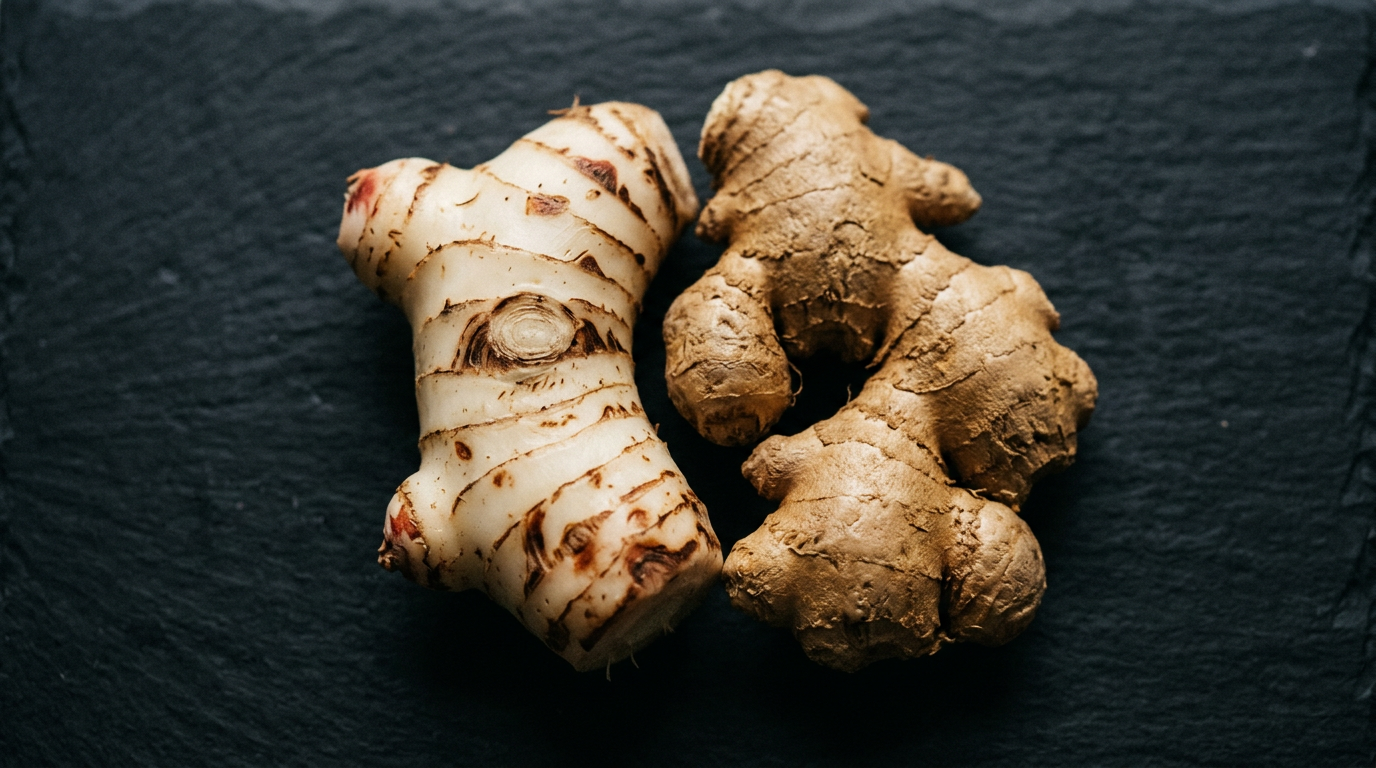
The primary galangal vs ginger difference is simple: they are not substitutes. Galangal, with its pale, smooth skin and dense flesh, offers a sharp, pine-like, and peppery flavor essential to Southeast Asian cuisine. Ginger is spicier, sweeter, and more pungent. Mistaking one for the other isn't a minor kitchen error—it fundamentally changes the character of a dish, and understanding why is key to unlocking a world of flavor.
For too long, Western culinary discourse has flattened the vibrant diversity of the Asian pantry. This is a quiet habit of a colonised-food system: treating distinct, culturally significant ingredients as interchangeable commodities. 'Curry powder' is the classic example, but the galangal-ginger confusion runs a close second. They may look vaguely similar and both are called rhizomes, but to treat them as one and the same is to miss the point entirely. In the kitchens of Thailand, Indonesia, and Malaysia where galangal reigns, this isn't a debate; it's settled knowledge.
They Aren't Twins, They're Cousins
Botanically, galangal and ginger both belong to the Zingiberaceae family, a tropical group of fragrant, flowering plants that also includes turmeric and cardamom [1]. But they part ways at the genus level. Ginger is Zingiber officinale. Galangal is most commonly Alpinia galanga. Think of them as lions and tigers—both are big cats, but you'd never mistake one for the other up close, nor would you ask one to do the other's job. Their separate evolutionary paths have resulted in dramatically different chemical compositions, which translates to wildly different tastes, textures, and aromas.
The Kitchen Test: A Side-by-Side Comparison
The best way to understand the galangal vs ginger difference is to see, smell, and taste them for yourself. The next time you're shopping, pick up both. In the [US](/region/us), you might find galangal next to ginger in a large chain like H Mart, often costing slightly more per pound (`lb`), a small price for its irreplaceable flavor. In the UK, while ginger is piled high in every supermarket, fresh galangal sometimes requires a more dedicated search in the vibrant stalls of a place like London's Brixton Market or a local South Asian grocer.
Here's what to look for:
| Feature | Galangal (Alpinia galanga) | Ginger (Zingiber officinale) |
|---|---|---|
| Appearance | Smooth, pale, almost translucent skin with distinct brown rings, like stacked coins. More cylindrical. | Knobbly, branched shape with a thicker, light brown, papery skin that wrinkles as it ages. |
| Flesh & Texture | Creamy white or pinkish, exceptionally hard, woody, and fibrous. It resists a knife and is best sliced thin. | Pale yellow, moist, and tender. Relatively easy to grate, mince, or juice. |
| Aroma | Sharp, clean, and pine-like with notes of citrus and camphor. Almost like a walk through a forest. | Pungent, spicy, and warming with an earthy, lemony sweetness. |
| Flavor Profile| Bright, peppery, and earthy with a cooling, slightly medicinal finish. It has bite, but not the 'heat' of ginger. | Sweetly spicy and pungent with a noticeable warming heat that builds on the palate. |
| Key Compound | Galangin [2] | Gingerol [2] |
| Classic Use | Sliced or pounded for the foundational flavor in Thai soups (Tom Yum, Tom Kha) and curry pastes. | Grated into stir-fries, marinades, teas, and baked goods across many global cuisines. |
Why You Can't Just Substitute
Using ginger in a recipe that calls for galangal (or vice versa) isn't a clever shortcut; it's a detour to a different destination. The sharp, resetting quality of galangal is designed to cut through the richness of coconut milk and the funk of fish sauce in a Thai curry, providing a clean, aromatic backbone. Substitute ginger, and its sweetness will muddle the flavors, creating a dish that tastes confused and cloying.
The science backs this up. Galangal's primary bioactive compound is galangin, while ginger's is gingerol [2]. These compounds not only contribute distinct flavors but also different functional properties. This chemical distinction is why one can't stand in for the other. It’s like substituting rosemary for thyme; they may both be woody herbs, but they tell completely different stories in a dish.
This respect for specificity is a form of tasting wisdom. It’s about understanding an ingredient on its own terms. Interestingly, Europe once had this wisdom. Hildegard of Bingen, the 12th-century German abbess and polymath, called galangal the 'spice of life,' and it was a staple in wealthy medieval kitchens for its unique character [3]. Its subsequent eclipse by the more easily cultivated and traded ginger is a small but telling chapter in how global foodways have been simplified, often for the worse.
By seeking out galangal and appreciating what makes it unique, we're not just making better Tom Kha. We're reclaiming a piece of lost culinary history and pushing back against the idea that deep flavor can ever be generic.
Frequently Asked Questions
1. What is the main galangal vs ginger difference in summary?
Galangal is woody and dense with a sharp, pine-like citrus flavor. Ginger is juicier and more tender with a sweet, pungent spice and noticeable heat. They are not interchangeable in recipes.
2. Can I use ginger instead of galangal in a Thai curry?
We strongly advise against it. Ginger will make the curry taste sweet and muddled, completely missing the clean, aromatic, and peppery base that galangal provides. It's better to omit it than to substitute poorly.
3. What does galangal taste like?
It has a complex flavor profile: sharply peppery, earthy, and very aromatic, with notes of pine, citrus, and a hint of soapiness, in the best way possible. It's much less 'hot' than ginger.
4. Where can I buy fresh galangal?
Look for it in Asian supermarkets, specialty grocers, and some farmers' markets. In the US and UK, you'll often find it in the refrigerated produce section near other Southeast Asian herbs like lemongrass and makrut lime leaves.
Sources & citations
- Royal Botanic Gardens, Kew. "Alpinia galanga (L.) Willd." Plants of the World Online, https://powo.science.kew.org/taxon/urn:lsid:ipni.org:names:871924-1.
- Kaushik, D., et al. "A comparative review on chemical, pharmacological and pharmacognostical potential of Zingiber officinale and Alpinia galanga (L.) Willd." Journal of Pharmacognosy and Phytochemistry, 2017, https://www.phytojournal.com/archives/2017/vol6issue6/PartW/6-6-291-131.pdf.
- Britannica, The Editors of Encyclopaedia. "Galangal". Encyclopedia Britannica, 20 Jul. 1998, https://www.britannica.com/plant/galangal.