
You won’t find us on the list of spice brand prime day deals this year. As the retail world gears up for [Amazon Prime Day on July 14, 2026](/festival/amazon-prime-day-2026), we’ve made a conscious choice to sit this one out. This isn’t a judgment, but a clarification of our values. Our pricing reflects the real costs of a food system we believe in—one that honors the farmer, the plant, and your palate. A steep discount would betray that trust. For more on our philosophy, you can read about [our why](/why).
The Illusion of a 'Deal'
Large-scale sales events are built on a simple premise: volume. The pressure to offer jaw-dropping discounts creates a powerful downstream current that erodes value at every step. To sell something for 50% off, compromises must be made somewhere. That ‘somewhere’ is usually the most vulnerable part of the chain: the quality of the raw ingredient, the ecological cost of its cultivation, and the price paid to the farmer who grew it.
We see it constantly in the spice trade. A demand for ever-cheaper product leads to a global market flooded with commodities of murky origin and questionable potency. To understand this, let's talk about cinnamon.
A Tale of Two Cinnamons
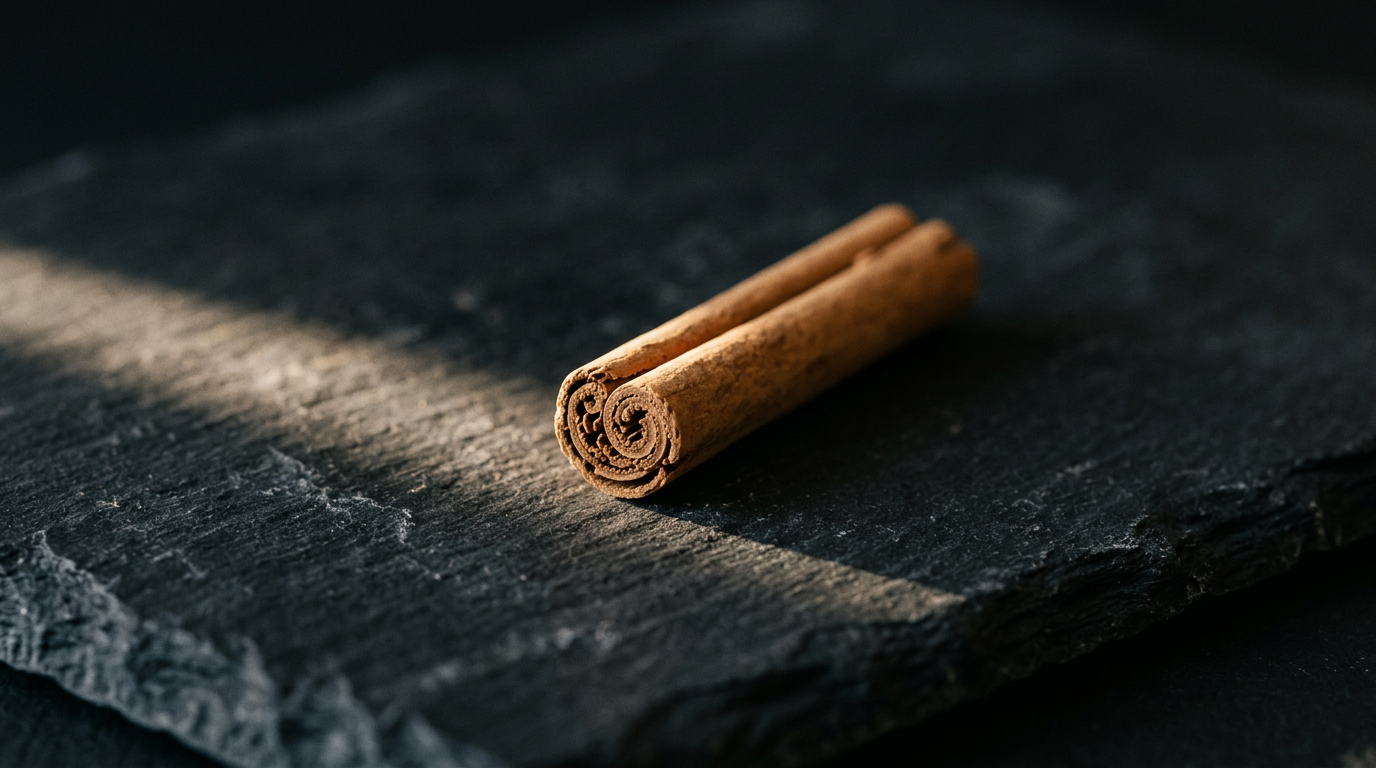
When you buy “cinnamon” at a typical grocery store, especially in the [United States](/region/us), you are almost certainly buying cassia (Cinnamomum cassia). It’s robust, aggressive, and cheap to produce. True cinnamon (Cinnamomum verum), also known as Ceylon cinnamon, is a different species entirely. It’s delicate, layered, and fragrant with citrusy notes. It is also much more difficult to harvest and, therefore, more expensive.
The difference isn’t just taste. It’s chemistry. Cassia contains high levels of a compound called coumarin, a flavour compound that can be toxic to the liver in large quantities [1]. True Ceylon cinnamon contains only trace amounts. This is not a trivial distinction. Germany's Federal Institute for Risk Assessment (BfR) has official guidelines on coumarin intake, making a German Christmas Zimtstern (cinnamon star cookie) a public health calculation [2]. In the UK, cassia's punchy, familiar flavour has become the default in everything from morning buns to apple crumbles, sold for a few quid with little transparency.
| Feature | True Ceylon Cinnamon | Cassia Cinnamon |
| :--- | :--- | :--- |
| Botanical Name | Cinnamomum verum | Cinnamomum cassia, loureiroi, burmannii |
| Primary Origin | Sri Lanka | China, Vietnam, Indonesia |
| Appearance | Soft, brittle, multi-layered quill | Thick, hard, single-layer bark |
| Flavor Profile | Delicate, complex, warm, citrusy | Pungent, spicy, aggressive |
| Coumarin Content | ~0.004% (trace amounts) | 1-5% (significantly higher) |
| Value Proposition | Culinary nuance, low coumarin | Low price, strong flavour |
In the UAE, the nuanced flavour of Ceylon cinnamon is prized for scenting gahwa (Arabic coffee), where cassia’s harshness would be out of place. In parts of India, while the catch-all term dalchini is used, Ayurvedic practitioners and discerning chefs have long known the difference, seeking out true cinnamon for its subtle and specific properties [3].
The Price of Integrity
Choosing Ceylon cinnamon over cassia is a choice for quality, safety, and flavour. It’s also a more expensive choice. The entire logic of a sales frenzy like Amazon Prime Day encourages the cassia model: opaque, high-volume, and cheap. Our mission is built on the Ceylon model: transparent, skillfully harvested, and fairly priced.
We can’t offer deep discounts because our prices don't have the fat built in. There is no corner to cut. We work with farmers who cultivate these specific, higher-value botanicals. We pay them a price that reflects the quality of their work and the value of their land. We test every batch for purity and potency. This is the quiet, consistent work of building a resilient and equitable supply chain. It's a perspective born from years of hands-on work, as [our founder](/founder) will tell you.
We believe the best “deal” is a product that is exactly what it claims to be, every single day of the year. When you buy from us, you’re not just buying a spice. You are buying the story of its soil, the skill of its harvester, and the scientific assurance of its purity. That value doesn’t go on sale.
FAQ
1. Why don't you offer any discounts at all?
We believe in fair pricing year-round. Instead of inflating our prices to accommodate seasonal sales, we set them at a level that honestly reflects the cost of exceptional, ethically sourced ingredients and rigorous scientific testing.
2. What’s the real problem with spice brand prime day deals?
The primary issue is the intense price pressure it puts on supply chains. For small producers and brands committed to quality, participating often means operating at a loss or, worse, making compromises on sourcing and paying farmers fairly to meet a low price point.
3. Is cassia cinnamon actually bad for you?
Not in moderation. However, for individuals who consume large amounts of cinnamon daily (for instance, in supplements or health regimes), the high coumarin content in cassia can pose a risk to liver health over time. Ceylon cinnamon is the safer choice for regular, heavy use [1].
4. How can I tell if my cinnamon is Ceylon or cassia?
With whole quills, it's easy: Ceylon cinnamon sticks are made of many thin, fragile layers rolled together, and they crumble easily. Cassia sticks are a single, thick, hard layer of bark. With ground cinnamon, it's nearly impossible to tell by sight alone, which is why trusting your source is paramount.
Sources & citations
- Wang, Y. H., Avula, B., Nanayakkara, N. P., Parveen, I., & Khan, I. A. (2013). Cassia cinnamon as a source of coumarin in cinnamon-flavored food and food supplements in the United States. Journal of agricultural and food chemistry, 61(18), 4470–4476. https://www.ncbi.nlm.nih.gov/pmc/articles/PMC3385612/
- German Federal Institute for Risk Assessment (BfR). (2012). Frequently Asked Questions about Coumarin in Cinnamon and other Foods. https://www.bfr.bund.de/en/press_information/2006/25/frequently_asked_questions_about_coumarin_in_cinnamon_and_other_foods-8398.html
- Britannica, The Editors of Encyclopaedia. "Cinnamon". Encyclopedia Britannica, 17 Oct. 2023. https://www.britannica.com/plant/cinnamon