
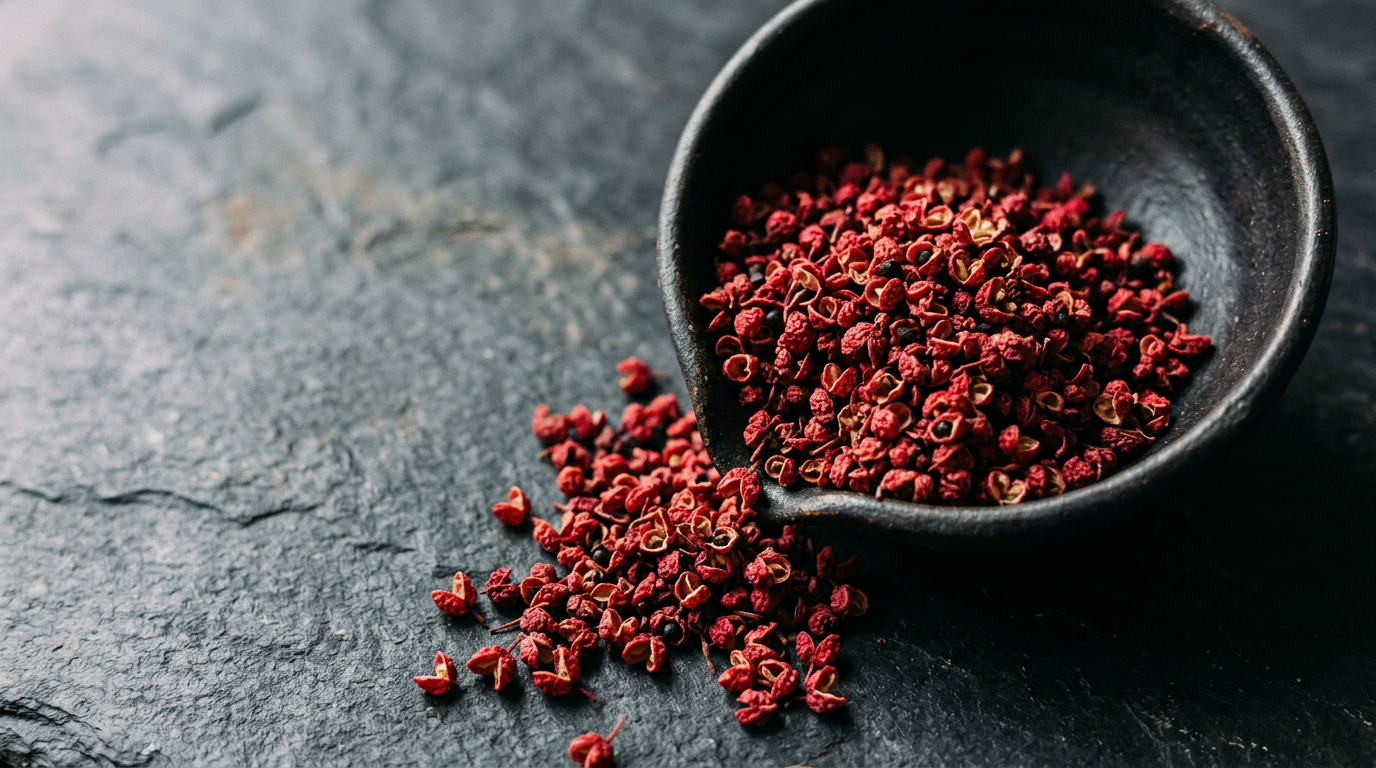
Sichuan peppercorn, or huājiāo, isn't related to black pepper or chili. It’s the husk of a citrus family shrub that delivers a unique tingling, numbing sensation known as 'mǎ'. This effect comes from a molecule called hydroxy-alpha-sanshool, which targets touch receptors—not taste buds—creating a vibration-like feeling on the tongue that is a foundational element of Sichuanese cuisine [1].
For the uninitiated, the first encounter can be baffling. You take a bite of Mapo Tofu or Kung Pao Chicken, expecting a familiar wave of chili heat. Instead, a strange, electric frequency spreads across your palate. It’s a pleasant, pins-and-needles vibration that seems to open up your senses, making them more receptive to the other flavors in the dish. This isn’t a defect or an allergic reaction; it’s by design. In the sophisticated culinary language of Sichuan, numbness is a primary flavor.
The Science of the Buzz
The molecule responsible for this magic is hydroxy-alpha-sanshool. Unlike capsaicin in chilis, which activates pain receptors that sense heat, sanshool interacts with mechanoreceptors in our nerve endings [1]. Specifically, it targets the ones responsible for detecting light touch and vibration. Scientific studies have shown that sanshool produces a neurological signal equivalent to a physical vibration of about 50 hertz. Your brain isn't imagining it; your tongue is literally experiencing a phantom vibration, a tactile illusion created by pure chemistry.
This makes Sichuan peppercorn unique in the world of spices. It’s not adding a taste in the traditional sense (sweet, sour, salty, bitter, umami) or even simple pungency. It’s adding a texture, a feeling. It’s a somatosensory spice. This distinction is crucial for understanding its role in the kitchen.
| Feature | Sichuan Peppercorn (Zanthoxylum) | Black Peppercorn (Piper nigrum) |
| :--- | :--- | :--- |
| Family | Rutaceae (Citrus) | Piperaceae (Pepper) |
| Key Compound | Hydroxy-alpha-sanshool | Piperine |
| Sensation | Numbing, tingling (Mǎ) | Pungent, sharp heat |
| Flavor Profile| Citrusy, floral, woody | Earthy, spicy, woody |
| Primary Use | Tactile sensation, aroma | Pungency, flavor |
A History of Málà
The use of huājiāo (花椒, or “flower pepper”) in China dates back thousands of years, long before chili peppers arrived from the Americas in the 16th century [2]. Ancient texts describe its use in rituals, medicine, and as a key flavoring agent. For centuries, the sensation of mǎ stood alone as the dominant form of piquancy in the region.
The real genius of Sichuanese chefs was revealed when they encountered the new-world chili. Instead of replacing their native peppercorn, they fused the two. They combined the numbing, vibrational quality of mǎ (麻) with the fiery heat of là (辣), creating the iconic flavor profile known as málà (麻辣), or “numbing-spicy.”
This pairing is not merely additive; it's synergistic. The mǎ tingle seems to temper the aggressive burn of the chili, allowing its fruity notes to come forward. At the same time, the chili heat provides a backdrop that makes the tingling sensation more pronounced. It’s a culinary tightrope walk, a dynamic balance that creates a complex, multi-layered experience that is deeply craveable.
How to Unlock the Tingle
Simply tossing the peppercorns into a dish won't work. The key is sourcing and technique. Look for vibrant, reddish-pink husks that are mostly free of tiny, bitter black seeds and stems. Premium varieties like Dà Hóng Páo (Big Red Robe) are prized for their potent aroma and intense numbing quality.
The essential technique is to “bloom” the spice. First, gently toast the whole peppercorns in a dry pan over low heat for a few minutes until they become intensely fragrant. This awakens the volatile oils. Then, you can either grind them into a powder or, for a clearer flavor, infuse them in warm oil. By gently heating the toasted peppercorns in oil, the sanshools and aromatic compounds are extracted, creating a potent, tingling oil that can be used to build sauces or finish dishes. This process ensures the flavor is distributed evenly without any gritty texture [3].
This ancient spice, once a regional specialty, is now being embraced by chefs and curious eaters globally. It offers a lesson that the world of flavor is far wider than the five basic tastes. Sometimes, the most exciting sensations are the ones we feel, not just the ones we taste.
---
### Frequently Asked Questions
1. Are Sichuan peppercorns spicy like chili peppers?
No. They do not contain capsaicin, the compound that makes chilis hot. Their signature sensation is a tingling numbness (mǎ), not a fiery burn (là). The two are often used together in Sichuan cooking to create a combined málà flavor.
2. Why are there little black seeds inside the husks?
The seeds are flavorless but have a sandy, gritty texture and can be slightly bitter. High-quality Sichuan peppercorns will have been sifted to remove most of the seeds, leaving only the potent husks. It's good practice to pick out any remaining seeds before cooking.
3. How should I store Sichuan peppercorns?
Like most spices, they should be stored whole in an airtight container in a cool, dark, and dry place. Their volatile compounds degrade with exposure to air, light, and heat. For best results, buy them whole and toast and grind them only as needed.
4. Is it safe to eat them?
Yes, it is perfectly safe. The tingling is a temporary, harmless neurological effect. The peppercorns were subject to a USDA import ban from 1968 to 2005 over concerns about carrying citrus canker, but this ban was lifted for peppercorns that have been properly heat-treated [4].
Sources & citations
- Hagura, N., Barber, H., & Haggard, P. (2013). Food vibrations: Asian spice sets lips trembling. Proceedings of the Royal Society B: Biological Sciences, 280(1770), 20131680. https://royalsocietypublishing.org/doi/10.1098/rspb.2013.1680
- Dunlop, F. (2019). The Food of Sichuan. W. W. Norton & Company. https://wwnorton.com/books/9781324004837
- McGee, H. (2004). On Food and Cooking: The Science and Lore of the Kitchen. Scribner. https://www.simonandschuster.com/books/On-Food-and-Cooking/Harold-McGee/9780684800011
- United States Department of Agriculture (USDA). (2005). USDA Lifts Ban on Costly, Tongue-Tingling Peppercorn. USDA Newsroom. https://www.usda.gov/media/blog/2010/10/27/usda-lifts-ban-costly-tongue-tingling-peppercorn