
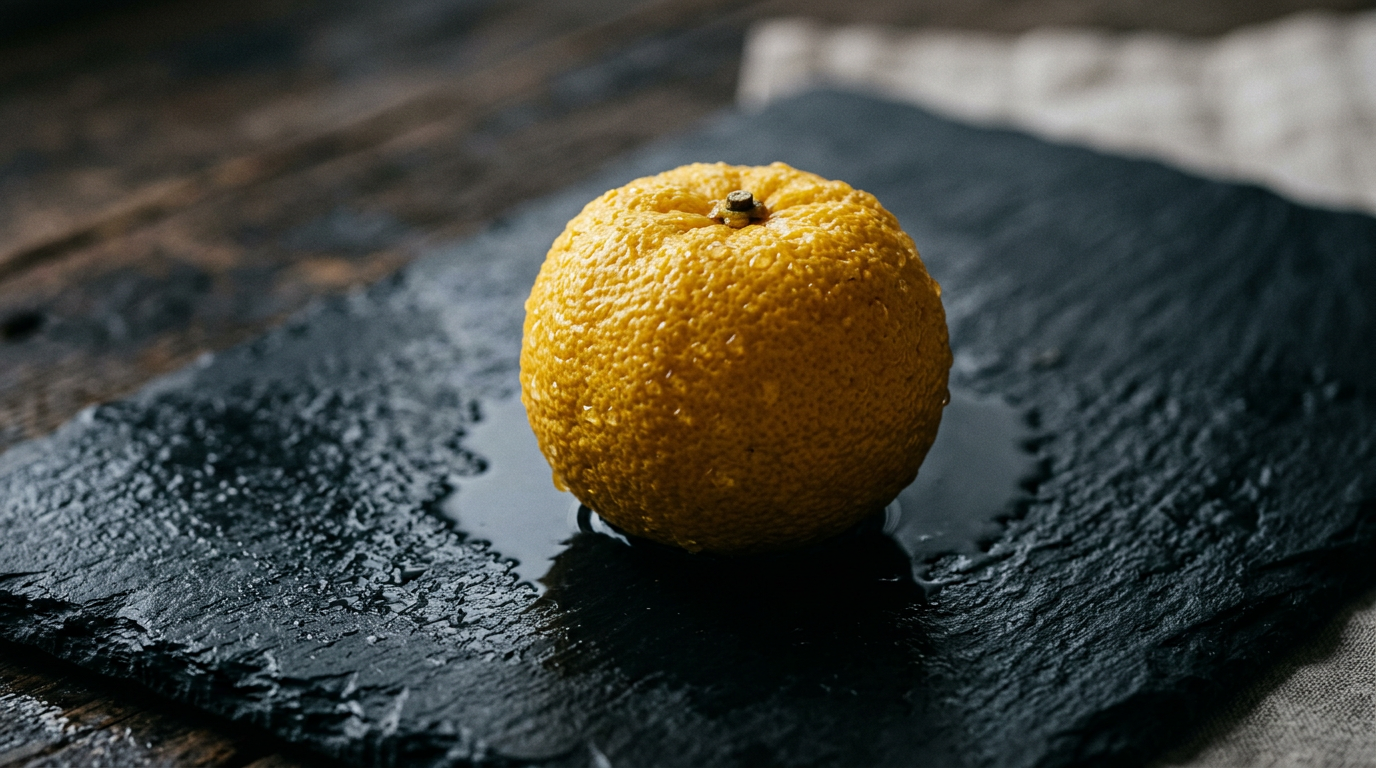
Yuzu (Citrus junos) is a hardy East Asian citrus prized for its intensely aromatic peel, not its scant, tart juice. Its unique fragrance—a complex, floral perfume—is central to its culinary and therapeutic use, from Japanese winter solstice baths to modern gastronomy. This scent is more than just pleasant; it's a marker of potent bioactive compounds that science is just beginning to fully appreciate.
The Scent is the Story
Sniff a lemon, and you primarily smell one thing: limonene. Sniff a yuzu, and you smell a symphony. While limonene is a major component, yuzu's singular aroma comes from a more complex and delicate balance of volatile compounds. Its signature floral, almost grapefruit-meets-tangerine note, is a conversation between dozens of molecules, including a significant amount of citral (also found in lemongrass) and other trace compounds like γ-terpinene and linalool. This chemical signature is what makes yuzu so distinct from its citrus cousins, and it's why a small amount of its zest can transform a dish or a fragrance.
This complexity isn't just an accident of nature; it's a product of its rugged origins. Yuzu is a hybrid of the hardy Ichang papeda and the sour mandarin orange, bred to withstand cold Japanese winters. That resilience is expressed in its thick, bumpy, oil-rich peel. For a chef, perfumer, or product developer, that peel represents a library of scents that can't be easily synthesized or replicated. It’s a natural moat, carved by genetics and climate.
A Bath, Not a Beverage
The most telling use of yuzu isn't in a sauce, but in a tub. The Japanese tradition of yuzuyu (yuzu bath), observed on the winter solstice (tōji), involves floating whole or halved yuzu fruits in hot bathwater. The practice is said to ward off winter colds and promote relaxation. For centuries, this was simply accepted wisdom. Now, we can see the science behind the steam.
As the hot water warms the fruit, the peel releases its essential oils. The steam carries these volatile compounds—notably limonene—up to be inhaled. Studies on aromatherapy have shown that inhaling citrus fragrances rich in limonene can have a measurable effect on the nervous system, helping to reduce stress and elevate mood [1].
But the magic isn't just in the air. The peel also contains a high concentration of a flavonoid called hesperidin. Hesperidin is not volatile, so you can't smell it, but it's a key player. It's believed to be absorbed through the skin, where it supports circulation [2]. This may explain the sensation of profound, lasting warmth that people report after a yuzu bath—a feeling that goes beyond the simple heat of the water. The ritual isn't just folklore; it's a brilliantly effective transdermal delivery system for beneficial plant compounds.
Yuzu vs. Its Cousins
To understand yuzu's unique place, it helps to see it next to more familiar citrus. Its value proposition is not in its juice, but in the complexity of its rind.
| Characteristic | Yuzu | Meyer Lemon | Grapefruit |
| :--- | :--- | :--- | :--- |
| Aroma | Intensely floral, complex, hints of pine | Sweet, floral, less acidic than lemon | Sharp, tangy, with a bitter edge |
| Acidity | Tart, but less sharp than a lemon | Low acidity, mildly sweet | Moderate to high, often with bitterness |
| Peel | Thick, bumpy, oil-rich | Thin, smooth, fragile | Medium-thick, smooth |
| Primary Use | Zest, oils, infusions (peel-forward) | Juice, zest, whole fruit | Juice, flesh |
Beyond Ponzu
While yuzu's traditional home is in Japanese cuisine—as a key component in ponzu sauce or the fiery, fragrant paste yuzu koshō—its utility extends far beyond. The global culinary world is catching on, recognizing that its aromatic profile is a powerful tool.
Because its flavor is carried in its oils, it pairs exceptionally well with fats, which capture and distribute the aroma. A bit of yuzu zest can cut through the richness of pork belly, enliven a creamy panna cotta, or brighten the marinade for an oily fish like mackerel. It also forms surprising alliances with spices and herbs, creating a bridge of flavor where one might not expect it. Try it with the floral notes of Szechuan peppercorns, the woodsy character of thyme, or the sweet spice of star anise. These combinations aren't traditional, but they are intuitive once you understand the chemistry of the peel.
This migration from a regional specialty to a global pantry staple is a quiet but significant shift. It demonstrates a growing appetite for complex, authentic flavors with a story—a story that, in yuzu's case, is written in molecules.
### Frequently Asked Questions
1. What exactly is yuzu?
Yuzu is a citrus fruit believed to be a hybrid of the Ichang papeda and the sour mandarin orange. Native to China, it is most famously cultivated and used in Japan and Korea. It's known for its powerful aromatic rind rather than its juice.
2. Why is fresh yuzu so expensive and hard to find?
Several factors contribute to its cost. Yuzu trees are slow to mature, often taking over a decade to bear significant fruit. The fruit itself has thorny branches, making harvesting a difficult, labor-intensive process. Furthermore, demand outside of East Asia has grown much faster than supply.
3. Can you eat yuzu peel?
Absolutely. The peel (or zest) is the most prized part of the fruit. It's used in everything from spice pastes (yuzu koshō) and teas to marmalades and cocktail garnishes. Just be sure to use fruit that has not been treated with pesticides.
4. What is the difference between yuzu and sudachi?
Sudachi is another Japanese citrus, often picked when green. While related, sudachi is more akin to a lime in its sharp acidity and flavor profile. Yuzu is more floral, complex, and less sharply acidic, with a fragrance closer to a hybrid of grapefruit and mandarin orange.
Sources & citations
- Yavari, K., et al. (2014). The effect of lemon inhalation on nausea and vomiting of pregnancy: a double-blinded, randomized, controlled clinical trial. Iranian Red Crescent Medical Journal, 16(3), e14360. https://www.ncbi.nlm.nih.gov/pmc/articles/PMC4005434/
- Umar, A., et al. (2020). Hesperidin as a protector against vascular diseases: A review. Current Pharmaceutical Design, 26(42), 5498-5507. https://www.eurekaselect.com/article/109041
- Higdon, J., & Drake, V. (2020). Flavonoids. Linus Pauling Institute, Oregon State University. https://lpi.oregonstate.edu/mic/dietary-factors/phytochemicals/flavonoids
- Hani, Y. (2018). The Yuzu: A Fragrant and Refreshing Japanese Citrus. Nippon.com. https://www.nippon.com/en/japan-glances/jg00115/