
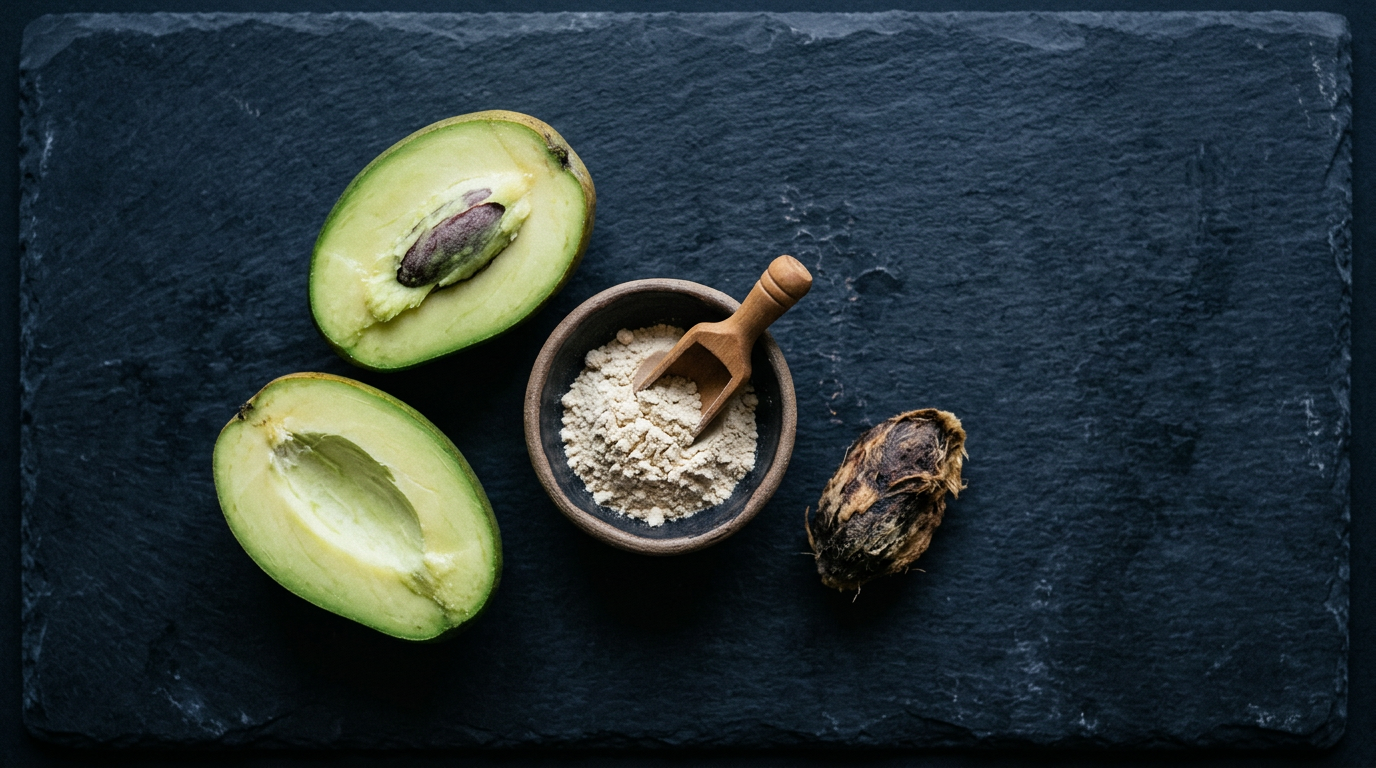
Stocking a pantry with multiple forms of the same plant is a time-honored strategy for culinary depth and nutritional resilience. Rather than relying on a single state—like a ripe fruit or a dried seed—this approach harnesses a plant’s full lifecycle. Using unripe mango, its dried powder (amchur), and even its kernel unlocks distinct flavors, textures, and bioactive compounds for year-round use.
The Monoculture of the Spice Cabinet
Walk down the spice aisle. You’ll see cinnamon sticks, but rarely cinnamon leaf. You’ll find whole cloves, but not the clove stem. The modern pantry, in its quest for convenience, has flattened the landscape of flavor. We’ve been taught to recognize a plant in its most common, commercially viable form and discard the rest.
This is a recent simplification. For millennia, cooking was an exercise in botany and resourcefulness. It meant understanding that a single plant offered different gifts at different stages of its life. The fresh spring leaves, the unripe summer fruit, the mature autumn seed, the dormant winter root—each had a purpose.
Nowhere is this principle more vivid than with the mango, Mangifera indica. To most of the world, a mango is a sweet, succulent, ripe fruit. But in the pantries of South and Southeast Asia, the ripe fruit is just one chapter in a much longer story. The real workhorses are its other forms, particularly those born from its unripe, sour stage.
Form 1: The Taut Green Original
The raw, green mango is a seasonal thrill. Harvested long before its sugars develop, its flesh is firm, crisp, and bracingly tart. This sourness comes from a cocktail of organic acids, primarily citric and malic acid, which are present in much higher concentrations than in the ripe fruit [1].
In the kitchen, it’s a structural element and a shot of high-toned acidity. It’s shaved into salads in Thailand (som tam mamuang), pickled with salt and spices across India (achaar), and simmered into tangy dals and chutneys. Its sourness is bright, clean, and loud—less complex than vinegar, sharper than a lime.
But its value is fleeting. A raw mango is 90% water and highly perishable. This very perishability is what drove the innovation that created its most stable and versatile form.
Form 2: The Shelf-Stable Alchemist (Amchur)
What if you could capture the essence of that green mango and make it last for years? That’s amchur.
Amchur, also spelled amchoor, is a powder made from dried, unripe green mangoes. The process is simple in concept, profound in effect. Slices of raw mango are sun-dried until brittle, then ground into a fine, pale beige-to-brownish powder. As the water evaporates, the acids and flavor compounds concentrate dramatically. The flavor is still sour, but it’s a different kind of sour—more complex, fruitier, and with a honey-like aroma that the fresh fruit lacks.
This transformation makes amchur a pantry powerhouse. It adds a fruity tartness to everything from lentil dishes and vegetable stir-fries to marinades for meat and fish. Crucially, it contains enzymes like mangiferin that act as a natural tenderizer [2]. Unlike acidic marinades which can turn meat mushy, amchur gently breaks down proteins, making it a secret weapon for tender kebabs and stews.
This is the genius of traditional food systems: converting a seasonal, perishable liability into a shelf-stable, high-value asset.
Form 3: The Hidden Core (Kernel)
Even after the fruit is eaten or dried, the plant has more to give. Inside the woody stone of the mango is a kernel, or guthli. Often discarded, this kernel is a source of fat, protein, and valuable phenolic compounds.
When processed, the kernel yields mango butter, a fat chemically similar to cocoa or shea butter, prized in cosmetics for its moisturizing properties [3]. In times of scarcity, the kernel has also been processed into a flour, detoxified and blended with other grains, showcasing a true zero-waste understanding of a single botanical source. While not a common spice, its use in traditional medicine and industry demonstrates a level of resourcefulness that sees value in every part of the plant.
| Form | Primary Flavor | Key Compounds | Primary Use |
| :--- | :--- | :--- | :--- |
| Raw Green Mango | Bright, sharp sourness | Citric acid, Malic acid | Pickles, Salads, Chutneys |
| Amchur Powder | Complex, fruity sourness | Concentrated acids, Mangiferin | Souring agent, Tenderizer |
| Mango Kernel | Mild, starchy, fatty | Oleic acid, Stearic acid | Mango butter, Flour extender |
Thinking about a plant in three forms isn't just trivia; it's a fundamentally different way of seeing. It’s a shift from being a passive consumer of a single product to an active partner with a plant's entire lifecycle. It requires deeper knowledge of sourcing, seasonality, and processing. It builds a pantry that is more resilient, flavorful, and intelligent—a library of possibilities from a single root.
Frequently Asked Questions
Q: Is amchur just a substitute for lemon juice?
No. While both are sour, amchur provides a fruity, less 'sharp' tartness and has a unique aroma. It also adds sourness without adding extra liquid, which is crucial in dry rubs, certain doughs, and fillings. Plus, its tenderizing properties are distinct.
Q: Can I make amchur at home?
Yes. You'll need very unripe, sour mangoes. Peel and slice them thinly, then dry them completely in the sun or a dehydrator until they are brittle and snap easily. Once totally dry, you can grind them in a powerful spice grinder. The key is removing all moisture to prevent spoilage.
Q: Are there other spices with multiple useful forms?
Many! Coriander is a classic example, used for its fresh leaves (cilantro), whole dried seeds (coriander), and sometimes its green, tender seeds. Nutmeg and mace are two distinct spices derived from the same fruit—the seed and its lacy covering (aril).
Sources & citations
- Food and Agriculture Organization of the United Nations (FAO). "MANGO Post-Harvest Operations." https://www.fao.org/3/ab088e/ab088e.pdf
- Masibo, M., & He, Q. (2008). "Major Mango Polyphenols and Their Potential Significance to Human Health." Comprehensive Reviews in Food Science and Food Safety, 7(4), 309-319. https://onlinelibrary.wiley.com/journal/15414337
- Jahurul, M. H. A., Zaidul, I. S. M., Ghafoor, K., et al. (2015). "Mango (Mangifera indica L.) by-products and their valuable components: A review." Food Chemistry, 183, 173-180. https://www.sciencedirect.com/journal/food-chemistry