
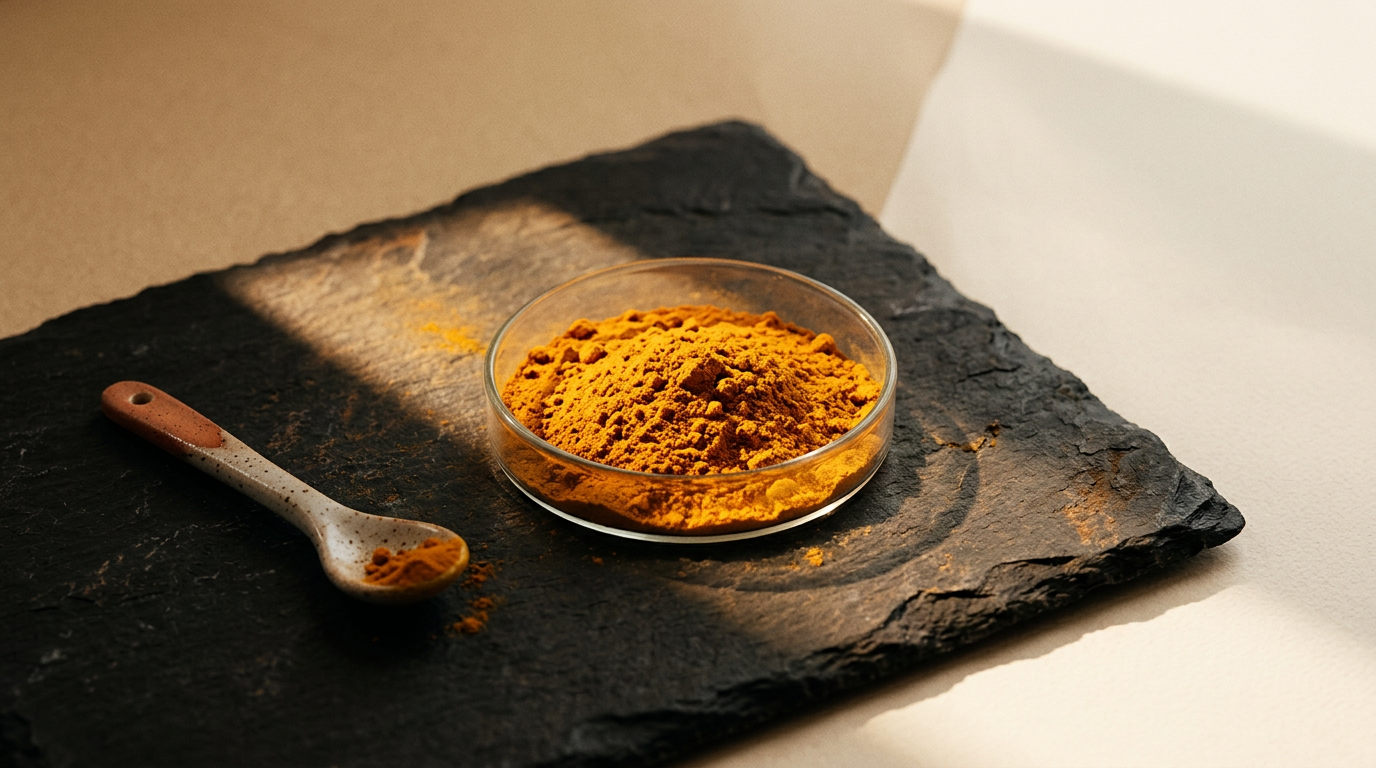
A turmeric certificate of analysis explained is your direct line to a spice’s true quality, a rigorously scientific document that stands between you and a poor product. It's a lab-verified report card detailing a specific batch’s key chemical and microbial properties. Far from being just industry jargon, it is the single most important document for ensuring the turmeric in your pantry is both potent and safe.
We see spices as partners in our health. And just like any partnership, this one thrives on transparency and trust. You can’t get that from a pretty label or a low price. Trust comes from data. For us, that data lives in a document called a Certificate of Analysis, or COA. Think of it as a passport for your spice, detailing its identity, purity, and potency. While it might sound technical, understanding it is surprisingly simple—and it’s the key to knowing exactly what you’re eating.
Decoding the Fine Print
A COA is a summary of third-party lab tests performed on a specific batch of spice. It doesn’t test a ‘representative’ sample from the whole brand, but the literal batch you are buying. It's the ultimate proof of accountability.
For a spice like [/spice/turmeric](turmeric), several key metrics are non-negotiable. Here's what we look for, and what you should too:
| Test Parameter | What It Measures | Why It Matters for You |
| :--- | :--- | :--- |
| Curcumin Content (%) | The concentration of curcuminoids, turmeric’s primary bioactive compounds. | Higher curcumin means more vibrant color, richer flavor, and the potency that scientific studies focus on [1]. Supermarket turmeric often clocks in at 2-3%; high-grade varieties can exceed 5% or more. |
| Heavy Metals (Pb, As, Hg) | Presence of lead, arsenic, and mercury, measured in parts per million (ppm). | Turmeric is susceptible to contamination from soil or, worse, intentional adulteration with lead chromate to enhance its yellow color. The FDA in the [/region/us](us) has issued alerts about this dangerous practice [2]. A COA is your shield against this. |
| Microbiologicals | Levels of bacteria like E. coli and Salmonella. | Spices are raw agricultural products. These tests ensure they were harvested, dried, and handled hygienically, making them safe to use without needing to be cooked to high temperatures. |
| Aflatoxins | Toxic compounds produced by certain molds (Aspergillus species). | These can develop if the turmeric is stored improperly in humid conditions. They are potent carcinogens, making this a critical safety check, monitored closely by agencies like the UK’s Food Standards Agency (FSA) [3]. |
More Than a Buzzword
So, why does this matter more than a generic 'organic' or 'natural' sticker? Because a COA provides accountability that a label alone cannot. Organic certification tells you about the farming process—no synthetic pesticides, for example. That's a great start. But it doesn't tell you the final curcumin percentage. It doesn't guarantee the batch is free from heavy metal contamination picked up from groundwater. The process can be perfect, but the final result still needs verification.
The world of spices is global and complex. A batch of turmeric might be grown on a small farm in Kerala, collected by a local aggregator, processed at a mill, and then exported. In India, bodies like the FSSAI and Agmark set standards, but the supply chain offers many opportunities for quality to degrade or for adulteration to occur [4].
A COA cuts through the noise. It’s a snapshot of the final product, right before it’s packed. It replaces claims with evidence. This commitment to testing is a core part of our philosophy at Spiced with Science, which you can read more about in our [/science](/science) section. This detailed turmeric certificate of analysis explained is a testament to that principle.
For a home cook, this translates into confidence. It’s the confidence to know that the golden hue in your daal comes from curcumin, not lead paint. It’s the assurance that you're getting the full, earthy, vibrant flavor of high-quality turmeric, not a diluted, dusty substitute. It’s the peace of mind that comes from knowing the ingredients you trust to nourish your family are exactly what they claim to be. The next time you shop for spices, don't just ask where it comes from. Ask to see the report card.
### Frequently Asked Questions
1. Do all spice brands have a COA for their products?
No. Reputable, smaller-batch, and science-forward brands are more likely to test every batch and make the results available. Bulk, mass-market brands often rely on supplier-level checks, not necessarily batch-specific reports for the consumer-facing product.
2. How can I see a COA?
Brands committed to transparency will often make them available on their website, sometimes via a QR code on the packaging, or will provide it if you ask customer service. If a brand is unwilling or unable to share it, that is also a piece of data.
3. Is a higher curcumin percentage always better?
For potency and vibrance, yes. Turmeric grown for its bioactive properties will have a higher curcumin content than turmeric grown for sheer volume. However, a COA should be viewed holistically. A high curcumin level is meaningless if the spice also has high levels of lead or microbial contaminants. Safety first, always.
Sources & citations
- Hewlings, S. J., & Kalman, D. S. (2017). Curcumin: A Review of Its Effects on Human Health. Foods, 6(10), 92. https://www.ncbi.nlm.nih.gov/pmc/articles/PMC5664031/
- U.S. Food and Drug Administration (FDA). (2022). Lead in Spices, Herbal Remedies, and Candy. https://www.fda.gov/food/metals-and-your-food/lead-spices-herbal-remedies-and-candy
- Food Standards Agency (UK). (n.d.). Contaminants. https://www.food.gov.uk/safety-hygiene/contaminants
- Food Safety and Standards Authority of India (FSSAI). (n.d.). Homepage. https://www.fssai.gov.in/