
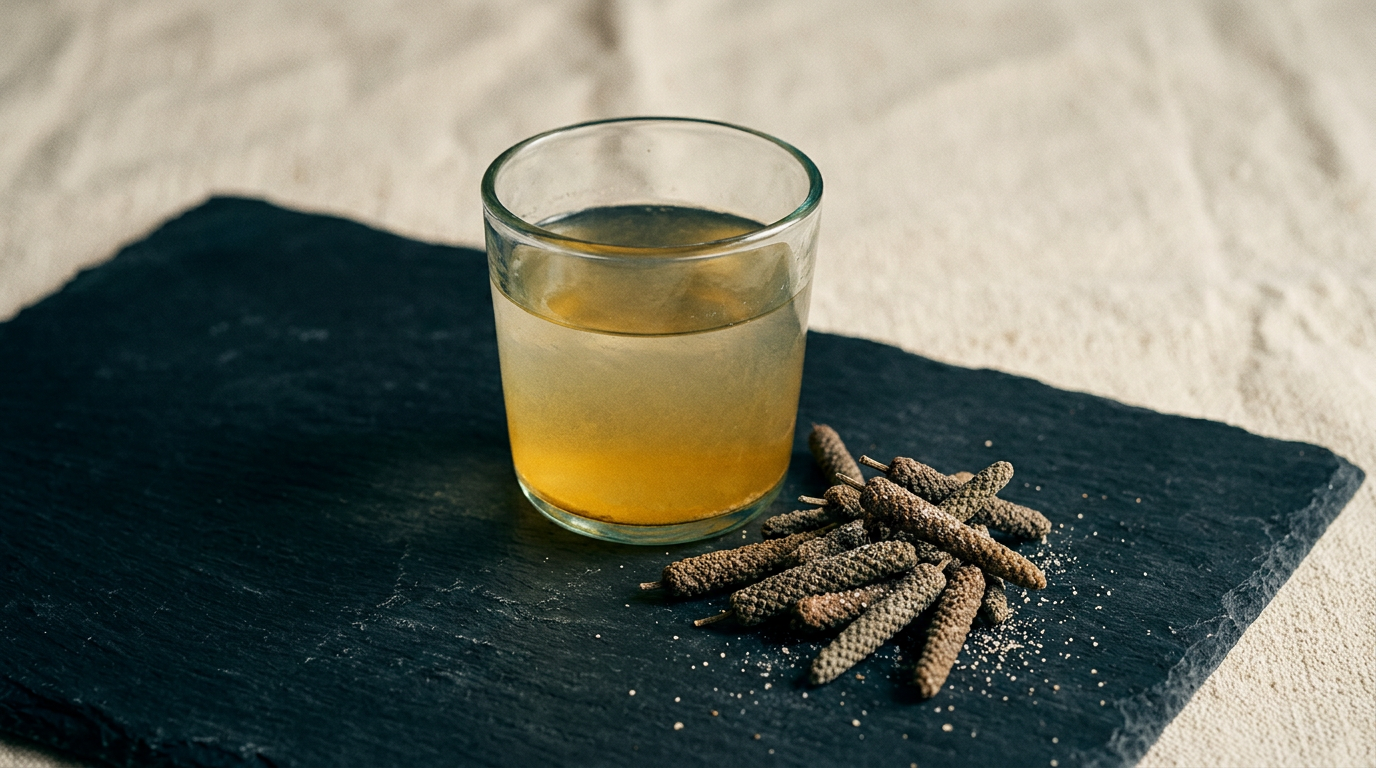
A salt-water gargle provides temporary relief for a sore throat through osmosis, where the higher salt concentration outside your throat cells draws out excess fluid, reducing swelling and flushing away irritants. A medicated throat spray typically uses chemical anesthetics like benzocaine to numb pain receptors. While both are effective, they work via different mechanisms—one physical, one chemical—for managing throat discomfort. [1]
That first tickle in the back of your throat. It’s a sensation we all know, a low-level alarm that sends us down one of two familiar paths. The first leads to the kitchen cabinet for salt and warm water, a remedy passed down through generations. The second leads to the pharmacy aisle for a brightly packaged throat spray promising instant, powerful relief.
One is an ancient, elemental fix. The other is a product of modern chemistry. We tend to reach for one or the other based on habit, convenience, or what our parents taught us. But what are we actually doing to our bodies when we choose? The answer is a fascinating lesson in physics, chemistry, and—if we look a little closer—botany.
The Case for Salt: A Lesson in Osmosis
The genius of a salt water gargle lies in its elegant simplicity. It’s not magic; it’s high school biology. When your throat is sore, the tissues are inflamed and swollen with excess fluid. By mixing salt into warm water, you create a hypertonic solution—a solution with a higher concentration of solutes (salt) than the fluid inside your cells.
When you gargle, the laws of osmosis take over. Nature seeks equilibrium. Water moves from an area of lower solute concentration (your swollen throat cells) to an area of higher concentration (the salt water) to balance things out. This outflow of water physically reduces swelling and eases the feeling of pressure and pain. The gargling action also mechanically loosens and flushes away mucus, bacteria, and viral particles. It's a simple, physical cleansing.
Its power is its purity. There are no side effects (unless you swallow it), no complex chemicals, and no risk of disrupting your oral microbiome. It costs pennies. It’s a physical intervention, not a chemical one. But its biggest strength is also its limitation: the relief is temporary, and it doesn't kill the pathogens causing the infection. It just makes the environment less hospitable for a short while. [2]
Unpacking the Spray Bottle
A commercial throat spray is an entirely different proposition. It’s a targeted chemical assault designed for one primary purpose: to stop the pain signal. The hero ingredient is usually a topical anesthetic like benzocaine or phenol.
These chemicals work by blocking sodium channels in your nerve endings. Since nerve impulses rely on sodium ions to fire, blocking their path effectively stops the pain signal from ever reaching your brain. You’re not less sore; you’re just temporarily unable to feel it.
Alongside the numbing agent, you’ll often find:
- Antiseptics: Ingredients like povidone-iodine or cetylpyridinium chloride are added to kill germs. Their real-world effectiveness in shortening a cold is debated, and some research suggests they can indiscriminately harm the beneficial bacteria that make up your oral microbiome. [3]
- Astringents: These cause tissues to constrict, which can feel soothing.
- Demulcents: Ingredients like glycerin create a viscous film over the throat tissue, providing a coating sensation.
- A supporting cast: A long list of flavorings, colorants, sweeteners, and preservatives required to make the concoction stable and palatable.
It’s an effective, if blunt, tool. It works fast and provides powerful numbing. But it’s a symptom-masker, not a systemic soother.
A Side-by-Side Comparison
| Feature | Salt Water Gargle | Branded Throat Spray |
| :--- | :--- | :--- |
| Primary Mechanism | Osmosis (Physical) | Anesthesia (Chemical) |
| Key Ingredient(s) | Sodium Chloride (Salt) | Benzocaine, Phenol, Povidone-Iodine |
| Cost | Pennies | $8 - $15 |
| Accessibility | Universally available | Pharmacy purchase |
| Side Effects | Minimal if not swallowed | Numbing, potential allergic reactions, microbiome disruption |
| Core Benefit | Reduces swelling, cleanses | Numbs pain signal |
A Third Way: Wisdom in the Warmth
What if we could combine the physical flushing of a gargle with a more intelligent, biologically active component? This is where ancient plant wisdom offers a compelling alternative to a simple chemical numbing agent.
Enter Long Pepper, or Pippali (Piper longum). A relative of black pepper, this slender, catkin-like spice is a cornerstone of Ayurvedic respiratory formulas. Its flavor profile is complex—less fiery than chili, but with a persistent, penetrating warmth that feels profoundly different from the acrid heat of a phenol spray.
Modern science is beginning to understand the mechanisms behind this traditional use. Long pepper is rich in an alkaloid called piperine, the same compound found in black pepper, which is known for its potent anti-inflammatory properties. [4] It inhibits the same inflammatory pathways (like NF-κB) that are active during a throat infection. But Pippali also contains other unique compounds, like piperlongumine, that are being explored for their own distinct bioactivity. [5]
Here, the approach changes. Instead of simply numbing the pain signal, you’re introducing a compound that can help address the underlying inflammation. Instead of a blunt chemical, you’re using a complex botanical with a long history of human use.
A gargle made with warm water, a pinch of sea salt, and a dash of finely ground long pepper bridges the gap between the kitchen and the pharmacy. The salt performs its osmotic duty. The warm water soothes and cleanses. And the long pepper brings its warming, anti-inflammatory phytochemistry to the exact site of the problem. It’s not about masking a symptom, but about delivering targeted, active warmth that works with your body's response.
Choosing how to soothe a sore throat becomes a more interesting decision when you know the story behind the solution. One is elemental physics. One is brute-force chemistry. And one is applied botany. Each has its place, but understanding how they work is the first step toward making a more intentional choice.
FAQ
1. How much salt should I use for a gargle?
A common recommendation is a quarter to a half teaspoon of salt dissolved in an 8-ounce (240ml) glass of warm water. The water should be warm enough to be soothing but not hot enough to burn.
2. Can a throat spray make things worse?
For some people, ingredients in throat sprays, particularly benzocaine, can cause allergic reactions. Overuse can also numb the gag reflex, and some antiseptics may disrupt the natural balance of your oral microbiome, though more research is needed.
3. What does Long Pepper taste like?
Long pepper has a unique flavor. It starts with a mild sweetness and then builds into a pungent, warming heat that is less sharp than black pepper but lingers longer. In a gargle, you would use a very small amount, which would contribute a pleasant, warming sensation.
4. Is it safe to gargle with spices?
Using small, culinary amounts of a spice like long pepper in a gargle is generally safe for most people. As with any new ingredient, start with a tiny amount to see how you respond. If you have known spice allergies or medical conditions, it's always best to consult a healthcare provider.
Sources & citations
- National Health Service (NHS). "Sore throat." NHS, www.nhs.uk/conditions/sore-throat/.
- Thomas, M., and C. Del Mar. "Physiological modelling of salt water gargling." Journal of the Royal Society of New Zealand, vol. 40, no. 2, 2010, pp. 53-56.
- Wade, W. G. "The oral microbiome in health and disease." Pharmacological Research, vol. 69, no. 1, 2013, pp. 137-43, doi.org/10.1016/j.phrs.2012.11.006.
- Ying, X., et al. "Piperine and Its Underexplored Functions: A Review." Current Pharmaceutical Design, vol. 27, no. 11, 2021, pp. 1385-1397, doi.org/10.2174/1381612826666201202110255.
- Kumar, S., et al. "Piperine, a Piperidine Alkaloid from Piper Species: A Comprehensive Review on Its Ethnobotany, Phytochemistry, and Pharmacological Aspects." Planta Medica, vol. 85, no. 13, 2019, pp. 1021-1036, doi.org/10.1055/a-0969-9556.