
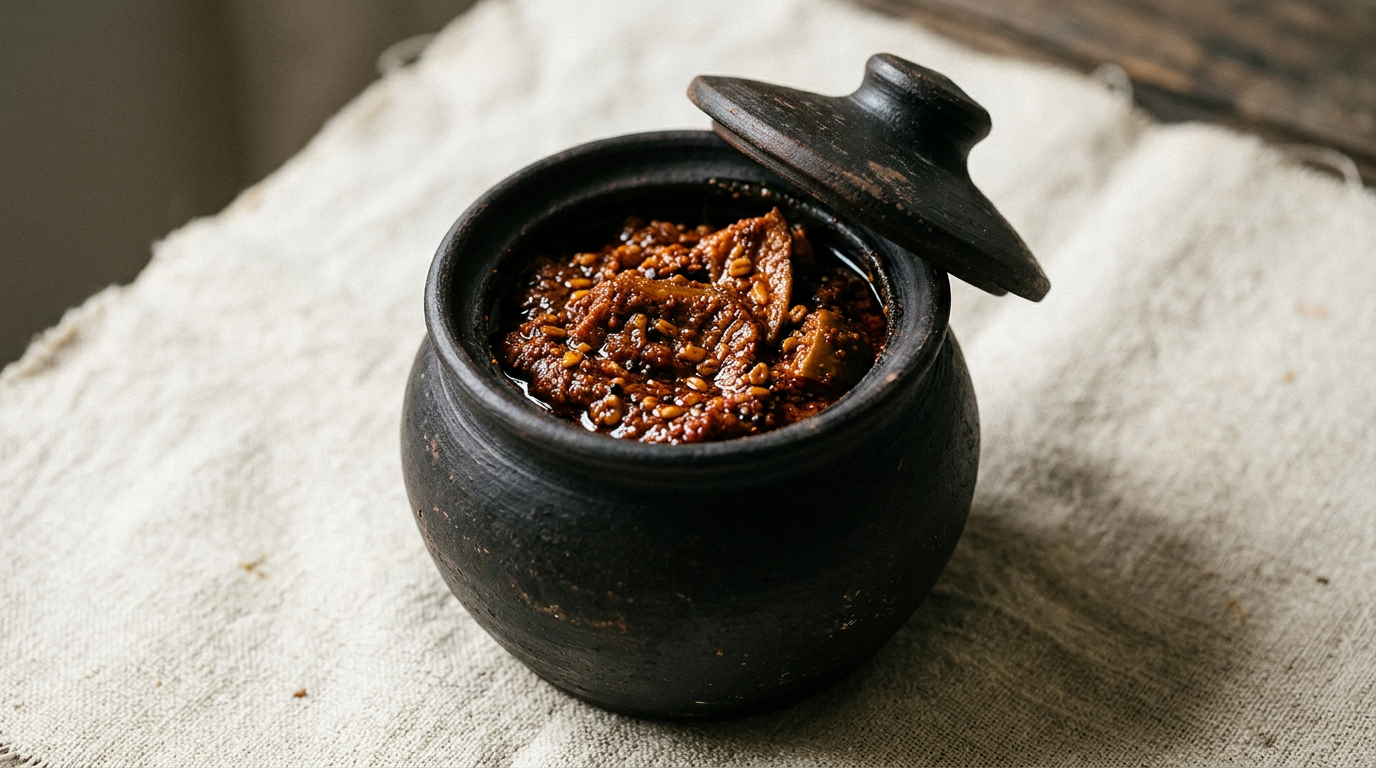
The onam pickle tradition is more than just a condiment; it’s a living heirloom. On a festive table groaning with freshly made dishes for the Onam sadya, the most vital flavour often comes from a jar prepared months, or even years, prior. This practice of aging pickles is a testament to the profound wisdom of our ancestors, who understood that time is the most magical, transformative ingredient.
The Wisdom of the Oldest Dish
As families across /region/india and the diaspora in the UAE prepare for Onam on September 2nd, 2026, menus are filled with dishes that celebrate the harvest: avial, thoran, olan, pachadi. They are marvels of freshness. But tucked into a corner of the banana leaf is a small, potent dollop of achar—lemon, mango, or gooseberry—that tells a different story. It’s a story of preservation, patience, and the deepening of flavour over seasons.
This isn't the quick, vinegar-based pickle you find in a supermarket. This is a pickle fermented in salt and its own juices, a process where time isn't an enemy to be kept at bay with chemical preservatives, but an ally to be welcomed. In many homes in Kerala, a ceramic bharani sits in a cool, dark pantry, holding pickles that connect this year’s /festival/onam to the one before, and the one before that. The youngest child at the table might be five, but the mango pickle might be seven.
The Science of Patient Fermentation
This tradition isn't just romantic; it's rooted in sophisticated food science. The process relies on lacto-fermentation. When you salt fruit or vegetables, you create an environment where salt-tolerant Lactobacillus bacteria thrive and harmful microbes cannot. These beneficial bacteria convert sugars into lactic acid, creating a tangy, complex flavour and a food that is naturally preserved [1].
But the magic of the onam pickle tradition lies in the spices. They aren't just for taste. Mustard seeds, a cornerstone of South Indian pickling, contain compounds like allyl isothiocyanate, which possess powerful antimicrobial properties, actively helping to preserve the food while contributing a signature pungency [2].
Asafoetida, or kayam, is another key player. When fresh, its sulfurous aroma can be overpowering. But over months and years, those volatile compounds mellow and transform, integrating into the pickle to create an irreplaceable, savoury umami depth that you simply cannot replicate in a hurry [3]. The fiery heat of chili mellows, the bitterness of fenugreek rounds out, and the sourness of the mango or lemon deepens into something far more complex than the sum of its parts.
A Tradition Across Borders
Carrying this tradition forward requires craft. It begins with sourcing. In Kerala, a trip to a place like Chalai Market in Thiruvananthapuram for the perfect, fibrous kili mooku (parrot-beak) mangoes is the first step. For families in the UAE, the effort is different but the intent is the same—finding firm, unripe mangoes flown in from India at the Dubai Waterfront Market and adjusting the salting and spicing for the arid climate.
This practice stands in quiet defiance of a modern food system built for speed and uniformity. A mass-produced pickle is engineered for shelf stability from day one. An aged, traditional pickle is a dynamic, living thing. It changes, matures, and improves. Its value isn't in its consistency, but in its evolution.
Having a pickle on the table that has been tended to for years is a profound statement. It’s a commitment to flavour that takes effort. It's a taste of a past harvest amidst the celebration of a new one. It’s a reminder that some of the best things in life aren’t made in a moment, but are nurtured over time. It’s the beautiful, enduring heart of the Onam pickle tradition.
---
Frequently Asked Questions
1. What is the significance of pickles in an Onam Sadya?
In a Sadya featuring many mild, coconut-based dishes, the pickle (achar) provides a concentrated point of intense flavour—spicy, sour, and salty. It acts as a palate cleanser and digestive aid, cutting through the richness of the meal.
2. Why do aged pickles taste better?
Aged pickles undergo slow fermentation and maturation. Over time, the harsh notes of spices mellow, flavours meld and deepen, and complex aromatic compounds develop. The texture of the fruit or vegetable also changes, becoming softer yet retaining integrity.
3. What spices are essential for a traditional Kerala pickle?
Key spices include mustard seeds (for pungency and preservation), red chili powder (for heat), asafoetida (kayam, for savoury depth), turmeric (for colour and its antimicrobial properties), and fenugreek seeds (for a characteristic bitter note).
4. Can I age any pickle?
Only pickles prepared for aging through lacto-fermentation (using salt, not vinegar) and containing the right balance of spices are suitable. They must be stored in sterile, non-reactive containers like ceramic or glass, away from direct sunlight and heat.
Sources & citations
- Food and Agriculture Organization of the United Nations. (n.d.). Fermented fruits and vegetables. A global perspective. FAO Agricultural Services Bulletin No. 134. Retrieved from https://www.fao.org/3/x0560e/x0560e08.htm
- Nowak, R., et al. (2014). The role of natural allyl isothiocyanate in food preservation. PubMed Central. Retrieved from https://pubmed.ncbi.nlm.nih.gov/24432978/
- Amal, K. S., & Tushar, D. (2016). Chemical composition and antioxidant activity of essential oil from the gum resin of Ferula assa-foetida. Journal of Agricultural and Food Chemistry, 64(10), 2139-2146. Retrieved from https://pubs.acs.org/doi/10.1021/jf505676a
- Encyclopædia Britannica. (n.d.). Onam. Retrieved from https://www.britannica.com/topic/Onam