
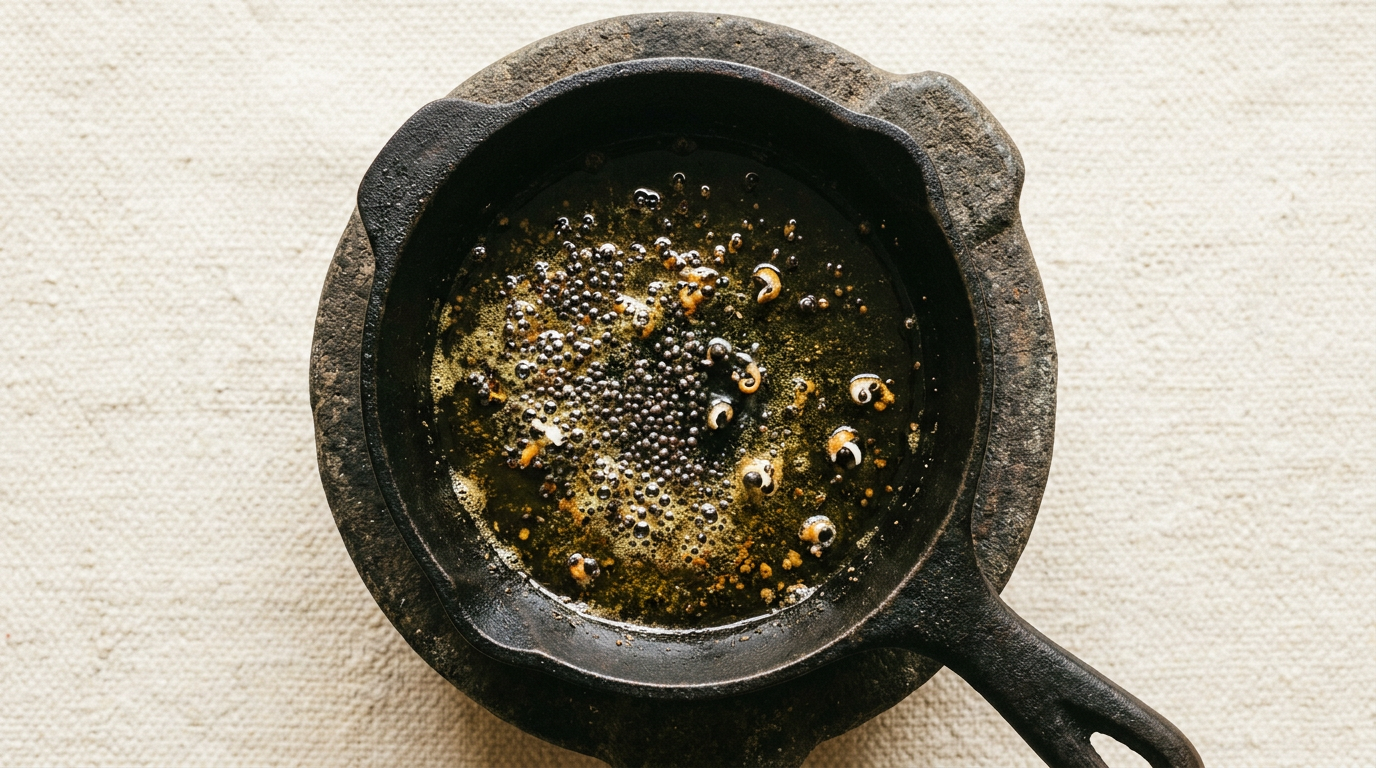
The sound is unmistakable: a sharp, percussive crackle as a spoonful of whole spices hits hot, liquid gold. In kitchens from Kerala to Kolkata, this is the opening chord of a symphony. This technique—known as tadka, chaunk, baghar, or simply tempering—is the fundamental flavor-building process of South Asian cuisine. The tempering spices science behind this 90-second event is a masterclass in chemistry, transforming dormant seeds and buds into aromatic powerhouses.
The Alchemy of Hot Fat
Many cooking processes rely on the Maillard reaction, the browning that occurs between amino acids and reducing sugars. But tempering is different. It's about using hot fat as a solvent to extract and carry flavor. Think of a whole spice like a locked treasure chest. Inside are volatile oils, the source of its aroma and taste. Grinding the spice breaks the chest open, but exposes those delicate oils to oxygen, causing them to degrade quickly.
Tempering is a more elegant solution. The hot fat—traditionally ghee, but also mustard or coconut oil—is the key. It efficiently unlocks and dissolves the fat-soluble compounds trapped within the spice's cellular structure, infusing the oil itself with a complex, layered aroma that water alone could never achieve [1]. This newly created flavor-infused fat then coats every grain of rice or lentil in the final dish, ensuring a depth of flavor that is pervasive, not just sprinkled on top.
From Seed to Sensation: The Case of Mustard
Consider the humble black mustard seed. Raw, it's mostly crunchy and mildly nutty. But drop it into a few tablespoons of hot fat, and a dramatic transformation unfolds. As the temperature rises, the seeds begin to pop, their outer shells cracking. This isn't just physical; it's deeply chemical.
The heat triggers enzymatic reactions inside the seed, converting compounds called glucosinolates into isothiocyanates—specifically allyl isothiocyanate, the same compound that gives wasabi and horseradish their signature punch [2]. You are, in effect, creating a new, more potent flavor molecule in real-time. This is why a dal finished with a tadka of popped mustard seeds pulses with a gentle, radiating heat that a raw seed could never provide. Whether you find them at a Patel Brothers in New Jersey, sold by the ounce, or on a market stall on London's Southall Broadway, these tiny spheres hold a universe of potential energy waiting for heat to set it free.
Unlocking Woodsy Warmth: Cloves and Eugenol
While mustard seeds pop and sputter, other spices behave differently. Take cloves, the dried, unopened flower buds of the Syzygium aromaticum tree. A clove's dominant flavor compound is eugenol, a powerfully aromatic oil that makes up 70–90% of its essential oil content [3]. This compound is responsible for the warm, sweet, and slightly medicinal scent we associate with winter baking and spiced chai.
When added to hot ghee, the clove doesn't pop. Instead, it swells slightly as the fat permeates its woody structure, pulling out the eugenol. The hot fat becomes a carrier for this intense aroma, turning it from a sharp point of flavor into a foundational, ambient warmth that permeates an entire dish. The difference between a raw and a tempered spice is not one of degree, but of kind.
| Feature | Raw Spice (e.g., Mustard Seed, Clove) | Tempered Spice (in Hot Ghee) |
|---|---|---|
| Aroma | Muted, nutty, or woody | Pungent, complex, intensely aromatic |
| Flavor | Mild, one-dimensional, sometimes bitter | Sharp, layered, warm, infused into the oil |
| Key Compounds | Trapped (e.g., Glucosinolates, Eugenol) | Released & Transformed (e.g., Isothiocyanates, free Eugenol) |
| Texture | Hard, crunchy | Popped, softened, infused |
| Culinary Role | Garnish, texture | Foundational flavor base |
More Than a Garnish
The most persistent misunderstanding, a relic of a colonised-food perspective, is to view tempering as a final, optional garnish. It is not. This crucial step is the architectural blueprint for the dish. In a Bengali kitchen, the selection of spices for the phoron—perhaps nigella seed, cumin, and a dried bay leaf in pungent mustard oil—defines the character of the entire meal. It's a decision as fundamental as choosing between olive oil and butter in a French sauce.
Understanding the tempering spices science moves us beyond imitation and toward intuition. It's the difference between following a recipe and truly understanding how to build flavor from the ground up. This knowledge, passed down through generations and now increasingly validated by modern chemistry, is at the heart of what makes this food so compelling. For a deeper dive into the molecules that make our food delicious, visit our page on [/science](/science).
Frequently Asked Questions
*What is the difference between bhuna and tadka?*
Tadka (or tempering) is the short process of frying whole spices in hot fat to release their aromas. Bhuna is a longer process of sautéing ingredients, often including onions, ginger, garlic, and ground spices, to build a deep, caramelized flavor base. A tadka can be the first step of a bhuna process or added as a final flourish to a finished dish like dal.
Why use whole spices instead of ground for tempering?
Whole spices contain their volatile oils within a protective cellular structure. They can withstand the high heat of tempering, releasing their flavor gradually without burning. Ground spices have a much larger surface area and will burn almost instantly in hot oil, creating a bitter, acrid taste.
My spices burned! What went wrong?
You likely had the heat too high, or you cooked them for too long. Tempering is a fast process—often 30 to 90 seconds. The oil should be hot enough for the spices to sizzle immediately, but not smoking. When mustard seeds start to pop or cumin seeds turn a shade darker and fragrant, it's done. Have your next ingredients ready to add to the pan to stop the cooking process.
Can I temper spices in water?
No. The key flavor compounds in many whole spices (like eugenol in cloves or curcuminoids in turmeric) are fat-soluble, not water-soluble. Hot fat acts as a solvent to extract and carry these flavors. Water will simply boil them, resulting in a much flatter, less aromatic flavor profile.
Sources & citations
- McGee, Harold. On Food and Cooking: The Science and Lore of the Kitchen. Scribner, 2004.
- The University of Sydney. "Glucosinolates - The Good and the Bad of the Cabbage Family." sydney.edu.au. Accessed 2023.
- Cortés-Rojas, D. F., et al. "Clove (Syzygium aromaticum): a precious spice." Asian Pacific Journal of Tropical Biomedicine, vol. 4, no. 2, 2014, pp. 90-96, www.ncbi.nlm.nih.gov/pmc/articles/PMC3819475/.
- Britannica, The Editors of Encyclopaedia. "Spice and herb". Encyclopedia Britannica, 28 Aug. 2023, https://www.britannica.com/topic/spice-and-herb.