
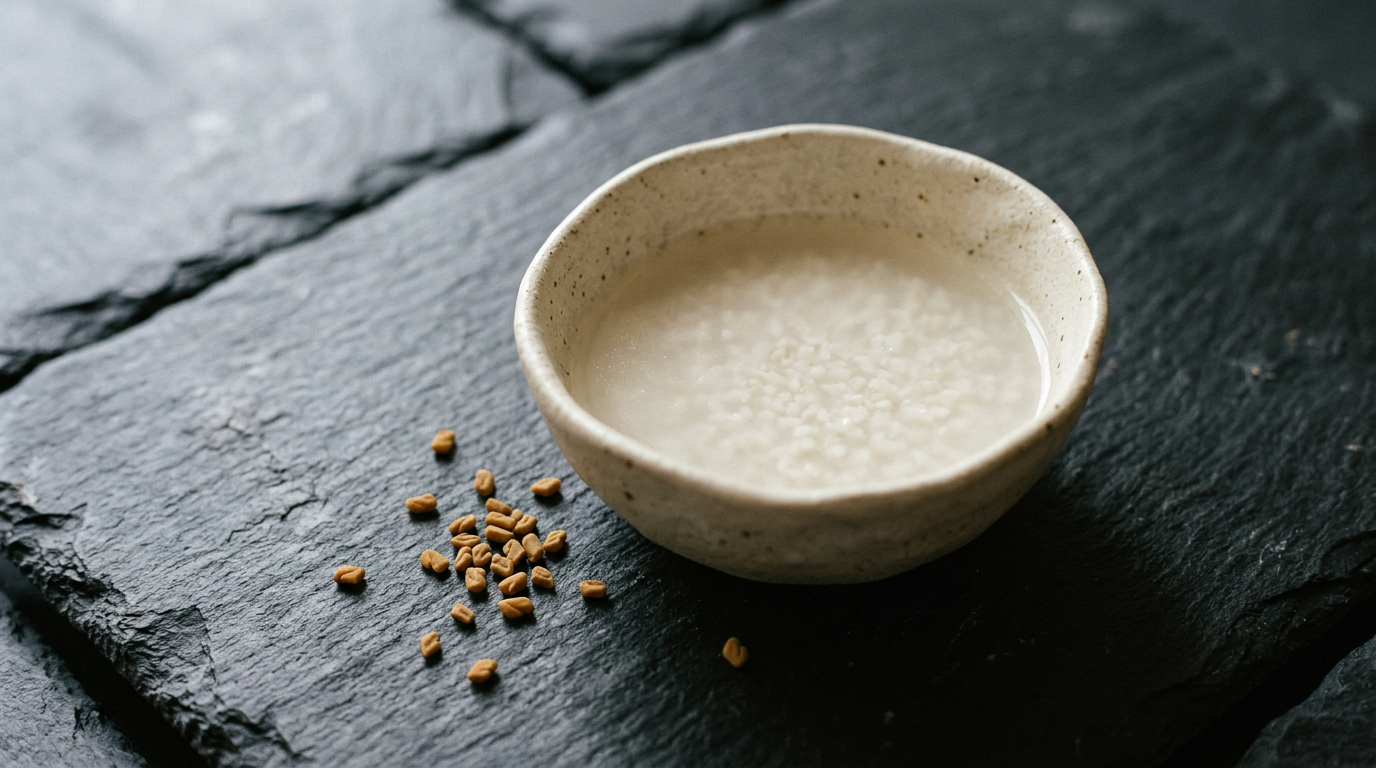
Rice water, the cloudy liquid left from washing rice, is a centuries-old hair treatment known for its strengthening effects. Modern cosmetic science now confirms its value, attributing benefits to compounds like inositol, amino acids, and antioxidants that protect and repair hair. A comprehensive 2023 review highlights its potential for improving hair elasticity and reducing friction, validating ancient wisdom with clinical data [1, 2].
The Heian Secret to Floor-Length Hair
Long before it became a social media trend, rice water was a revered beauty staple. The practice is most famously documented among the court ladies of Japan’s Heian period (794 to 1185). These women were known for their stunning, floor-length hair, called suberakashi, which they maintained through a ritual known as Yū-sū-rū—rinsing it with the water left over from washing rice [4].
This wasn't an elaborate concoction, but an act of simple resourcefulness. The water that would have otherwise been discarded was repurposed into a nourishing treatment. It’s a quiet lesson in sustainability, a philosophy where nothing of value is wasted. This tradition, born from a desire for strong, healthy hair, was passed down through generations, holding its place long before we had the labs to explain why it worked.
From Kitchen Byproduct to Lab Bench
For centuries, the evidence was purely observational: hair felt stronger, looked shinier, and grew longer. Today, we can see it on a molecular level. When scientists analyze rice water, they find a rich composition of compounds beneficial for hair.
A 2023 review in the journal Cosmetics breaks down the key components that make rice water so effective [1].
| Component | Function in Hair Care |
| :------------ | :------------------------------------------------------------------- |
| Inositol | A carbohydrate that penetrates and repairs damaged hair from within. |
| Amino Acids | The building blocks of protein, helping to strengthen the hair root. |
| Starch | Coats the hair shaft, reducing friction and improving elasticity. |
| Antioxidants| Protects hair from environmental damage caused by free radicals. |
One of the most remarkable findings relates to inositol. Studies show that it remains in the hair even after the rice water is rinsed out, offering a continuing protective shield against damage and friction [2]. The amino acids help fortify the hair’s protein structure, while the starches provide a gentle coating that helps detangle and add shine. It’s a multi-pronged approach to hair care, delivered in one simple, natural liquid.
Spicing the Rinse: A Modern Synthesis
While the Japanese tradition provides a powerful foundation, other cultures have their own botanical wisdom for hair care. In our work, we look for synergies—where combining two traditions creates something more effective than either one alone. When it comes to rice water, the perfect partner is Fenugreek (Trigonella foenum-graecum).
Fenugreek seeds have been a cornerstone of Ayurvedic and Middle Eastern hair care for millennia. While rice water excels at strengthening with starches and inositol, fenugreek brings a different set of properties to the table. The seeds are rich in proteins and lecithin, a natural emollient that nourishes and conditions the hair follicle [3].
Most importantly, when soaked, fenugreek seeds release a slippery substance called mucilage. This natural conditioner provides incredible slip, making hair easier to detangle and leaving it feeling soft and moisturized. The combination is a masterclass in botanical synergy:
- Rice Water: Strengthens the hair structure, reduces breakage, and adds shine.
- Fenugreek: Conditions, softens, and nourishes the scalp and strands.
Together, they create a holistic treatment that strengthens and softens in a single step. It’s a rinse that honors the wisdom of Heian Japan while embracing the nourishing power of a spice celebrated from India to the Mediterranean. This is what it means to build on tradition—not just to replicate it, but to see the connections that create something new and uniquely effective.
Frequently Asked Questions
1. How do I make a rice and fenugreek rinse?
Soak a half-cup of rice and one tablespoon of fenugreek seeds in two cups of water for at least 30 minutes, or up to 24 hours to ferment. Swirl, then strain the cloudy liquid into a clean jar. After shampooing and conditioning, pour the rinse over your hair, massaging it into your scalp and strands. Let it sit for up to 20 minutes before rinsing with cool water.
2. What's the difference between plain and fermented rice water?
Fermenting the rice water (letting it sit at room temperature for 12-24 hours) lowers its pH to more closely match the natural pH of your hair, which helps seal the cuticle. Fermentation may also increase the concentration of antioxidants [1].
3. How often should I use it?
Start with once a week. Both rice water and fenugreek contain proteins. For some hair types, especially low-porosity hair, frequent protein treatments can lead to stiffness. Observe how your hair responds and adjust accordingly.
4. Is it suitable for all hair types?
Generally, yes. It can be particularly beneficial for damaged, brittle, or high-porosity hair. If you have protein-sensitive or very fine hair, you may want to use it less frequently or for a shorter duration (e.g., 5 minutes instead of 20).
Sources & citations
- Marto, J., et al. (2023). "Development of Rice (Oryza sativa L.)-Water-Based Hair-Care Formulation: A Traditional Ingredient with Promising Future." Cosmetics. https://www.mdpi.com/journal/cosmetics
- Gubitosa, J., et al. (2022). "Rice water: A traditional ingredient with emerging benefits for hair care." Journal of Cosmetic Dermatology. https://onlinelibrary.wiley.com/journal/14732165
- Goyal, S., et al. (2016). "Fenugreek: A review on its nutraceutical properties and usage in curing diseases." Journal of Pharmacognosy and Phytochemistry. https://www.phytojournal.com
- "Heian period." Encyclopædia Britannica. https://www.britannica.com/event/Heian-period