
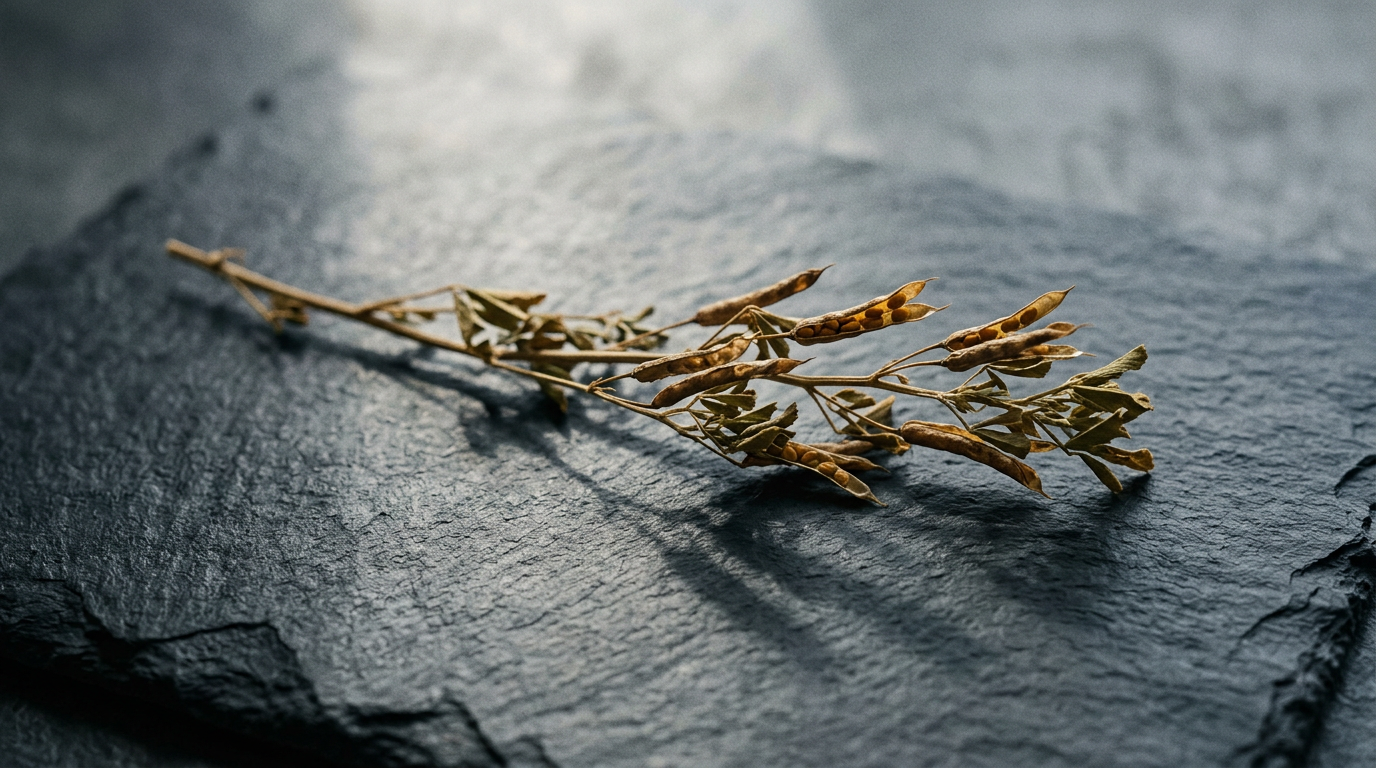
The most compelling story for any heritage food brand gulf 2026 is not about simple nostalgia. It’s a quiet revolution brewing in [Gulf](/region/gulf) kitchens, where ancestral ingredients are being fused with clinical science. As we approach the [Islamic New Year (Hijri 1448)](/festival/islamic-new-year-1448) on July 16, 2026, this synthesis, exemplified by spices like fenugreek, points to a new, evidence-backed future for wellness.
The Misread Signal
For years, the global wellness market has viewed “heritage” food through a lens of rustic simplicity. It’s a marketing story of sepia-toned photos and rediscovered family recipes. While charming, this misses the point. The real work happening on the ground, particularly in the UAE and KSA, is far more rigorous. It treats ancestral knowledge not as a relic, but as a hypothesis—a vast, time-tested dataset waiting for modern validation.
This isn't about just recreating grandmother’s dishes. It’s about understanding why grandmother used certain ingredients. Why fenugreek for a new mother? Why a pinch of it in a slow-cooked stew? This shift from the what to the why is creating a space for a new generation of makers and thinkers who are as comfortable reading a clinical trial as they are a family cookbook.
A Case Study: Fenugreek
Consider fenugreek (Trigonella foenum-graecum), a spice whose legacy stretches from the Mediterranean to India. In the [UAE](/region/uae), it lends a subtle, savory depth to the festive dish harees. In Egypt (EGY), roasted helba seeds are brewed into a popular, comforting tisane believed to warm the body. In the souqs of Riyadh (KSA), it’s still sold by the tola, a traditional unit of mass, prized for its robust character. And in India (IND), its seeds are a cornerstone of tadka while its leaves, methi, are a beloved winter green.
This is the heritage. Here is the science.
The distinctive, bittersweet aroma of fenugreek, often likened to maple syrup, comes from a compound called sotolon [1]. Beyond its sensory profile, fenugreek is one of the most clinically studied traditional spices. A significant body of research points to its high soluble fiber content, which may play a role in modulating blood sugar absorption [2]. Its reputation as a galactagogue—a substance that promotes lactation—is also supported by modern studies, validating centuries of use as a postpartum tonic across cultures [3].
This dual identity is key. It's a culinary staple with a robust scientific file. It’s not one or the other; it’s both. The power lies in holding these two truths at once.
The New Synthesis in Practice
What does this look like on the shelf and in the kitchen? It looks like a small brand sourcing fenugreek from a specific cooperative in Rajasthan, not because it’s a good story, but because that region’s soil chemistry produces a higher concentration of the desired bioactive compounds, verified by lab analysis. It looks like a chef in Dubai developing a modern dish that uses a fenugreek extract standardized for its 4-hydroxyisoleucine content, precisely because they want a specific metabolic effect, not just a flavor note.
A generation is emerging that demands both the poetry of provenance and the prose of a peer-reviewed paper. They have global palates but are increasingly seeking nutritional wisdom from their own backyards. This is the environment where a new kind of heritage food brand gulf 2026 is being forged—one built on transparency, efficacy, and a deep respect for both ancient and modern ways of knowing.
As we look toward the Islamic New Year, a time of reflection and renewal, this culinary movement feels particularly resonant. It’s about honoring the past not by preserving it in amber, but by carrying its wisdom forward into a new, more intentional future. The quiet, evidence-backed approach is the defining characteristic of the most interesting heritage food brand gulf 2026 players. They aren't the loudest, but their foundations are the deepest.
### Frequently Asked Questions
- What is fenugreek and why is it significant in the Gulf?
Fenugreek, or helba in Arabic, is a versatile spice used for its flavor and traditional medicinal properties. It's a key ingredient in regional dishes like harees and is culturally significant as a wellness tonic, particularly for new mothers.
- How does this "heritage-meets-science" approach differ from traditional cooking?
It goes beyond simply following a recipe. It seeks to understand and verify the functional benefits of traditional ingredients using modern scientific methods, such as chemical analysis and clinical studies, to confirm their efficacy.
- What are the scientifically studied benefits of fenugreek?
Research suggests fenugreek may help regulate blood sugar levels due to its high soluble fiber content. It is also studied for its potential as a galactagogue (promoting lactation) and for its anti-inflammatory properties [2, 3].
- Why is the Islamic New Year a relevant time to discuss this trend?
The Islamic New Year marks a time of reflection on the past and intention for the future. This culinary trend mirrors that sentiment by respectfully examining past traditions to build a more informed, evidence-based future for food and wellness.
Sources & citations
- G. Arjun, K. M. N., & Kumar, D. (2022). Sotolon: A potent flavor compound in foods and its versatile bioactivities. Food Bioscience, 49, 101886. https://www.sciencedirect.com/journal/food-bioscience
- Neelakantan, N., Narayanan, M., de Souza, R. J., & van Dam, R. M. (2014). Effect of fenugreek (Trigonella foenum-graecum L.) on glycaemic control in adults with type 2 diabetes mellitus: a systematic review and meta-analysis. Journal of nutrition, 144(2), 167-74. https://pubmed.ncbi.nlm.nih.gov/24282339/
- Khan, T. M., Wu, D. B. C., & Dolzhenko, A. V. (2018). Effectiveness of fenugreek as a galactagogue: A network meta-analysis. Phytotherapy research, 32(3), 438-451. https://onlinelibrary.wiley.com/journal/10991573
- Food and Agriculture Organization of the United Nations (FAO). Trigonella foenum-graecum. https://www.fao.org/
- Al-Jasass, F. M., & Al-Jasser, M. S. (2012). Chemical Composition and Fatty Acid Content of Some Spices and Herbs under Saudi Arabia Conditions. The Scientific World Journal, 2012, 859892. https://www.hindawi.com/journals/tswj/2012/859892/