
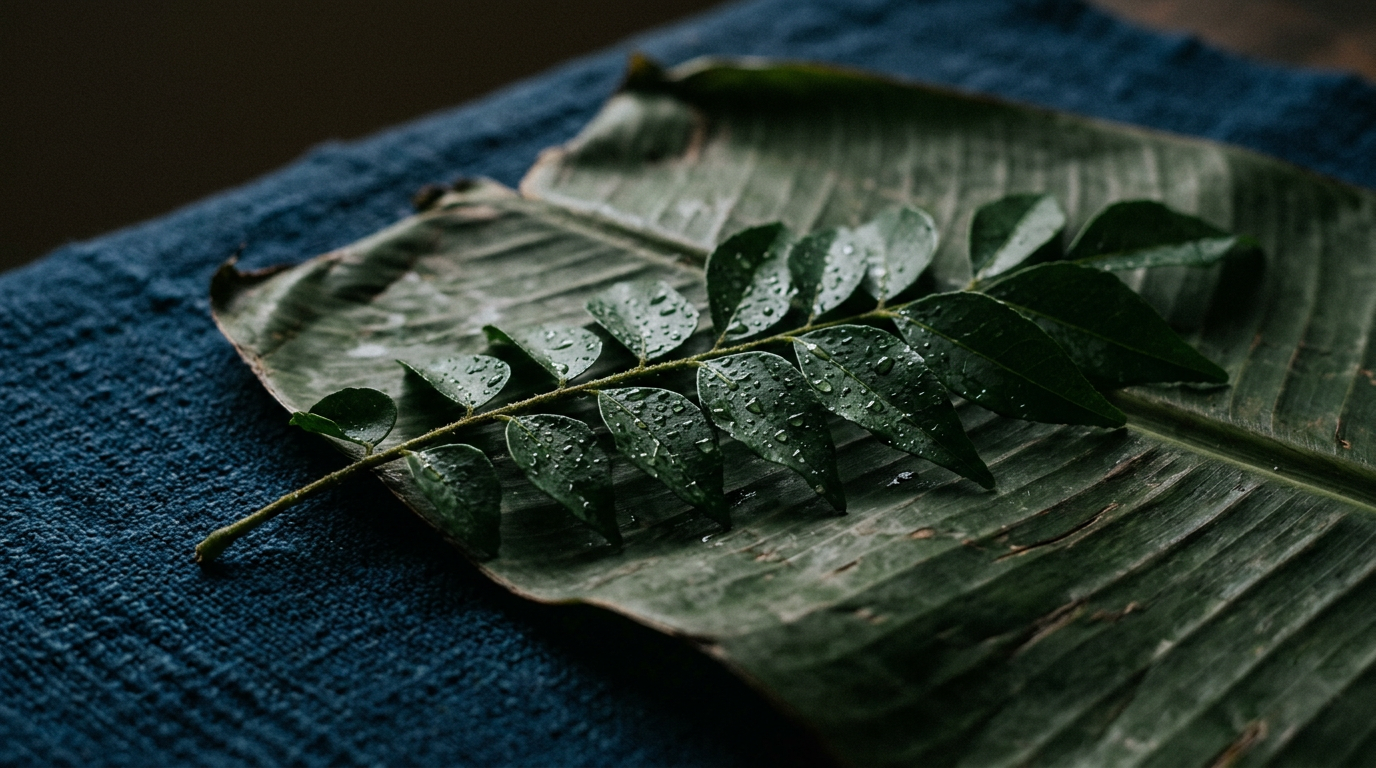
The incredible curry leaves benefits Onam feasts showcase are a masterclass in culinary wisdom. Far more than a garnish, these glossy leaves—Murraya koenigii—are a functional powerhouse, traditionally used to aid digestion and balance the metabolic impact of the sprawling, multi-course Sadhya. They are the quiet, fragrant architects of the festival's gastronomic harmony, wedding flavour to wellbeing.
The Scent of Celebration
When [Onam](/festival/onam) arrives on September 2nd, 2026, kitchens across [Kerala](/region/india) and the global Malayali diaspora will fill with a singular, complex perfume. It's the scent of coconut oil heating in an uruli (a heavy bronze pan), followed by the explosive crackle of mustard seeds, and then, the star of the show: a generous handful of fresh [/spice/curry-leaves](curry leaves). This tadka, or tempering, is the foundational flavour chord for nearly every dish in the magnificent Onam Sadhya, a vegetarian feast traditionally served on a banana leaf with up to 26 different preparations. While the vibrant pookalam (floral carpet) greets you at the door, it's the aroma of frying curry leaves that signals the feast has truly begun.
Beyond Garnish: The Pharmacology of a Feast
For generations, many of us were taught to push the curry leaf to the side of the plate. It was seen as a mere aromatic, its job done once it had infused the oil. Modern science, however, confirms what indigenous wisdom has always practiced: to discard the leaf is to miss the point entirely.
Murraya koenigii is rich in a class of bioactive compounds called carbazole alkaloids, including mahanimbine, koenimbine, and girinimbine [1]. These compounds are potent antioxidants, helping to neutralize the free radicals that contribute to cellular stress. In the context of a rich meal, this is more than a theoretical benefit. The Sadya, for all its plant-based glory, is calorically dense—a joyous onslaught of carbohydrates, fats, and complex flavours.
Clinical research points to the leaf's significant role in metabolic health. Studies have explored its hypoglycemic (blood sugar-lowering) effects, suggesting that compounds in the leaves may help improve insulin sensitivity and glucose uptake [2]. Furthermore, its anti-inflammatory and hepatoprotective (liver-protecting) properties offer a compelling argument for its starring role in a feast designed for communal indulgence. The curry leaves benefits Onam traditions have intuitively harnessed for centuries are now being validated in the lab.
The Sadya's Digestive Conductor
Think of the Sadya as a symphony. You have the percussive saltiness of the upperi (banana chips), the deep bass of the kalan (a yogurt and yam stew), the bright notes of the pachadi (a yogurt-based side), and the sweet crescendo of the payasam (a milk or jaggery-based pudding). The curry leaf is the conductor.
Its unique flavour—a slightly bitter, citrusy, and deeply savoury note—cuts through the richness, preventing any single dish from becoming overwhelming. But its function is more than sensory. By stimulating digestive enzymes and offering anti-inflammatory support, the curry leaf acts as a built-in digestive aid for the entire meal [3]. It’s a sophisticated, elegant solution to a universal problem: how to enjoy a grand feast without feeling overwhelmed by it. The practice of including curry leaves isn't just about tradition; it's a deeply intelligent culinary strategy.
A Tale of Two Markets
The potency of a curry leaf is directly tied to its freshness. In a village in Kerala, it’s often plucked from a shrub in the backyard just moments before being tossed into the pan. This is the ingredient in its truest form: vibrant, bursting with essential oils, and at its peak pharmacological power. At a bustling hub like Chalai Market in Thiruvananthapuram, you'll see vendors selling mountains of these fragrant sprigs, their freshness a non-negotiable mark of quality.
Contrast this with the experience of the diaspora. In the sprawling Al Aweer Fruit & Vegetable Market in Dubai, a vital lifeline for the UAE's large Indian community, fresh curry leaves are a prized commodity. They arrive by air, sold in bundles known as kattas, and are quickly snapped up by shoppers preparing for Onam. While refrigeration technology has improved, there's a quiet understanding that every hour since being picked in India diminishes its power. This global supply chain, chasing the freshness of a backyard shrub, highlights the immense value locked within this seemingly humble leaf. It’s a challenge that generic spice brands, focused on long-shelf-life dried products, are structurally unable to meet.
To truly understand curry leaves is to understand that they are not a dried spice. They are a fresh herb, whose culinary and functional magic is fleeting. This is why tradition insists on using them fresh, and why we believe their story is just beginning to be told.
FAQs About Curry Leaves
1. Should you eat the curry leaves in your food?
Absolutely. The leaves themselves contain the highest concentration of the beneficial carbazole alkaloids, fiber, and vitamins. Pushing them aside is like throwing away the most nutritious part of the dish.
2. What is the difference between curry leaves and curry powder?
This is a common point of confusion, especially in the West. Curry leaves are fresh leaves from the Murraya koenigii tree with a complex, citrusy aroma. Curry powder is a ground spice blend, typically containing turmeric, cumin, coriander, and other spices. It does not usually contain curry leaves.
3. How can I keep curry leaves fresh?
To maximize their lifespan, gently wash and thoroughly pat them dry. You can then store them in an airtight container in the refrigerator for up to two weeks. For longer storage, they freeze beautifully, retaining much of their flavour and aroma.
Sources & citations
- Gahlaut, A., & Shirolkar, A. (2017). A review on phytochemistry and pharmacology of Murraya koenigii. World Journal of Pharmacy and Pharmaceutical Sciences, 6(8), 1646-1674. https://www.wjpps.com/
- Tembhurne, S. V., & Sakarkar, D. M. (2009). Hypoglycemic effects of fruit juice of Murraya koenigii (L) in alloxan induced diabetic mice. International Journal of PharmTech Research, 1(4), 1589-1593. https://sphinxsai.com/
- Iyer, D., & Patil, U. K. (2012). Assessment of gastroprotective effects of Murraya koenigii root extracts. Journal of Young Pharmacists, 4(4), 232–237. https://www.ncbi.nlm.nih.gov/pmc/articles/PMC3543972/