
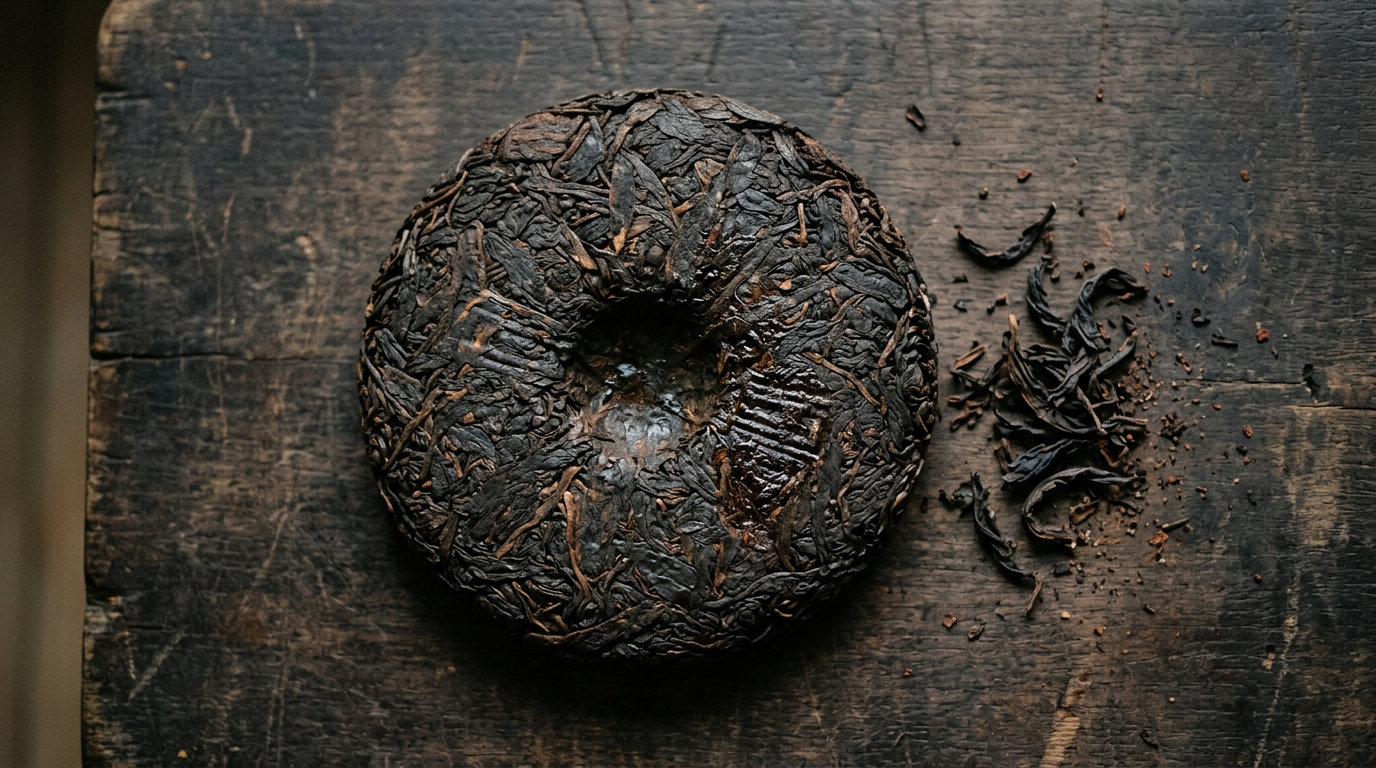
The time-honored practice of drinking pu-erh tea after a heavy meal is more than just tradition. A growing body of research on pu-erh tea digestion science reveals its fermented compounds can aid lipid metabolism and support gut health. This ancient brew offers a scientifically-backed path to post-meal comfort, moving beyond anecdotal belief to clinical evidence.
That feeling of pleasant lethargy after a big Sunday roast or a decadent pasta dinner can quickly curdle into discomfort. It's a universal experience, and for centuries, cultures around the world have developed rituals to manage it. In the mountainous Yunnan province of southwestern China, the answer has long been a cup of pu-erh tea.
For over 1,500 years, this unique fermented tea has been cherished not just for its deep, earthy flavor but for its perceived ability to “cut through the grease.” What was once passed down as generational wisdom—a grandmother’s advice to sip pu-erh after a fatty meal—is now being explored in clinical labs. And the findings suggest they were onto something profound.
The Tea That Ages Like Wine
Unlike green, oolong, or black teas, which are preserved through firing or oxidation, pu-erh undergoes a true microbial fermentation, much like cheese or kombucha. After the leaves of the large-leaf Camellia sinensis var. assamica trees are harvested and withered, they are either allowed to age and ferment slowly over years (known as sheng or raw pu-erh) or put through an accelerated, controlled fermentation process over several weeks (shou or ripe pu-erh).
This fermentation transforms the chemical profile of the leaves, creating a vast ecosystem of beneficial bacteria and fungi. It’s this living, evolving character that makes pu-erh a fascinating subject for modern science and gives it a complexity that cannot be replicated by simple flavoring. It's a product of time, place, and microbiology.
From Dim Sum Halls to the Laboratory
Walk into any bustling dim sum hall, from Hong Kong to the vibrant Cantonese communities of Flushing, Queens in the /region/us, and you'll see pots of dark, fragrant pu-erh on nearly every table. The tea is the default pairing for a reason. The meal, a parade of savory and often fried delights like spring rolls, pork buns, and sticky rice, is rich. Pu-erh is considered the perfect digestive counterbalance.
For years, this was purely anecdotal. But the emerging field of pu-erh tea digestion science is providing the footnotes to this long-held tradition. Researchers are now isolating the specific mechanisms behind its benefits:
- Aiding Fat Metabolism: A heavy, fatty meal can cause a spike in triglycerides and cholesterol. Studies have shown that compounds in pu-erh, particularly theabrownin (which gives the tea its dark color) and gallic acid, may help regulate this process. They appear to work by inhibiting certain enzymes involved in fat synthesis and absorption in the gut [1]. In essence, the tea seems to help the body process dietary fats more efficiently, potentially lessening the metabolic load of a rich meal.
- Nurturing the Gut Microbiome: The most exciting research centers on pu-erh's relationship with our gut. The microbes that ferment the tea leaves seem to have a positive, modulating effect on our own internal ecosystem. Studies indicate that regular consumption of pu-erh can promote the growth of beneficial bacteria and help balance the gut microbiota, which is foundational to digestive health and beyond [2, 3]. It’s not just a drink; it's a prebiotic and a source of postbiotics that feeds the very engine of our digestive wellness.
| Tea Type | Primary Process | Key Bioactive Compounds | Post-Meal Feeling |
| :--- | :--- | :--- | :--- |
| Green Tea | Firing (prevents oxidation) | EGCG, Catechins | Light, refreshing |
| Black Tea | Full Oxidation | Theaflavins, Thearubigins | Brisk, astringent |
| Pu-erh Tea | Microbial Fermentation | Theabrownin, Gallic Acid, Lovastatin | Grounding, settling |
Sourcing a Tea Worth Drinking
The rising interest in fermented foods has led to a flood of pu-erh on the market, but quality varies dramatically. True pu-erh comes from Yunnan, and its character is shaped by the region’s ancient tea trees and unique environment. A well-made ripe pu-erh should be smooth, rich, and earthy, with notes of camphor, dark chocolate, or damp forest floor—never muddy or tasting of pond water.
For those in the [UK](/region/uk) accustomed to strong black tea, a quality ripe pu-erh can be a wonderful entry point into the world of fermented teas. Its deep, robust flavor stands up well, without the tannic bitterness of a lower-grade black tea. Seeking out specialist importers, like those you might find tucked away in London's Borough Market, ensures you're getting a product that has been sourced with care and reflects the tea's true potential.
This isn't about finding another 'functional' hack. It's about reconnecting with a tradition that viewed food and drink as an integrated system of wellness. The science simply validates the wisdom of the ritual: sharing a pot of tea after a meal to help everything settle, together.
---
### Frequently Asked Questions
1. What does pu-erh tea taste like?
Ripe (shou) pu-erh is known for its dark, smooth, earthy, and sweet profile, often with notes of dark chocolate, wood, or malt. Raw (sheng) pu-erh is more complex and changes significantly with age; when young, it can be floral, astringent, and bright, mellowing into deeper, fruitier notes over decades.
2. How much caffeine is in pu-erh tea?
The caffeine content is generally comparable to that of black tea but can vary based on the specific tea and how it's brewed. The fermentation process may alter the caffeine molecules, and some people report it feels less 'jolting' than coffee or other teas.
3. Can I drink pu-erh tea every day?
Yes. In many parts of Asia, pu-erh is a daily beverage, enjoyed for both its taste and its gentle digestive support. As with any caffeinated beverage, moderation is key.
4. How do you brew pu-erh tea properly?
Traditionally, pu-erh is brewed Gongfu style. This involves using a small pot, a higher ratio of leaf-to-water, and multiple short infusions. A crucial first step is to 'rinse' the leaves by steeping them for 10-15 seconds and discarding the first infusion. This awakens the compressed leaves. Subsequent infusions can be as short as 20–30 seconds, increasing with each steep.
Sources & citations
- Cao, Z., et al. (2021). "A review of the composition, treatment, and health-promoting effects of Pu-erh tea." Food Research International. Available via: https://www.sciencedirect.com/journal/food-research-international
- Huang, F., et al. (2019). "Pu-erh tea regulates gut microbiota and metabolism in diverse domains." mSystems, American Society for Microbiology. Available via: https://journals.asm.org/journal/msystems
- Cai, X., et al. (2022). "Fermented tea, a potential modulator of gut microbiome and host health." Food & Function. Available via: https://pubs.rsc.org/en/journals/journalissues/fo
- The Editors of Encyclopaedia Britannica. (2024). "Tea." Encyclopaedia Britannica. Available via: https://www.britannica.com/topic/tea-beverage