
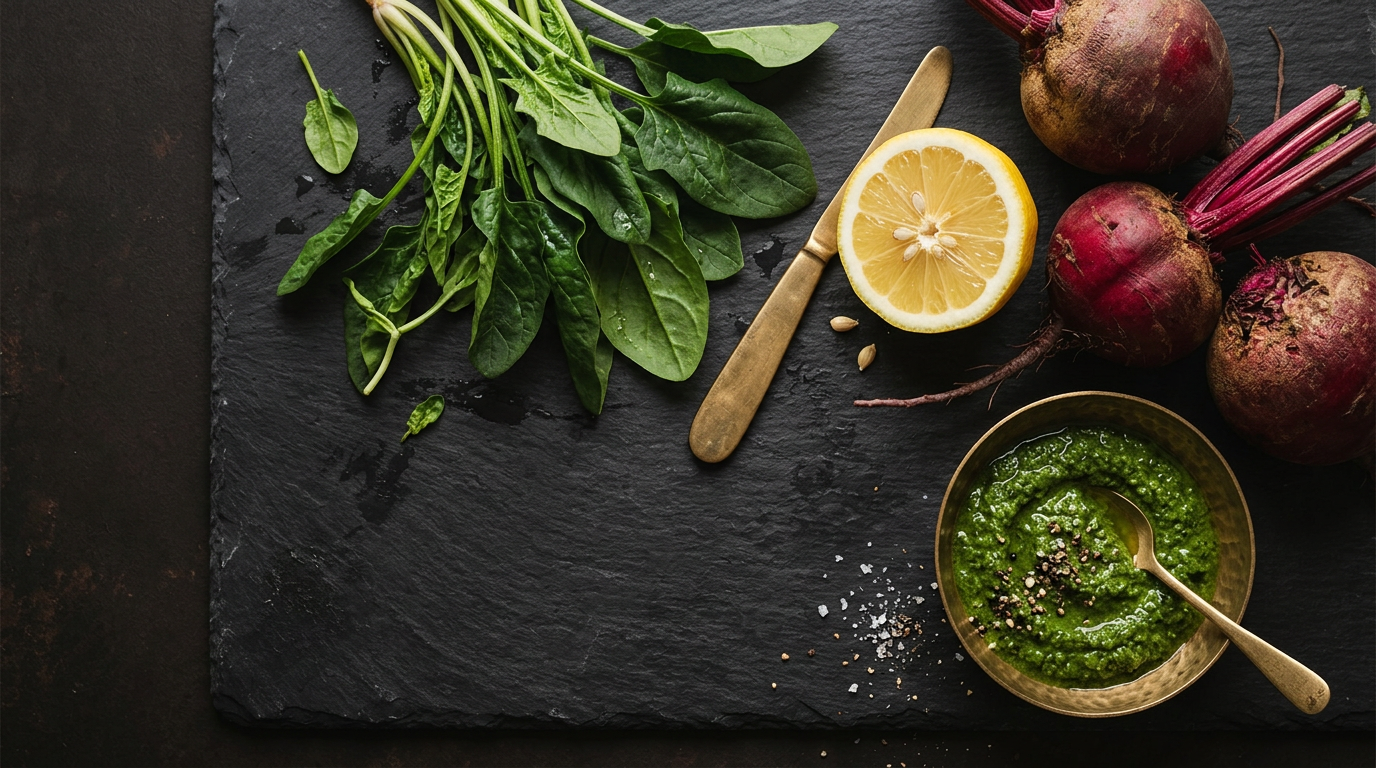
What are alkaline foods, and can they really transform your health? The concept of an alkaline diet suggests that eating certain foods can help maintain your body’s ideal pH balance, warding off disease. While the core idea is rooted in a misunderstanding of human physiology, the dietary pattern it promotes—one rich in fruits, vegetables, and certain spices—is powerfully good for you. Let's look at the real science.
Your body, it turns out, is an expert at managing its own pH. Blood pH is kept in a very tight, slightly alkaline range of 7.35 to 7.45, thanks to a robust, self-regulating system involving your lungs and kidneys [1]. A diet can't change your blood's pH. If it could, you'd be in serious medical trouble.
So, is the whole thing a myth? Not exactly. While your blood is stable, the food you eat does change the pH of your urine. Think of urinary pH as an indicator of the work your body is doing to maintain that perfect blood pH. A diet heavy in meat, dairy, and processed grains creates a higher 'acid load,' forcing your kidneys to work harder to buffer the acid and excrete it. This metabolic cost is what we should really be talking about.
Meet PRAL: The Score That Matters
Instead of thinking in terms of 'acid' or 'alkaline' foods, a more scientific approach is to look at a food's Potential Renal Acid Load, or PRAL score [2].
PRAL is a value assigned to foods based on the amount of acid or alkali they produce in the body after being metabolized. Foods that leave behind an acid residue (like protein and phosphate) have a positive PRAL score. Foods that leave behind alkaline minerals (like potassium, magnesium, and calcium) have a negative PRAL score. The goal isn't to eliminate all acid-forming foods—protein is vital!—but to balance the scales with plenty of alkaline-forming ones.
The Alkaline-Forming Pantry
A diet with a lower acid load is, by its nature, rich in whole plant foods. Here are some of the most effective alkaline-forming foods, with their approximate PRAL scores per 100g serving. Notice how some foods that taste acidic, like lemons, are actually alkaline-forming once metabolized.
| Food Item | Category | Approx. PRAL Score | Notes |
| :--- | :--- | :--- | :--- |
| Spinach, raw | Leafy Green | -14.0 | A true powerhouse. |
| Kale | Leafy Green | -8.0 | Versatile and potent. |
| Fennel | Vegetable | -7.9 | Crisp, with a light anise flavor. |
| Beets | Root Vegetable | -6.8 | Earthy, sweet, and vibrant. |
| Coriander Leaf (Cilantro) | Herb | -6.5 | Bright and essential in many cuisines. |
| Cucumber | Vegetable | -5.7 | Hydrating and cooling. |
| Lemon | Fruit | -2.5 | Despite its acidic taste. |
| Almonds | Nut | -2.0 | A great alkaline-forming snack. |
Where Spices Fit In
In many traditional food systems, there's an intuitive understanding of this balance. In India, a lentil dish (acid-forming) is rarely served without a generous garnish of fresh [coriander leaf](/ingredient-library/coriander-leaf) and a squeeze of lime (both alkaline-forming). A heavy paratha might be seasoned with [Ajwain](/spice/ajwain) (Carom seeds), a warming spice traditionally used to balance the meal and aid digestion.
Herbs and spices are nutritional lightweights in terms of calories but can be surprisingly dense in alkaline minerals like potassium and magnesium. While you don't consume them in large quantities, their consistent use shifts the net PRAL of your entire meal. At a farmers' market in the [US](/region/us), you might grab a bunch of cilantro; in a London market, you'd ask for fresh coriander. The goal is the same: adding a final, fresh, alkaline-forming flourish.
Even sparingly used spices like ginger and fenugreek seeds, ground into a curry blend, contribute to this balancing act. It's not about one 'superfood,' but the architecture of the entire plate.
What's the Real Benefit?
While an alkaline diet won't 'cure' cancer—a dangerous myth—a diet with a low acid load (i.e., high in fruits and vegetables) has several evidence-backed benefits:
- Bone Health: Some research suggests that a high dietary acid load may cause a subtle leeching of calcium from bones to buffer the acid, potentially impacting bone density over a lifetime [3]. A diet rich in alkaline-forming foods provides the potassium and magnesium that help preserve bone mineral density.
- Kidney Stone Prevention: By increasing urine pH and citrate, a diet high in alkaline-forming foods can help prevent the recurrence of calcium oxalate kidney stones [4].
- Muscle Mass: A lower acid load may help preserve muscle mass in older adults, as chronic low-grade metabolic acidosis can contribute to muscle breakdown.
Essentially, the benefits of 'alkaline foods' are the well-known benefits of a plant-rich diet, viewed through a different and useful chemical lens. It encourages a shift away from ultra-processed items toward the vibrant produce and spices our bodies have evolved to thrive on.
A Day of Alkaline-Leaning Eating
- Breakfast: Oatmeal with sliced almonds, banana, and a pinch of cinnamon.
- Lunch: A large mixed greens salad with cucumber, shredded beets, chickpeas, and a lemon-tahini dressing.
- Dinner: Baked salmon (acid-forming, but healthy) with a side of steamed asparagus and quinoa, finished with a squeeze of lemon.
- Snack: An apple or a handful of almonds.
---
Frequently Asked Questions
1. Is the alkaline diet for weight loss?
Indirectly. The diet emphasizes whole foods like fruits and vegetables, which are nutrient-dense and lower in calories than processed foods. This naturally supports a healthy weight, but weight loss isn't the primary mechanism.
2. Do I need to test my urine pH?
It's generally unnecessary. Focusing on incorporating more vegetables, fruits, nuts, and seeds into your diet is a more practical and effective approach than chasing a specific pH number on a test strip.
3. Are all fruits and vegetables alkaline-forming?
Almost all of them are. Some exceptions exist (like cranberries, which contain compounds that lead to more acidic urine), but as a general rule, piling your plate with a variety of produce is the single best thing you can do.
4. Can I still eat acid-forming foods like meat and grains?
Absolutely. The goal is balance, not elimination. Healthy acid-forming foods like fish, lentils, and whole grains provide essential nutrients like protein and fiber. Aim for a plate where alkaline-forming foods (vegetables) take up the most space.
Sources & citations
- Schwalfenberg, G. K. (2012). The Alkaline Diet: Is There Evidence That an Alkaline pH Diet Benefits Health? Journal of Environmental and Public Health. https://www.ncbi.nlm.nih.gov/pmc/articles/PMC3195546/
- Remer, T., & Manz, F. (1995). Potential renal acid load of foods and its influence on urine pH. Journal of the American Dietetic Association. https://www.jandonline.org/
- Frassetto, L., & Sellmeyer, D. (2018). Diet and body-acid-base-state in the context of bone demineralization and bone-sparing. Journal of Nutrition & Intermediary Metabolism. https://www.sciencedirect.com/
- Health Information and Services, University of California, San Francisco. (n.d.). Kidney Stone Diet.