
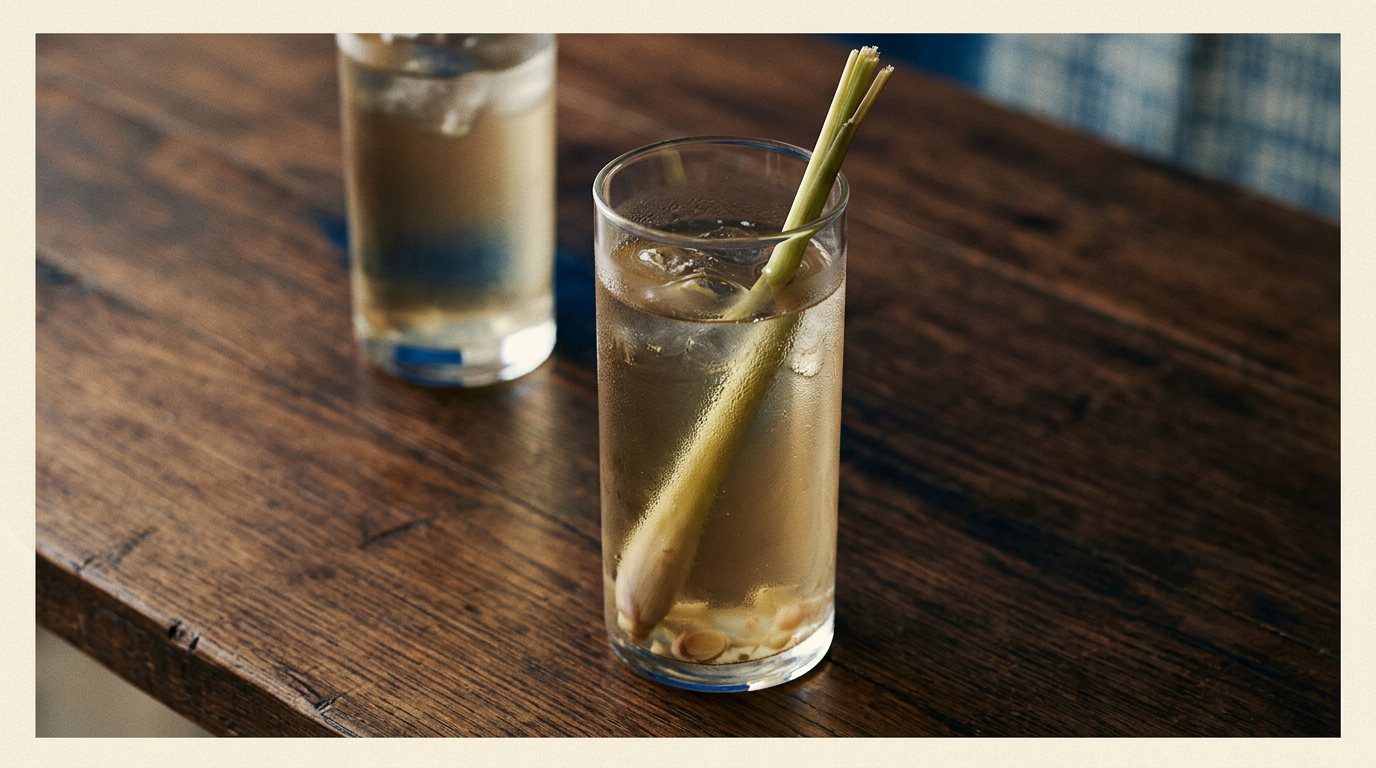
The key lemongrass tea benefits summer brings are not new, but they are potent. This aromatic, citrusy infusion acts as a natural diuretic and coolant, offering profound refreshment without the sugar or marketing budget of modern canned beverages. It's a simple, evidence-backed answer to summer heat, backed by centuries of use from Kerala to the Caribbean.
This became startlingly clear last weekend. The air was thick and heavy, the kind of heat that makes you want to lie on a cool floor. A friend came over, pulling a brightly coloured can from her bag. “You have to try this,” she said. “It has schisandra and L-theanine for calm focus.” It was a ‘functional’ cooler, an artifact of the modern wellness market, beautifully designed and backed by a compelling narrative about hacking your biology.
I put the kettle on. In my freezer, I keep a bag of pre-cut, bruised [lemongrass](/ingredient/lemongrass) stalks. I pulled a handful out, dropped them in a jug, and poured the hot water over them. The scent — a bright, grassy, almost-sherbet lemon — filled the kitchen. We left it to infuse while we talked, then poured it over ice.
Half an hour later, her expensive can was still half-full, sweating onto the table. Our glasses of pale-gold lemongrass tea were empty, and we were getting up to make another batch.
The Cooler in the Can vs. The Cooler from the Garden
What happened at my kitchen table wasn’t a formal study. It was a sensory verdict. My friend’s drink promised a function but delivered a complicated, slightly medicinal sweetness. The lemongrass tea promised nothing, yet delivered everything we needed in that moment: pure, clean-tasting refreshment.
This experience highlights a quiet tension between invented wellness and inherited wisdom. One is engineered in a lab and optimized in a boardroom; the other is cultivated in a garden and perfected over generations.
| Feature | The 'Functional' Cooler | My Lemongrass Tea |
| :--- | :--- | :--- |
| Ingredients | Carbonated Water, Erythritol, Hibiscus Flavor, Schisandra Extract, Citric Acid, L-Theanine, Stevia. | Water, Lemongrass. |
| Cost | $4.50 per can in the [USA](/region/us). | ~$0.20 per serving (a few stalks for a whole jug). |
| Feeling | Vaguely sweet, slightly synthetic aftertaste. | Clean, crisp, hydrating, cooling. |
| Backstory | A pitch deck about disrupting the beverage category. | Generations of mothers from Pune to Kingston. |
What the Lab Coats Say
This isn't just about nostalgia or a preference for the ‘natural.’ The feeling of being cooled and cleansed by lemongrass tea has a clear scientific basis. The star compounds in lemongrass (Cymbopogon citratus) are citral and geranial, which are responsible for its distinctive aroma and many of its benefits [1].
Most relevant on a hot summer day is its diuretic effect. A study published in the Journal of Renal Nutrition found that lemongrass tea increased urine output in subjects without causing electrolyte imbalances or other adverse effects [2]. This gentle flushing action can help reduce feelings of bloating and heat-induced sluggishness, a core reason the lemongrass tea benefits summer bodies so effectively.
Furthermore, citral has well-documented anti-inflammatory and antioxidant properties [3]. While you won’t feel these effects as acutely as the diuretic cooling, they contribute to a general sense of wellbeing. You’re not just hydrating; you are helping your body manage the low-grade oxidative stress that a hot day, pollution, and life in general can bring.
An Inheritance, Not an Invention
In my Aji’s garden in Pune, lemongrass wasn’t a ‘functional ingredient’; it was just Gavati Chaha (गवती चहा), the grass tea you grew to soothe a fever or settle a stomach. In the UK, finding fresh stalks this vibrant for less than £1.50 a pack can be a mission, a stark contrast to the weed-like abandon with which it grows in more tropical climates. It’s part of a global pharmacopeia of plants that we often file under [colonised-food](/blog/category/colonised-food)—knowledge systems devalued for being too common, too domestic, too ‘ethnic.’
But what the modern wellness industry is spending millions to create—a trusted, effective, low-sugar, plant-based beverage—already exists in this humble grass. It is a powerful reminder that some of the most potent technologies are not new at all. They are perennials, waiting in the soil. All you have to do is add water.
The next time summer beats you down, before you reach for the algorithmically-optimized can, perhaps reach for a stalk of lemongrass instead. The return on your small effort will be immeasurable.
FAQ
1. Does lemongrass tea have caffeine?
No, lemongrass tea is a naturally caffeine-free herbal infusion, making it a great choice for hydration any time of day or night.
2. How do you make fresh lemongrass tea?
Take 1-2 stalks of fresh lemongrass per cup of tea. Trim the root end and the dry, leafy tops. Crush the whitish bulb part with the back of a knife to release the oils. You can chop the stalk into 1-inch pieces. Place in a mug or teapot, and pour boiling water over it. Let it steep for 5-10 minutes. Strain and enjoy, hot or iced.
3. What does lemongrass tea taste like?
It has a light, crisp, and refreshing flavor profile with a distinct citrusy, lemony aroma and taste, but without the acidity of actual lemon.
4. Can I drink lemongrass tea every day?
For most people, enjoying a cup or two of lemongrass tea daily is considered safe. As with anything, moderation is key. The diuretic properties mean you should ensure you're also drinking plain water [2].
Sources & citations
- Ekpenyong, C. E., Akpan, E. E., & Daniel, N. E. (2014). Phytochemical constituents, therapeutic applications and nutritional values of Cymbopogon citratus Stapf (DC): a review. Global Journal of Pure and Applied Sciences, 20(2), 133-143. Available at: https://www.ajol.info/index.php/gjpas
- Gomes, F. S., et al. (2016). Diuretic and natriuretic evaluation of the Cymbopogon citratus (lemongrass) in rats. Journal of Renal Nutrition. Available at: https://www.jrnjournal.org/
- Shah, G., Shree, R., & Vaidya, P. (2011). A review of the traditional uses, phytochemistry, and pharmacology of Cymbopogon citratus (DC.) Stapf. Journal of Ayurveda and Integrative Medicine, 2(4), 1-13. Available at: https://www.ncbi.nlm.nih.gov/pmc/articles/PMC3217679/