
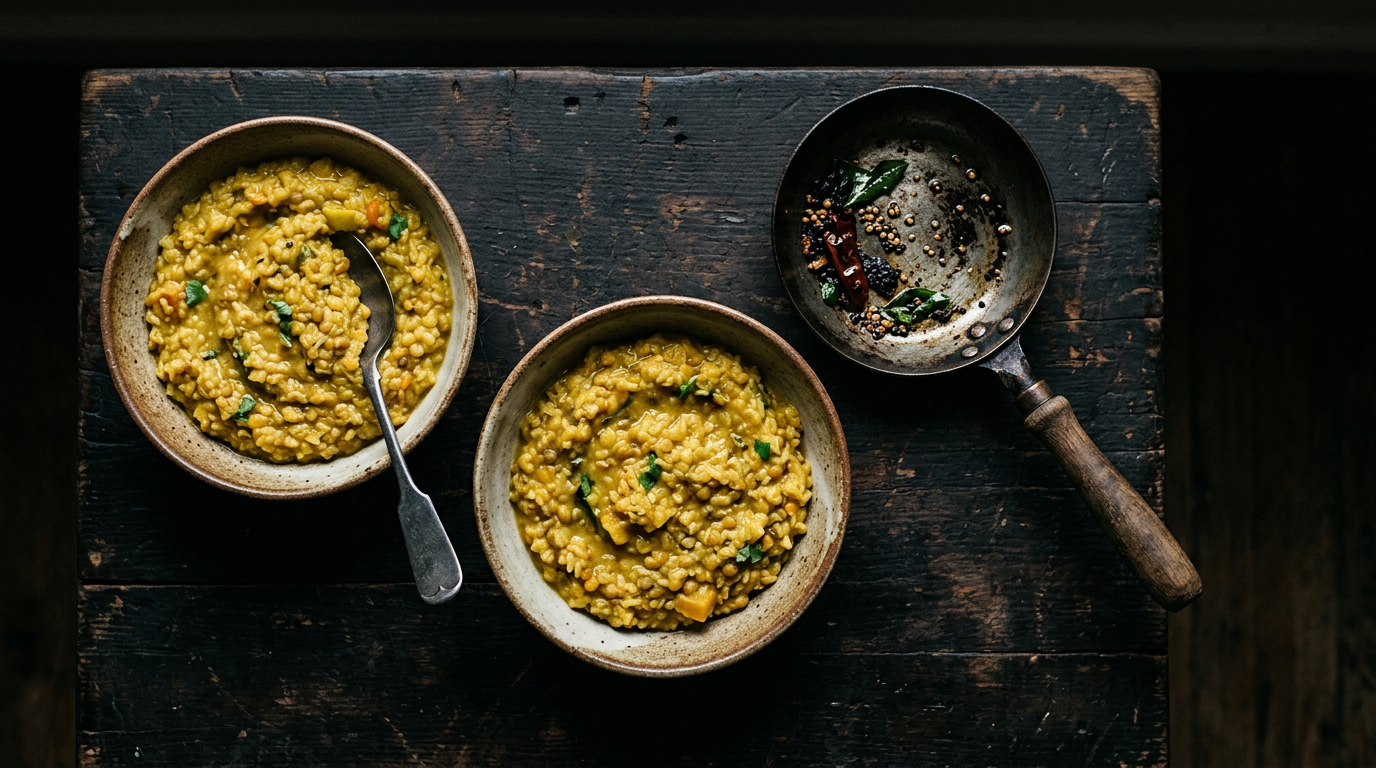
The best khichdi recipe for two is a simple, one-pot meal that balances comfort and nourishment. This version, using foxtail millet and moong dal, is designed for a quiet evening of connection. With a gentle tempering of asafoetida and turmeric, it's a deeply restorative dish perfect for sharing with a friend, especially as we approach the [International Day of Friendship](/festival/intl-friendship-day) on July 30th.
More Than Just Comfort Food
Khichdi is a dish that speaks a universal language of care. For generations, this humble porridge of rice and lentils has been the first food for babies and the last resort for the unwell. In Ayurveda, it's considered foundational, a tridoshic food believed to bring balance to the body’s core energies. It’s the original “cleanse” food, long before the term became a wellness commodity [1].
To cook khichdi for someone is an intimate gesture. It says, 'I want to nourish you, simply and completely.' It’s an edible sigh of relief, a retreat from the world of complex meals and demanding schedules. This isn't food for performance; it's food for presence. And sharing this particular khichdi recipe for two can be a quiet celebration of the friendships that sustain us.
The Alchemy of the ‘Tadka’
The soul of a great khichdi isn’t just in the grain and lentil, but in the final flourish of tempered spices, known as the tadka or chhonk. This is where fat, heat, and aromatics conspire to create flavour and unlock nutritional benefits.
At the heart of our tadka is Asafoetida (hing). Often misunderstood, this potent plant resin smells fiercely pungent in its raw state. But when bloomed in hot ghee or oil, its harshness mellows into a deeply savory, leek-and-garlic aroma that forms the backbone of countless lentil dishes. Its function is twofold: it adds an irreplaceable layer of umami, and it’s traditionally prized for its carminative properties, helping to make the lentils more digestible and reducing gas [2]. Sourcing pure, gluten-free asafoetida resin—not the common version bulked with wheat flour—is a detail that separates a good khichdi from a great one.
Alongside asafoetida, we use mustard seeds that pop and crackle, releasing a nutty pungency, and a generous pinch of [/spice/turmeric](/spice/turmeric). Here, the tadka does more than add colour. The active compound in turmeric, curcumin, is fat-soluble. By frying it in ghee, we make it vastly more bioavailable, allowing the body to absorb its anti-inflammatory properties more effectively [3].
Why Foxtail Millet?
While most khichdi is made with rice, we’ve opted for foxtail millet (kangni in Hindi, thinai in Tamil). This ancient, climate-resilient grain requires significantly less water than rice, a critical consideration in our changing world. For the eater, it offers a lower glycemic index and a delightful, toothsome texture that stands up beautifully in the final porridge [4].
This small substitution is a nod to a more diverse and sustainable pantry, honoring a grain that has nourished people across Asia and Africa for millennia. It’s a way of looking back to find a better way forward.
A One-Pot Khichdi Recipe for Two
This recipe is a canvas. Add seasonal vegetables like peas, carrots, or green beans with the millet if you wish. The consistency is a matter of personal taste—add more water for a looser, more porridge-like texture.
Yields: 2 generous servings
Prep time: 5 minutes
Cook time: 20-25 minutes
#### Ingredients:
- 1/2 US cup (100g) foxtail millet
- 1/2 US cup (100g) split yellow moong dal
- 3 cups (720ml) water, plus more if needed
- 1/2 tsp salt, or to taste
- 2 tbsp ghee (or coconut oil for a vegan option)
- 1 tsp black mustard seeds
- 1/4 tsp asafoetida (hing)
- 1/2 tsp turmeric powder
- Fresh cilantro, chopped, for garnish
- A dollop of full-fat yogurt or, for a British touch, clotted cream to serve
#### Instructions:
- Rinse: Combine the foxtail millet and moong dal in a fine-mesh sieve. Rinse under cool water until the water runs clear. Drain well.
- Cook: In a medium-sized heavy-bottomed pot or Dutch oven, add the rinsed millet and dal, 3 cups of water, and the salt. Bring to a boil, then reduce the heat to a low simmer. Cover and cook for 15-20 minutes, or until the grains are tender and the water is mostly absorbed. Stir occasionally to prevent sticking.
- Temper: While the khichdi simmers, prepare the tadka. In a small pan (a tadka pan is ideal), heat the ghee over medium heat. When the ghee is shimmering, add the mustard seeds. Once they begin to pop and sputter (this takes about 30 seconds), turn the heat to low and add the asafoetida and turmeric powder. Swirl the pan for just 10 seconds—don’t let the turmeric burn.
- Combine: Immediately pour the hot, sizzling tadka over the cooked khichdi. Stir well to combine everything. If the khichdi is too thick for your liking, stir in another 1/2 cup of hot water until you reach your desired consistency.
- Serve: Ladle the khichdi into two bowls. Garnish with fresh cilantro and serve warm with a spoonful of yogurt or clotted cream.
Frequently Asked Questions
1. What is the ideal grain-to-lentil ratio for khichdi?
A 1:1 ratio, as used in this khichdi recipe for two, creates a balanced dish that is both hearty and light. For a richer, more lentil-forward version, you can increase the dal to a 1:1.5 grain-to-dal ratio.
2. Can I make this khichdi vegan?
Absolutely. Simply substitute the ghee with a neutral, high-heat oil like coconut oil or avocado oil for both the cooking and the tadka.
3. Is khichdi good for an upset stomach?
Yes, it's one of the most recommended foods for convalescence. The combination of easy-to-digest moong dal and a simple carbohydrate, along with digestive spices like asafoetida and ginger (an optional addition), makes it gentle on the digestive system.
4. How should I store and reheat leftovers?
Store any leftovers in an airtight container in the refrigerator for up to 3 days. Khichdi will thicken considerably when cooled. To reheat, add a splash of water and heat gently on the stovetop or in the microwave, stirring until smooth and hot.
Sources & citations
[1] Pole, S. (2013). Ayurvedic Medicine: The Principles of Traditional Practice. Singing Dragon. (General reference for Ayurvedic principles).
[2] Mahendra, P., & Bisht, S. (2012). Ferula asafoetida: Traditional uses and pharmacological activity. Pharmacognosy Reviews, 6(12), 141–146. https://www.ncbi.nlm.nih.gov/pmc/articles/PMC3459456/
[3] Gota, V. S., et al. (2010). Safety and pharmacokinetics of a solid lipid curcumin particle formulation in osteosarcoma patients and healthy volunteers. Journal of Agricultural and Food Chemistry, 58(4), 2095–2099. https://pubs.acs.org/journal/jafcau
[4] Kam, J., et al. (2017). Millet Grains: Nutritional Quality, Processing, and Potential Health Benefits. Comprehensive Reviews in Food Science and Food Safety, 16(1). https://onlinelibrary.wiley.com/journal/15414337