
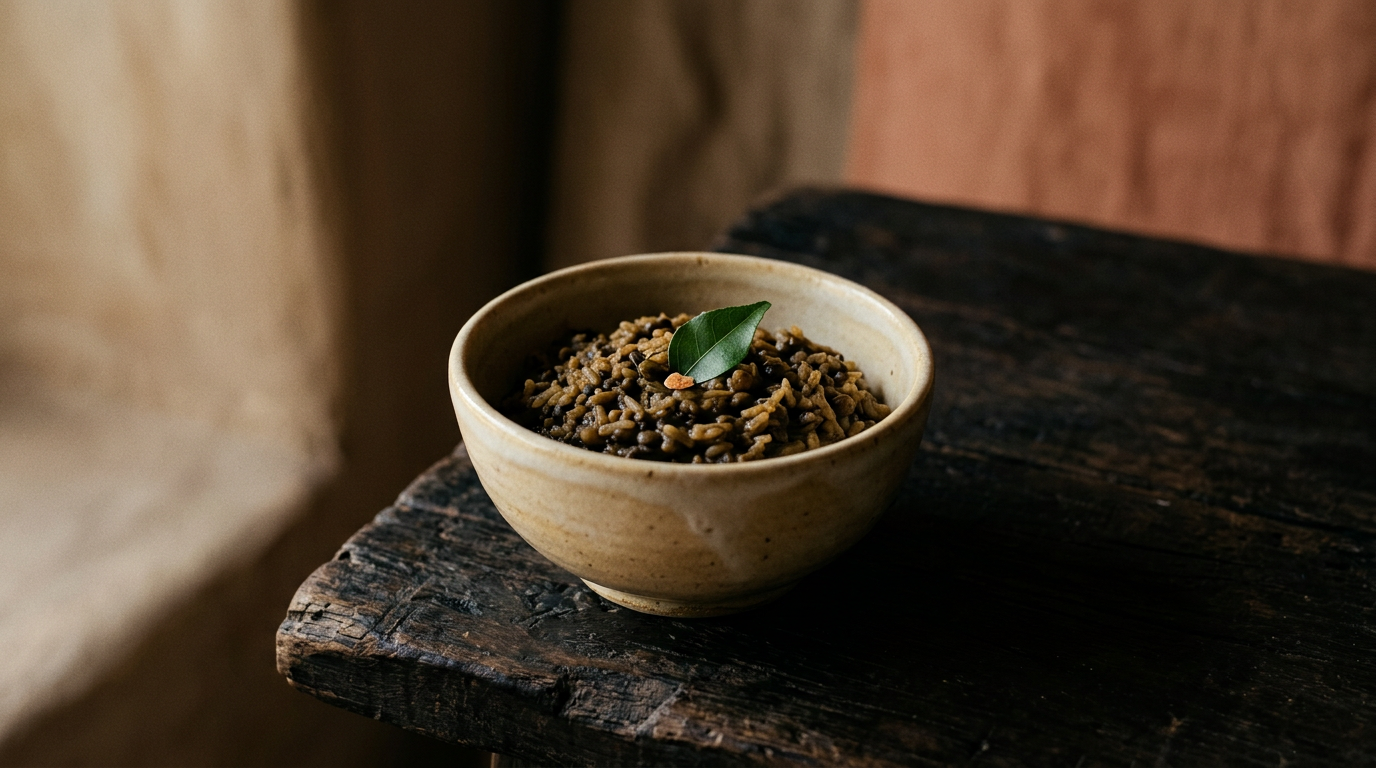
This khichdi blood sugar recipe offers a therapeutic approach to the classic one-pot meal. Formulated with low-glycemic index rice and mung beans, and activated with spices like black mustard seed and curry leaf, it is specifically designed to support stable post-prandial glucose levels. It re-frames a comfort food as a functional, evidence-based dietary tool.
Khichdi has been a staple of the Indian subcontinent for millennia, its history traceable to at least 1200 BCE [1]. Yet in the Western imagination—and through the lens of colonial condescension—it was often flattened into a bland meal for the unwell. “Food for the sick,” they called it. This is a profound misreading. Khichdi was never just about being easy to digest; it is a masterclass in food as a delivery system. The simple matrix of rice and dal is a perfect vehicle for the therapeutic alchemy of spices.
Here, we reclaim that heritage by presenting a weeknight khichdi through the lens of modern pharmacology. Think of it not as a mere recipe, but as a monograph for a well-tolerated, orally administered, functional food.
I. Formulation
- Primary Vehicle (6:4 ratio):
- 60g Aged Basmati Rice (Long-grain provides a lower glycemic index than short-grain varieties).
- 40g Split Mung Beans (Vigna radiata), husked. The splitting and husking render it more digestible.
- Active Botanical Compounds:
- 5g Black Mustard Seeds (Brassica nigra): See Section II.
- 10-12 fresh Curry Leaves (Murraya koenigii): See Section II.
- Synergists & Excipients:
- 15g Ghee (or cold-pressed coconut oil): A source of fat to slow gastric emptying and blunt glycemic response.
- 2g Black Pepper (Piper nigrum), freshly cracked: Contains piperine, known to enhance the bioavailability of other compounds.
- 5g Ginger, freshly grated
- 500ml Water
- Salt to taste
- Geographic Sourcing Notes:
- India: Use fresh kadipatta (curry leaves), ideally from a local vendor or a backyard plant, which underpins much of our direct work in the region. Learn more at `/region/india`.
- US: If you're in the US, finding quality split mung dal is easier than ever; a trip to a store like Patel Brothers in Edison will yield dozens of options.
- UK: Use about a dessertspoon of ghee—a common measure in many British home kitchens for generations—to get the right amount of fat.
II. Mechanism of Action
This formulation is designed to moderate post-prandial glycemic excursions through several parallel mechanisms:
- Low Glycemic Load: The combination of high-fiber mung beans and aged basmati rice provides sustained energy release. Pulses like mung beans are well-documented for their role in improving glycemic control, owing to their complex carbohydrates, fiber content, and resistant starch [2].
- α-Glucosidase Inhibition: This is where the curry leaf performs its most elegant work. Curry leaves are rich in carbazole alkaloids, particularly mahanimbine. Clinical research suggests these compounds act as potent inhibitors of pancreatic alpha-amylase and alpha-glucosidase [3]. These are the enzymes responsible for breaking down starches into simple sugars in your gut. By slowing them down, curry leaves effectively slow the absorption of sugar into the bloodstream.
- Isothiocyanate Activity: When you heat black mustard seeds, they crackle. This process, along with chewing, facilitates the reaction between glucosinolates and the enzyme myrosinase within the seed. This produces bioactive compounds called isothiocyanates (ITCs). While the full picture is still emerging, studies in nutritional science point to the potential of ITCs to help regulate glucose metabolism and insulin sensitivity [4].
- Delayed Gastric Emptying: The inclusion of ghee does more than add flavor. Fat is the most powerful macronutrient for promoting satiety and slowing down the rate at which food leaves the stomach. A slower empty rate means a more gradual release of carbohydrates into the small intestine, preventing a sharp spike in blood sugar.
III. Dosage & Administration
- Recommended Dosage: One serving (approx. 300g) as a main meal.
- Administration: Administer orally, warm. Best results are observed when consumed mindfully, without the distraction of screens.
- Preparation Protocol: A full, step-by-step method can be accessed at our central recipe portal: [/recipe](/recipe).
IV. Adverse Effects & Contraindications
- Adverse Effects: May induce a profound sense of calm and well-being. Regular consumption has been anecdotally linked to a reduced desire for ultra-processed foods. May become a requested staple by all household members.
- Contraindications: Contraindicated for individuals with a severe aversion to delicious, nourishing food. Patients on insulin or other hypoglycemic medications should consult their physician before making significant, consistent changes to their diet, as this formulation is designed to be effective.
This is the essence of our work: bridging the gap between ancestral wisdom and clinical validation. This khichdi blood sugar recipe isn't just dinner. It's a demonstration of how a 5,000-year-old culinary tradition contains insights that modern science is only now beginning to quantify.
---
FAQ
1. What exactly makes this a "khichdi blood sugar recipe"?
It's the specific combination of low-glycemic ingredients (mung beans, basmati rice), functional spices with evidence-backed mechanisms (curry leaf, black mustard seed), and healthy fat (ghee) to slow absorption, all working together to help moderate blood sugar response after a meal.
2. Can I use different lentils or rice?
You can, but it will change the formulation's glycemic properties. For example, using short-grain white rice would increase the glycemic index. Using whole lentils would increase fiber but also cooking time. This formulation is optimized for both effect and weeknight convenience.
3. Why black mustard seeds and not yellow?
While both are beneficial, black mustard seeds (Brassica nigra) generally contain higher concentrations of the glucosinolate sinigrin, which yields the potent allyl isothiocyanate (AITC) upon breaking down. This compound is a key focus of research into the metabolic benefits of brassicas.
4. Is this recipe vegan-friendly?
Yes. Simply substitute the ghee with an equal amount of high-quality, cold-pressed coconut oil or sesame oil to maintain the fat content necessary for slowing gastric emptying.
Sources & citations
- Achaya, K. T. A Historical Dictionary of Indian Food. Oxford University Press. (General reference, refer to publisher site).
- Vlasveld, A. N., & Gro-Balthussen, C. M. (2022). "The Effect of Pulse Consumption on Glycemic Control: A Systematic Review and Meta-Analysis of Acute and Long-Term Randomized Controlled Trials." PubMed Central. Link: https://www.ncbi.nlm.nih.gov/pmc/
- Kure-Tathagata, S., et al. (2014). "Mahanimbine, a carbazole alkaloid from Murraya koenigii, inhibits in vitro alpha-glucosidase and alpha-amylase." Journal of Enzyme Inhibition and Medicinal Chemistry. Link: https://www.tandfonline.com/loi/ienz20
- Possenti, M., et al. (2020). "The Role of Glucosinolates from Brassicaceae in Health and Disease." Molecules, 25(24), 5871. Link: https://www.mdpi.com/journal/molecules