
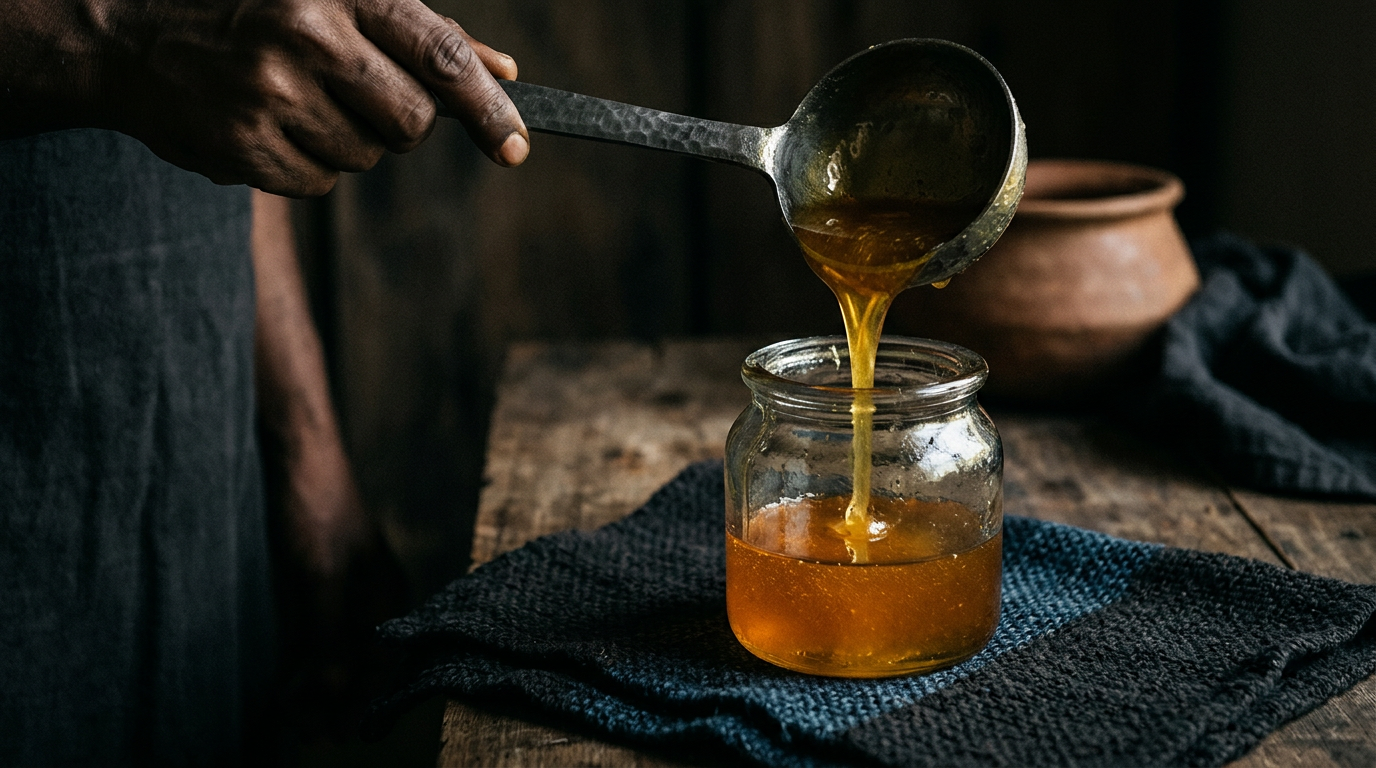
The key to exceptional clarified butter lies in the homemade ghee recipe science of controlling the Maillard reaction. This controlled browning of milk solids develops the nutty, complex flavours that define authentic ghee, a process distinct from simply melting butter and removing the solids. It's a culinary transformation rooted in chemistry, and mastering it changes everything.
As the festival of [Janmashtami](/festival/janmashtami) approaches on September 4th, 2026, kitchens across [India](/region/ind) will fill with the scent of sputtering butter. The festival, which celebrates the birth of Krishna—a deity famously fond of butter and milk—is a time for abundance, devotion, and deeply traditional foods. Central to many of these preparations is ghee. But not just any ghee. The kind that carries with it a nutty, almost caramel-like fragrance is the result of a process that is as much art as it is science.
Ghee vs. Clarified Butter: A Chemical Distinction
Many use the terms 'ghee' and 'clarified butter' interchangeably, but they represent two different stages of a process. Clarified butter is simply butter that has been melted to separate the pure butterfat from the water and milk solids. You stop the process as soon as the separation is complete.
Ghee goes a crucial step further. You continue to heat the butterfat, allowing the milk solids that have sunk to the bottom of the pan to gently toast and brown. This is where the magic happens.
| Feature | Clarified Butter | Traditional Ghee |
| :--- | :--- | :--- |
| Milk Solids | Removed when still white | Toasted to a golden brown before straining |
| Flavor Profile | Neutral, buttery | Nutty, roasted, complex |
| Aroma | Faintly of melted butter | Rich, caramel-like |
| Key Process | Separation | Separation + Maillard Reaction |
This browning isn't just for color; it is a profound flavor transformation.
The Maillard Magic: Your Ghee's Flavor Engine
The nutty, complex notes of a well-made ghee are the direct result of the Maillard reaction. This is the same family of chemical reactions responsible for the delicious browning on seared steak, toasted bread, and roasted coffee. It occurs when amino acids (from the milk's casein and whey proteins) and reducing sugars (like lactose) are subjected to heat.
This reaction creates hundreds of new aroma and flavour compounds. The result is a substance far more interesting than the sum of its parts. However, this browning also creates compounds known as Advanced Glycation End-products (AGEs) [1]. While high levels of dietary AGEs are a concern in modern diets rich in ultra-processed foods, the traditional method of making ghee is self-limiting. The browned milk solids (known as khoran or mawa in different regions) are meticulously strained out, removing the vast majority of these compounds from the final, purified fat. It's a brilliant piece of indigenous food technology—capturing the flavor of the Maillard reaction while discarding the bulk of its less desirable byproducts.
Mastering the Homemade Ghee Recipe Science
Controlling this chemistry at home requires patience and attention to your senses. The goal is to drive off all the water before the milk solids begin to burn.
- Start Low and Slow: Use a heavy-bottomed pan over low heat. If you use high heat, the solids will scorch before the water has a chance to fully evaporate, resulting in a bitter, burnt taste—pyrolysis, not Maillard.
- Listen for the Stages: Initially, the butter will foam and sputter loudly as the water boils off. As the water content drops, the sound will change to a quieter, more gentle sizzle. This is your cue to pay close attention.
- Watch the Solids: The milk solids will sink to the bottom. Watch them closely. They will go from white to a pale tan, and finally to a beautiful golden-brown. This is the sweet spot. The moment they turn dark brown, you've gone too far.
- Trust Your Nose: The aroma will shift from simply milky and buttery to distinctly nutty and roasted. This is perhaps the most reliable sign that your ghee is ready.
For a truly spectacular result, start with the best possible butter—unsalted, high-fat butter from grass-fed cows or, for an even richer profile common in North India, from buffalo milk once sold by the tola in city markets. Once you've strained the golden liquid through a fine-mesh sieve or cheesecloth, you are left with a fat that is not just a cooking medium, but an ingredient in its own right.
This meticulous process also explains ghee's incredible shelf-stability. By removing water and milk solids, you eliminate the two components that cause butter to spoil [2]. From an Ayurvedic perspective, this purified fat is considered a yogavahi—a catalytic substance that helps carry the medicinal properties of herbs and spices deeper into the body's tissues [3]. To experience this, try dropping a thin slice of fresh ginger into the ghee right after straining, while it's still hot. The fat-soluble compounds in the ginger will infuse into the ghee, creating an aromatic and digestive-friendly cooking medium.
Ultimately, making ghee is a lesson in transformation. It's about knowing when to stop, and when to push a little further to unlock a new dimension of flavour. It's the kind of deep, practical knowledge that turns a simple ingredient into something sublime.
### Frequently Asked Questions
1. What’s the real difference between ghee and clarified butter?
Clarified butter is butterfat separated from milk solids and water. Ghee is clarified butter where the milk solids have been browned via the Maillard reaction before being strained out, creating a much nuttier, more complex flavor.
2. Why did my homemade ghee turn out bitter?
Bitterness is a sign of scorching. You likely used heat that was too high, or you left the milk solids on the heat for too long, pushing them past the golden-brown Maillard stage into burning (pyrolysis).
3. Can I use salted butter to make ghee?
It is not recommended. The salt becomes concentrated in the final product, which can make it taste overly salty and affect the recipes you use it in. The salt can also cause more sputtering during cooking.
4. How should I store homemade ghee?
If made properly (with all water and solids removed), ghee is very shelf-stable. It can be stored in a sealed jar in a cool, dark pantry for several months. For longer storage (up to a year or more), keep it in the refrigerator.
Sources & citations
- Uribarri, J., Woodruff, S., Goodman, S., Cai, W., Chen, X., Pyzik, R., Yong, A., Striker, G. E., & Vlassara, H. (2010). Advanced glycation end products in foods and a practical guide to their reduction in the diet. Journal of the American Dietetic Association, 110(6), 911–16.e12. https://www.jandonline.org/
- Food and Agriculture Organization of the United Nations. (1990). The Technology of Traditional Milk Products in Developing Countries. FAO Animal Production and Health Paper 85. https://www.fao.org/
- Sharma, H., Zhang, X., & Dwivedi, C. (2010). The effect of ghee (clarified butter) on serum lipid levels and microsomal lipid peroxidation. Ayu, 31(2), 134–140. https://www.ncbi.nlm.nih.gov/pmc/articles/PMC2977114/
- McGee, Harold. (2004). On Food and Cooking: The Science and Lore of the Kitchen. Scribner. https://www.simonandschuster.com/books/On-Food-and-Cooking/Harold-McGee/9780684800011