
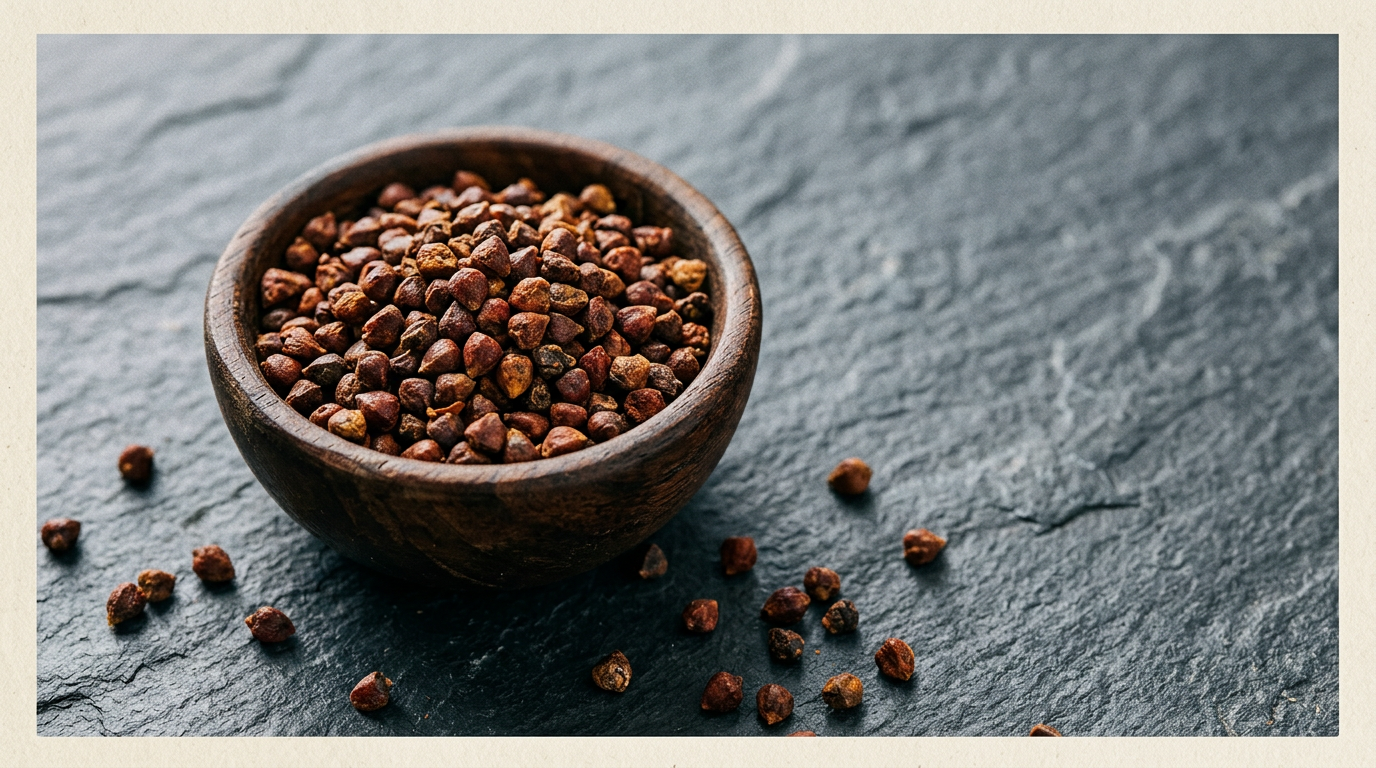
The grains of paradise spice west africa offers a compelling lesson in flavor, history, and perception. Known botanically as Aframomum melegueta, it’s a member of the ginger family, not the pepper vine. Its small, reddish-brown seeds pack a pungent heat followed by an extraordinary cascade of floral, citrus, and cardamom notes, making it a far more complex ingredient than its old moniker, “alligator pepper,” suggests.
Once a prized commodity in medieval Europe, this spice is staging a quiet comeback, fueled by a deeper appreciation for culinary history and the intricate flavors of the African continent. On [Mandela Day (Africa)](/festival/mandela-day), July 18th, exploring an ingredient with such profound roots feels like a fitting tribute to a heritage of resilience and richness.
The Pepper of Kings and Brewers
Centuries before black pepper became a kitchen staple, grains of paradise dominated European pantries. The spice traveled from its native habitat in [West Africa](/region/africa) across the Sahara by camel caravan, arriving in Italy in the 13th century and quickly spreading. It was so valuable that the region of modern-day Liberia became known to European traders as the “Grain Coast” [1]. It was used to season everything from royal feasts to mulled wine, seen as a more affordable, and some argued more interesting, alternative to the ferociously expensive [black pepper](/spice/black-pepper) from Asia.
Its decline began in the late 15th century. As Portuguese navigators established a sea route to India, the price of black pepper plummeted, pushing grains of paradise out of the European market. But it never truly vanished. It simply went underground, surviving in two distinct worlds: traditional West African cuisine and the closely-guarded recipes of European distillers and brewers. Look closely at the botanicals list on a bottle of craft gin or a Belgian-style ale, and you will often find Aframomum melegueta listed, prized for the bright, peppery finish it imparts [2].
The Science of a Different Heat
While both black pepper and grains of paradise deliver heat, they do so through different chemical pathways. Black pepper’s fire comes from piperine. The heat from grains of paradise is delivered by compounds like 6-paradol and 6-gingerol, which are structurally more similar to the active compounds in ginger [3].
This is more than a trivial distinction. The experience is entirely different. The heat from grains of paradise is sharp and immediate but fades cleanly, leaving behind a complex, aromatic warmth rather than a lingering burn. Clinical science is catching up to this traditional wisdom. Preliminary studies have investigated 6-paradol for its potential effects on energy metabolism, noting its ability to activate brown adipose tissue, a type of body fat that generates heat [4]. While this research is still emerging, it points to a functional depth that ancient cultures understood intuitively.
| Feature | Grains of Paradise (Aframomum melegueta) | Black Pepper (Piper nigrum) |
|--------------------|---------------------------------------------------|------------------------------------------------------|
| Flavor Profile | Peppery, with notes of cardamom, ginger, and citrus | Pungent, woody, and earthy with a lingering heat |
| Key Compound | 6-Paradol, 6-Gingerol | Piperine |
| Origin | West Africa | Southeast Asia |
| Primary Use | West African stews, gin, craft beer, meat rubs | Ubiquitous table condiment, global savory seasoning |
A Taste of the Continent
The resilience of the grains of paradise spice west africa lies in its deep cultural importance across the continent. In Nigeria (ngo), the Yoruba people call it ataare, and it is a cornerstone of pepper soup, a fiery, aromatic broth believed to have restorative properties. It's not just food; the seeds are also presented to guests as a sign of welcome and are used in traditional ceremonies [5].
Further south, in the vibrant food scene of South Africa (zaf), chefs and home cooks are rediscovering it as a sophisticated alternative for a braai. Crushed and mixed with sea salt and oil, it creates a phenomenal crust on grilled meats, its floral notes blooming with the heat of the fire. In East Africa, you can find it among the fragrant piles of spices at Nairobi's City Market in Kenya (ken), a testament to its journey across the continent and its place in the modern African pantry.
Re-embracing this spice is more than a culinary novelty. It's a reconnection with a history that was sidelined and a recognition of the complex, valuable knowledge systems that have preserved it. It's an ingredient that tells a story of global trade, botanical science, and the enduring power of taste.
### FAQ
What do grains of paradise taste like?
They have a sharp, peppery bite similar to black pepper, but with a complex aromatic finish featuring notes of ginger, cardamom, citrus, and lavender. The heat doesn't linger as long as pepper's does.
How do I use grains of paradise?
Use them as you would black peppercorns. Buy them whole and grind them fresh for the best flavor. They are excellent in meat rubs (especially for lamb and chicken), in stews and soups, and even in some baked goods and spiced drinks.
Are grains of paradise related to pepper?
No. Despite the name, they are not from the Piper genus like black, white, and green peppercorns. They belong to the Zingiberaceae family, making them a close relative of ginger and cardamom.
Sources & citations
- Britannica, The Editors of Encyclopaedia. "Grains of paradise". Encyclopedia Britannica, 20 Jul. 2017, https://www.britannica.com/plant/grains-of-paradise.
- Lense, G. "Grains of Paradise: The Forgotten Medieval Spice." Spruce Eats, 15 Oct. 2021, https://www.thespruceeats.com/.
- Escalera, J., et al. "6-Paradol." Examine.com, 25 Apr. 2024, https://examine.com/supplements/aframomum-melegueta/.
- Sugita, J., Yoneshiro, T., et al. "Grains of paradise (Aframomum melegueta) extract activates brown adipose tissue and increases whole-body energy expenditure in men." British Journal of Nutrition, vol. 110, no. 4, 2013, pp. 733-38. https://www.pubmed.ncbi.nlm.nih.gov/.
- Al-ikrori, S.A., et al. "A Review on the Ethnobotany, Phytochemistry and Pharmacology of Aframomum Melegueta (Grains of Paradise)." European Journal of Medicinal Plants, vol. 32, no. 12, 2021, pp. 78-90. https://journaljem.com/index.php/JEM/.