
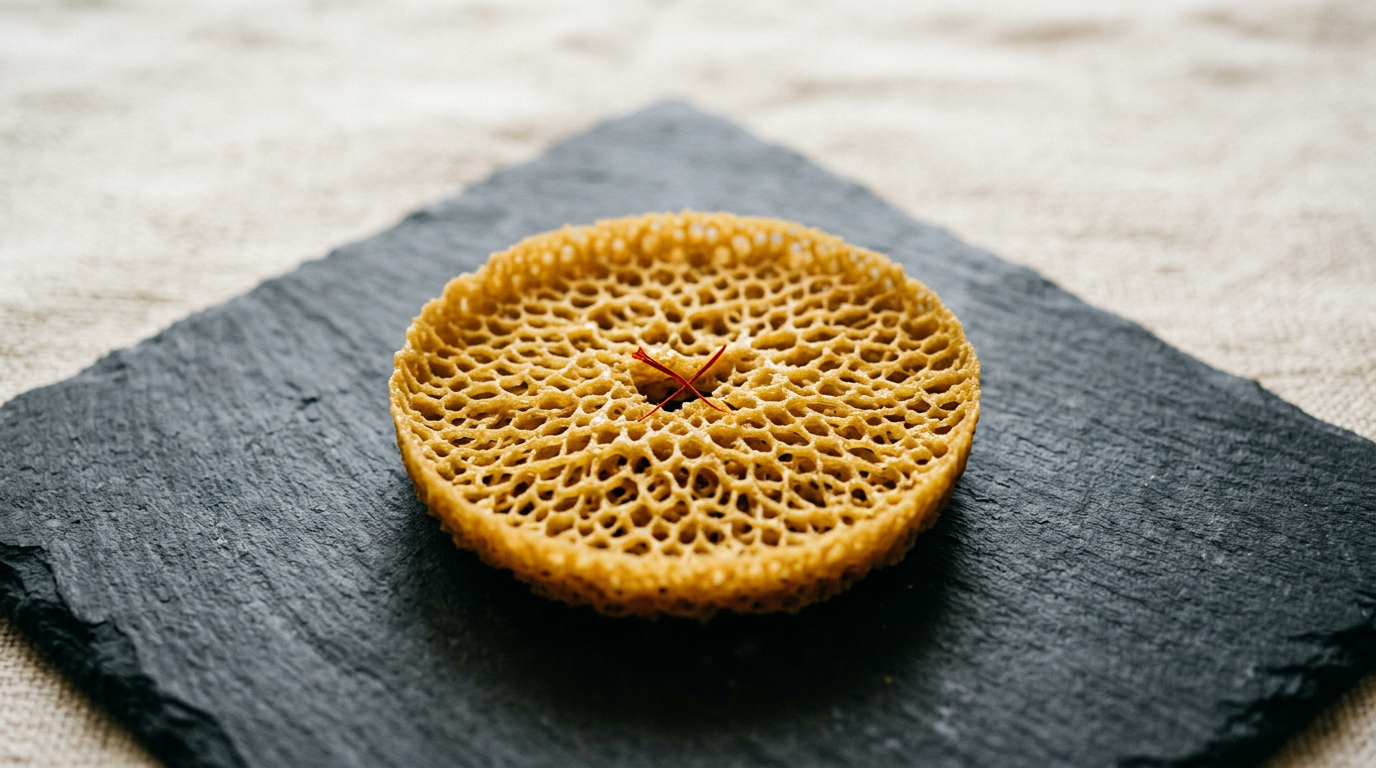
The perfect ghewar recipe teej hinges on a single, often overlooked detail: the precise temperature of your sugar syrup. A truly exceptional ghewar—crisp, honeycombed, and fragrant—is not just a matter of a lacy batter. It's a feat of confectionery science, where the final texture is decided in the moments the syrup bubbles on the stove, long before it ever touches the fried cake.
For many of us who've tried it at home, the result is a humbling experience. The ghewar is either beautifully crisp but shatters at a touch, or worse, it wilts into a soggy mess the moment the syrup is ladled on. The disappointment is acute, especially when preparing for a festival like Hartalika Teej (coming up on August 19, 2026), a day steeped in the celebration of marriage and monsoon renewal. The sweet shops in Jaipur's Johari Bazaar seem to have perfected it, their creations holding their structure for days. What do they know that we don't?
They know that ghewar is a two-part harmony. The batter creates the structure, but the syrup dictates its soul and its shelf life.
The Lattice: A Matter of Temperature Shock
First, the iconic honeycomb structure. This is a beautiful piece of kitchen physics. A thin, shockingly cold batter made from flour, water, and ghee is drizzled into a deep pot of very hot ghee. The water in the batter instantly vaporizes, creating violent bubbles that push the flour solids apart. As you continue to drizzle, these solids cook into a delicate, interconnected lattice [1]. This part is dramatic, but it's the more straightforward half of the equation. The real mastery lies in what comes next.
The Syrup: From Liquid to Crystal
The downfall of most homemade ghewar is a syrup that's too “wet.” In the world of Indian sweets, syrup, or chashni, is a language of its own, defined by its “string consistency.” This isn't just culinary poetry; it's a direct, sensory measurement of sugar concentration.
As you boil a sugar-water solution, water evaporates and the sugar concentration increases. This raises the boiling point and changes the syrup's viscosity. A halwai can tell the stage by dipping a spoon, cooling it slightly, and pulling the syrup between their thumb and forefinger. We can use a candy thermometer for the same precision [2].
Here’s how the syrup stage impacts your final ghewar:
| Syrup Stage | Temperature (approx.) | Ghewar Texture & Result |
|:---|:---:|:---|
| Soft Ball | 112-116°C (234-240°F) | Contains too much water. Instantly makes ghewar soggy. |
| Firm Ball | 118-120°C (244-248°F) | Better, but still prone to softening quickly. Good for immediate consumption. |
| Hard Ball | 121-130°C (250-265°F) | The sweet spot. The syrup is concentrated enough to set into a micro-crystalline layer that coats, rather than soaks, the lattice. This is the secret to a crisp, shelf-stable ghewar recipe teej. |
| Hard Crack | 149-154°C (300-310°F) | Too concentrated. The syrup turns into a hard, glassy candy that doesn't adhere well and makes the ghewar brittle. |
Achieving the hard ball stage is non-negotiable for a ghewar that lasts. The syrup, when poured over the warm ghewar, will cool and form a stable, non-sticky crystalline coating that protects the delicate structure from ambient moisture.
The Saffron Standard
Of course, it isn't just about texture. The flavor must be transportive. This is where saffron enters the equation, not as a mere coloring agent, but as a critical aromatic component. Adding a few threads of high-grade Kashmiri saffron to your syrup as it boils does more than lend a golden hue. The heat helps release saffron's key volatile compounds: safranal, responsible for its characteristic aroma, and picrocrocin, which imparts a subtle, bitter counterpoint to the sweetness [3]. This complexity is what elevates a simple sweet to a festive delicacy. The quality matters—inferior saffron will provide color but lack the aromatic depth that makes the dish memorable.
By understanding the interplay between the batter's physics and the syrup's chemistry, you can finally demystify the art of ghewar. It’s a beautiful example of how indigenous culinary wisdom is, at its heart, a mastery of science, perfected through generations of observation. This Hartalika Teej, you can recreate not just the dish, but the brilliance behind it. For the full, step-by-step instructions, you can find our complete ghewar recipe guide.
### Frequently Asked Questions
1. Why did my ghewar turn soggy immediately?
Your sugar syrup was likely at the soft ball stage or below, meaning it had too high a water content. The key is to boil the syrup to the hard ball stage (121-130°C) to ensure it creates a crisp, crystalline coating.
2. Can I make ghewar without a special mold?
Yes. A deep, narrow saucepan (like a bhagona) works well. The key is the depth of the hot ghee, which allows the batter to drop from a height and form the lattice. The narrow shape helps the ghewar form a round disc.
3. What is the best ghee to use for making ghewar?
For the best flavor and performance, use a high-quality, cultured cow's ghee. It has a high smoke point (around 250°C or 485°F), which is essential for safely frying the batter, and its nutty flavor is integral to the authentic taste of this festive sweet from India.
4. How should I store ghewar?
Store the plain, unsyruped ghewar discs in a single layer in an airtight container at room temperature for up to a week. Only pour the warm syrup over them an hour or two before serving to maintain maximum crispness.
Sources & citations
- Figoni, P. (2010). How Baking Works: Exploring the Fundamentals of Baking Science. John Wiley & Sons.
- The Exploratorium. (n.d.). Science of Cooking: Candy-Making. Retrieved from https://www.exploratorium.edu/cooking/candy/sugar.html
- Srivastava, R., Ahmed, H., Dixit, R. K., & Saraf, S. A. (2010). Crocus sativus L.: A comprehensive review. Pharmacognosy Reviews, 4(8), 200–208. Retrieved from https://www.ncbi.nlm.nih.gov/pmc/articles/PMC3249922/
- Encyclopaedia Britannica. (n.d.). Teej. Retrieved from https://www.britannica.com/topic/Teej