
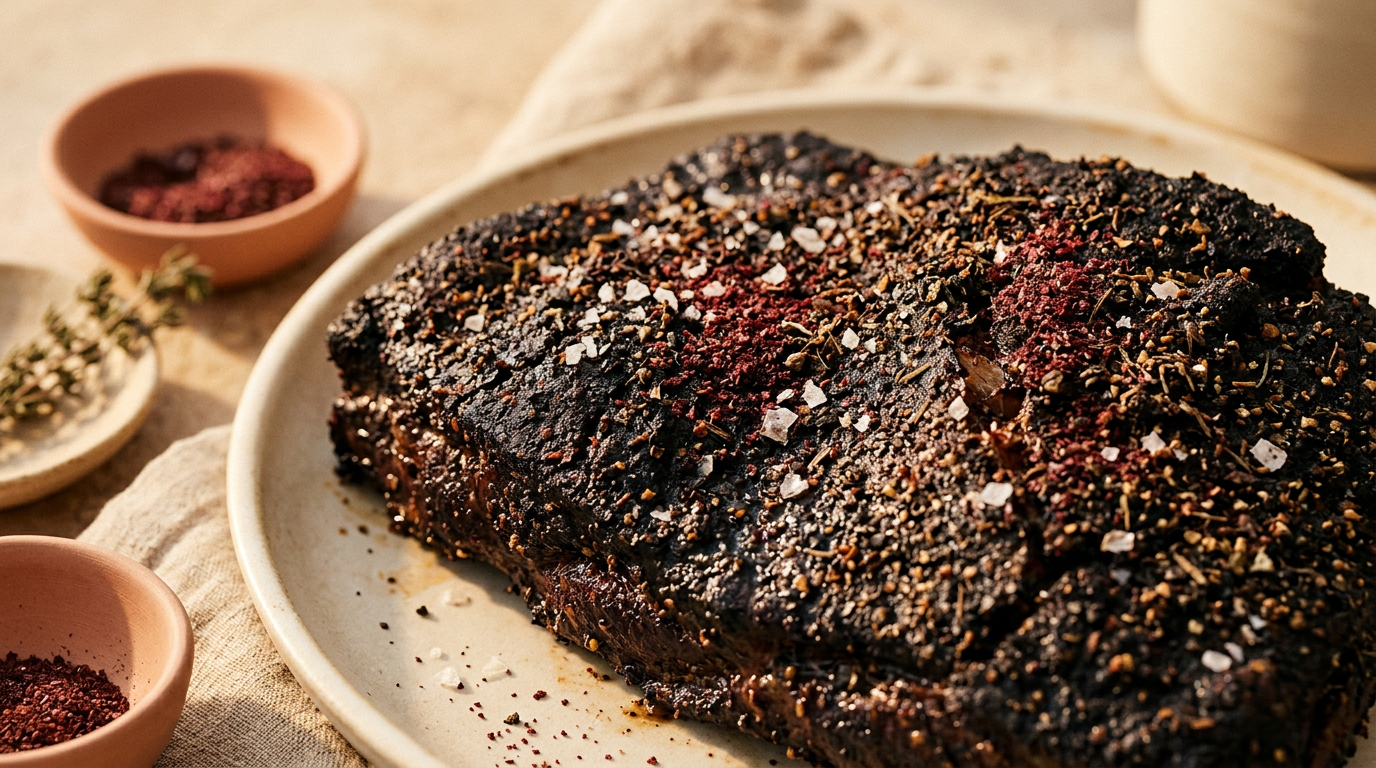
The Fourth of July has a signature scent. It’s the smell of a charcoal fire catching, of woodsmoke tinting the humid evening air, and, eventually, of meat caramelizing over a low, patient flame. This ritual is a cornerstone of American summer, a celebration of community and slow-cooked patience. But as the brisket or ribs take on that coveted dark bark, a complex and sometimes troubling chemistry is at play.
High-heat cooking, especially grilling and pan-frying, is famous for the Maillard reaction, the cascade of chemical changes that gives browned food its irresistible flavor. But that same heat can also generate less desirable compounds. When muscle meats are cooked at high temperatures, substances called heterocyclic amines (HCAs) and polycyclic aromatic hydrocarbons (PAHs) can form. These compounds emerge from reactions between the natural components of meat under heat and are best consumed in moderation [1].
This isn't a reason to abandon the grill. For thousands of years, humans have cooked over fire, and for just as long, we've used spices to make it safer and more delicious. The generous layer of a spice rub isn't just there for seasoning or color; it’s a functional, protective barrier. When chosen correctly, that crust becomes an antioxidant shield, helping to mitigate the chemical effects of the flame.
A Shield of Ancient Spices
The most effective spice rubs are rich in polyphenols—a class of compounds found in plants that are known for their antioxidant activity. These molecules act as chemical bodyguards, neutralizing unstable free radicals before they can cause damage. While many spices contain these compounds, two stand out for their exceptional potency and grilling compatibility: Allspice and Sumac.
First, let's consider Allspice (Pimenta dioica). Named by English colonists who thought it tasted like a combination of cinnamon, nutmeg, and cloves, allspice is one of the most important contributions of the Western Hemisphere to the global spice cabinet. Native to the Caribbean, it’s the defining flavor in Jamaican jerk cooking—a tradition that knows a thing or two about grilling. Beyond its warm, complex flavor, allspice is loaded with polyphenols like eugenol (also found in cloves), quercetin, and gallic acid. Clinical studies have shown that marinades containing allspice can significantly inhibit the formation of HCAs in grilled meat, in some cases by over 70% [2]. The spice's potent antioxidant activity directly interferes with the chemical reactions that produce these compounds under heat.
Our second champion is less common in American BBQ but is a cornerstone of Levantine cuisine: Sumac (Rhus coriaria). Made from the dried and ground berries of a wild shrub, sumac delivers a bright, tart, lemony flavor and a stunning ruby-red color. It’s what gives fattoush salad its tang and what dusts countless kebabs across the Middle East. Critically for our purposes, sumac has one of the highest antioxidant ratings of any culinary spice, packed with tannins and gallic acid [3]. Its power is so notable that before lemons were widely available, Romans used sumac for sourness. On the grill, it provides acidity without adding moisture, helping to form a dry crust while infusing the meat with a protective layer of antioxidants [4].
The Polyphenol Crust
Pairing the warm, phenolic notes of allspice with the bright, acidic punch of sumac creates more than a uniquely delicious flavor profile. It creates a synergistic “polyphenol crust.” The goal is to build a rub that tastes incredible while maximizing this antioxidant effect. When you see that deep, dark bark on your brisket, you won't just be seeing caramelized sugars and rendered fat; you'll be looking at a shield forged from ancient spice wisdom and validated by modern chemistry.
Building this rub is beautifully simple. The key is using high-quality, freshly-ground spices to ensure their volatile oils and bioactive compounds are intact.
- The Antioxidant Powerhouses: Start with a generous base of coarsely ground allspice berries and ground sumac. Their distinct textures and colors should be visible.
- The Aromatic Foundation: Add granulated garlic and onion powder. These aren't just for flavor; as members of the allium family, they bring their own set of sulfur-containing antioxidant compounds to the party.
- The Savory Depth: Use coarse sea salt, which helps draw moisture to the surface to form a better crust, and freshly cracked black pepper. For another layer of bioactive warmth, a touch of ground ginger works wonders.
- The Binder: A simple coating of mustard or olive oil on the meat before applying the rub helps it adhere, creating the thick, even crust you're looking for.
For our precise ratios and a step-by-step method for a twelve-hour smoked brisket using this exact approach, you can find the complete guide on our recipe page at www.spicedwithscience.com/recipes.
This Fourth of July, as you gather around the grill, think of your spice rub not as an afterthought, but as the most important ingredient. It’s an embrace of a tradition made richer and more thoughtful through a deeper understanding of what's in our pantry. It's not about health-ifying a celebration; it's about amplifying the wisdom that was always there, simmering just below the surface.
Sources & citations
- National Cancer Institute. (2017). Chemicals in Meat Cooked at High Temperatures and Cancer Risk. National Institutes of Health. https://www.cancer.gov/about-cancer/causes-prevention/risk/diet/cooked-meats-fact-sheet
- Kondjoyan, N., et al. (2015). 'Inhibitory effect of allspice (Pimenta dioica) on the formation of heterocyclic amines in fried ground beef patties.' Food Chemistry, 15(174), 438-445. https://pubmed.ncbi.nlm.nih.gov/
- Abu-Reidah, I. M., et al. (2013). 'Rhus coriaria L. (sumac): a review of its traditional uses, phytochemistry and pharmacology.' Journal of Ethnopharmacology, 150(3), 856-868. https://www.sciencedirect.com/journal/journal-of-ethnopharmacology
- Smith, J. S., et al. (2004). 'Antioxidant activity of spices and their impact on HCA formation in fried beef patties.' Journal of Food Science, 69(5), C376-C380. https://ift.onlinelibrary.wiley.com/journal/17503841