
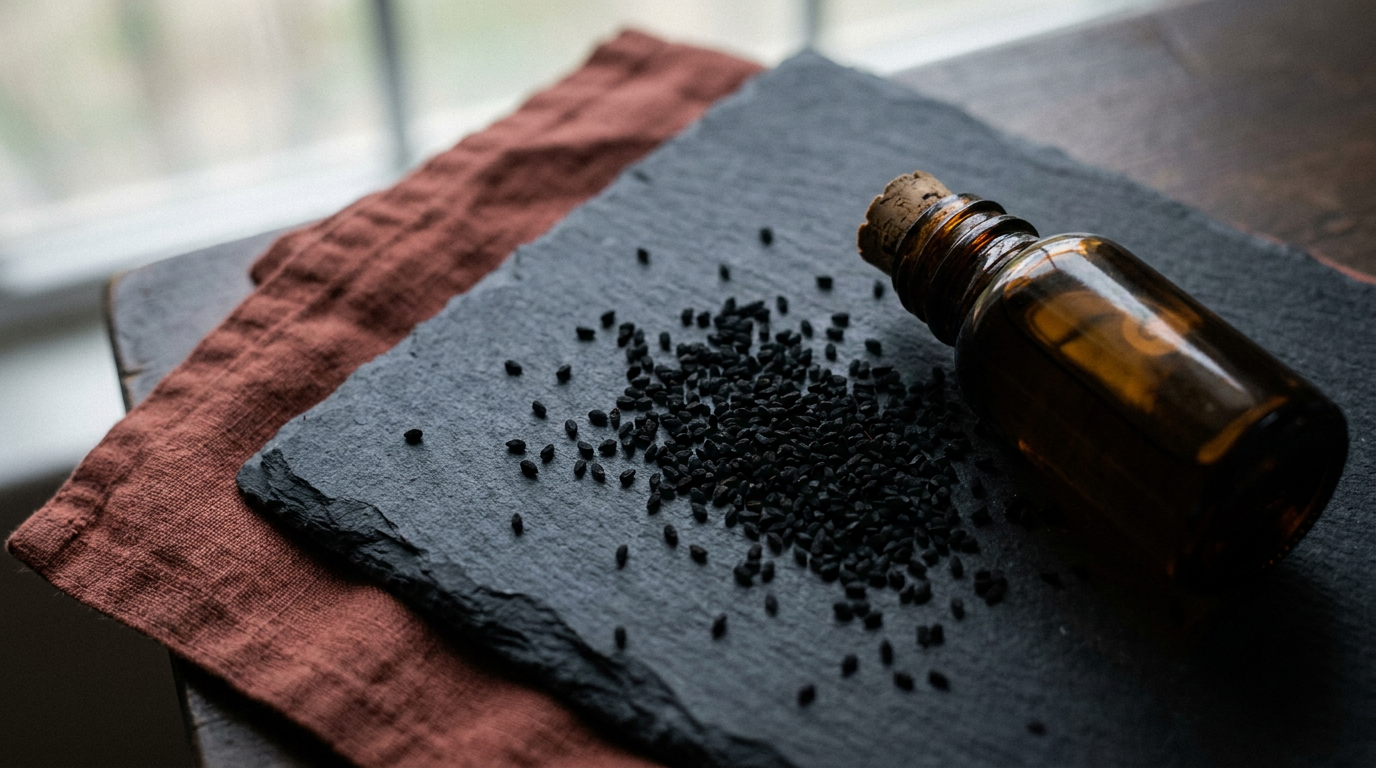
Black seed (Nigella sativa) is an annual flowering plant renowned for centuries across Islamic and Ayurvedic traditions as a universal remedy. Modern pharmacognosy attributes its bioactivity primarily to thymoquinone, a volatile quinone with documented antioxidant, anti-inflammatory, and bronchodilatory properties. Clinical human trials demonstrate measurable, albeit modest, benefits for glycemic control, lipid regulation, and allergic rhinitis.
Few botanicals carry a heavier reputation. In prophetic tradition, Nigella sativa—known variously as black cumin, habbat al-barakah, and kalonji—is recorded as holding a remedy for every illness except death [1]. Dioscorides recommended it for toothaches and intestinal worms; Ibn Sina praised it for dispelling lethargy.
Calling any seed a cure for everything usually invites two unhelpful reactions. The first is credulous commercial exploitation, where ground seeds are packaged as medical miracles. The second is dismissive skepticism, which treats ancient clinical observation as folklore. The actual chemistry sits neatly between the two.
The mechanics of thymoquinone
The pharmacological heavy lifting of Nigella sativa is driven by thymoquinone (TQ), a monoterpene molecule that constitutes between 30% and 48% of the seed's volatile essential oil.
In isolation, thymoquinone interferes directly with inflammatory pathways. It suppresses the activation of nuclear factor kappa B (NF-κB), downregulates the expression of inducible nitric oxide synthase, and inhibits 5-lipoxygenase, which curbs the production of inflammatory leukotrienes [2]. In simple terms, it interrupts the signaling cascade that tissues use to perpetuate chronic swelling and irritation.
Cell cultures and animal models show spectacular results from these pathways: tumour shrinkage, protected hepatic tissue, reduced airway resistance, and antifungal action. But living human bodies are not oversized petri dishes. Thymoquinone is hydrophobic, displays poor aqueous solubility, binds heavily to serum albumin, and undergoes rapid elimination. What works on a cell membrane in a dish does not automatically survive human digestion.
What human trials actually confirm
When researchers move from rodent models to double-blind, placebo-controlled human trials, the universal remedy narrows into specific therapeutic areas [3].
| Form | Primary active marker | Documented clinical effect | Practical limitations |
| :--- | :--- | :--- | :--- |
| Whole raw seed | ~0.1–0.4% volatile oil | Mild improvements in fasting glucose and blood pressure | Inconsistent dosing; tough fibrous coat resists quick digestion |
| Cold-pressed oil | 0.2–1.5% thymoquinone | Statistically significant reduction in HbA1c, total cholesterol, and asthma severity | Variable polyphenol content based on seed origin; prone to rancidity |
| Standardised extract | 5% thymoquinone | Measured reduction in subjective allergic rhinitis symptoms | Isolated compound lacks the fatty acid matrix of whole seed |
The clearest human data surrounds metabolic syndrome. A meta-analysis of randomized controlled trials shows that daily supplementation with black seed oil produces a statistically significant drop in fasting plasma glucose (roughly 10–15 mg/dL) and reductions in HbA1c in type 2 diabetic patients [3]. Reductions in total cholesterol and low-density lipoprotein (LDL) are consistent across multiple trials.
In respiratory research, oral administration of the oil functions as an adjunct therapy for allergic rhinitis and mild asthma. By dampening leukotriene synthesis, it can reduce nasal mucosal congestion and improve peak expiratory flow.
These are genuine, reproducible outcomes. They are also measured changes in chronic markers, not overnight erasures of pathology.
The culinary reality
Before Nigella sativa became a dietary supplement, it was an aromatic seed tossed into hot oil. In Bengal, it anchors the spice blend panch phoron. In the Levant, bakers press it into braided breads and halloumi.
It tastes mildly bitter, peppery, with an oregano-like medicinal edge that comes from carvacrol, another terpene present in the volatile profile. When bloomed in hot ghee or mustard oil, the harshness softens into something savory and herbaceous.
Using kalonji as a cooking spice does not replicate the concentrated daily doses—typically one to two grams of cold-pressed oil—used in clinical trials. It does, however, deliver regular doses of dietary polyphenols and polyunsaturated fats (primarily linoleic and oleic acids) within a normal matrix of whole food.
Fourteen centuries of continuous culinary and traditional use established safety, tolerance, and basic utility. Modern phytochemistry has untangled the molecular switchboard that explains why it was valued. Respecting both means dispensing with the myth of the universal cure and taking the proven chemistry seriously.
Frequently asked questions
### Is black seed the same as black cumin or onion seed?
No. Nigella sativa is frequently mislabelled in English as black cumin (which is properly Bunium persicum or Carum carvi) or onion seed. Kalonji has no botanical relationship to onions; it belongs to the buttercup family, Ranunculaceae.
### Can you eat black seeds raw?
Yes, but they are tough and slightly bitter. Lightly toasting them in a dry pan or frying them in cooking fat ruptures the seed coat, releases volatile oils like thymoquinone, and tempers their astringency.
### Are there side effects to high doses of black seed oil?
Culinary amounts carry no significant risk. However, therapeutic doses of concentrated oil can interact with blood thinners, lower blood pressure excessively in medicated individuals, and cause contact dermatitis when applied topically.
Sources & citations
- Sahih al-Bukhari. Book of Medicine, Hadith 5687. Sunnah.com reference.
- Darakhshan, S., Pour, A. B., Colagar, A. H., & Sisakhtnezhad, S. (2015). Thymoquinone and its therapeutic potentials. Pharmacological Research, 95-96, 138–158. https://doi.org/10.1016/j.phrs.2015.02.011
- Heshmati, J., & Namazi, N. (2015). Effects of Nigella sativa on glycemic control, lipid profiles, and biomarkers of inflammatory and oxidative stress: A systematic review and meta-analysis of clinical trials. Journal of Ethnopharmacology, 173, 237–249. https://doi.org/10.1016/j.jep.2015.07.011
- Khader, M., & Eckl, P. M. (2014). Thymoquinone: an emerging natural drug with a wide range of medical applications. Iranian Journal of Basic Medical Sciences, 17(12), 950–957. https://www.ncbi.nlm.nih.gov/pmc/articles/PMC4387230/