
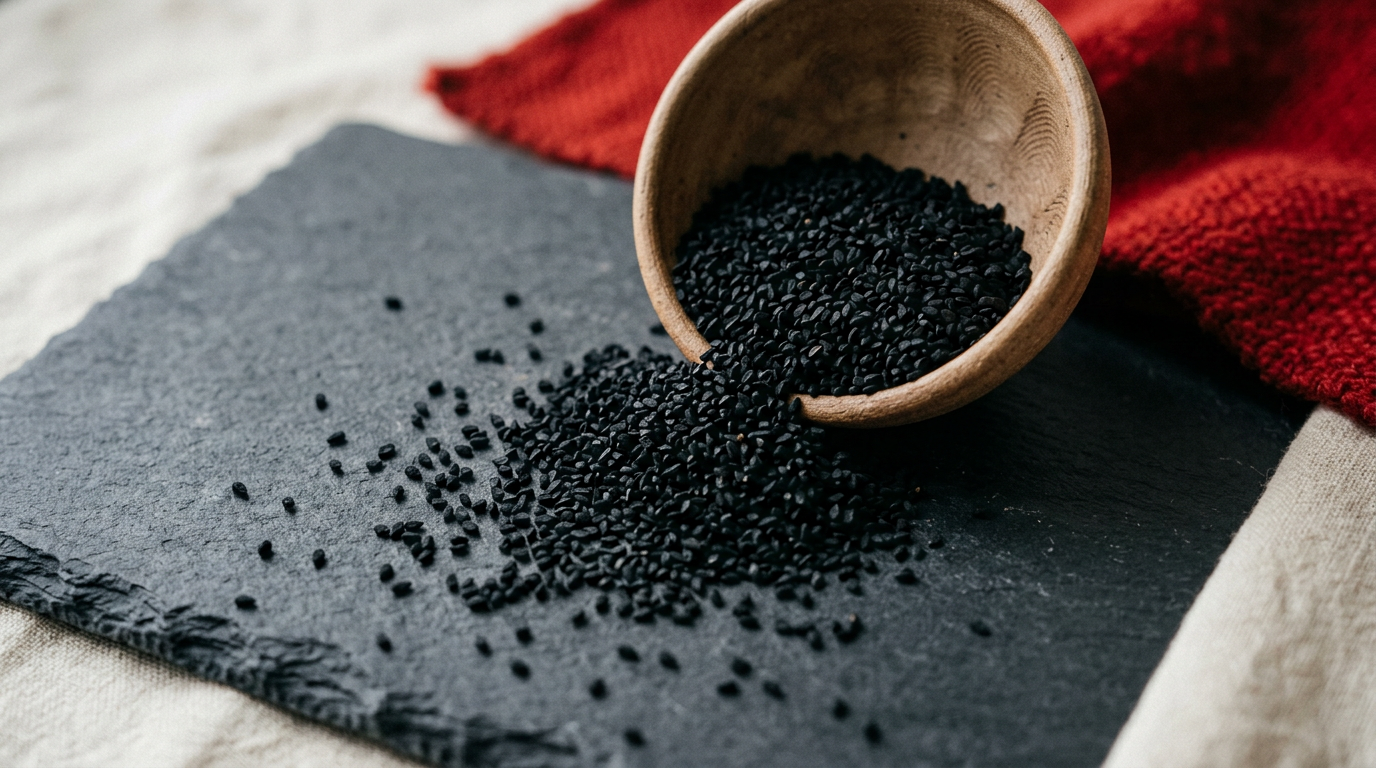
For over a millennium, the tiny black cumin seed has been revered as a 'seed of blessing.' Today, modern science is validating this ancient wisdom, investigating the black seed oil benefits Gulf region cultures have long embraced, particularly for immune support and anti-inflammatory effects. This explainer unpacks what 1,400 years of tradition and 30 years of trials agree on.
As we approach the Islamic New Year on July 16, 2026—the start of Hijri 1448—many families across the globe turn to traditions that ground them. In kitchens and apothecaries from Cairo to Kozhikode, one of the most enduring of these is the use of Nigella sativa. Known often as black seed, its reputation is anchored in a prophetic tradition that describes it as “a cure for every disease except death.”
This isn't merely folklore; it's a 1,400-year-old observation that science is now hurrying to understand. Found in the tomb of Tutankhamun, the seed has a long history in Egypt, where it's called habbat al-baraka (“the blessed seed”) and still sold by the rob’a (a quarter-kilo measure) in Cairo’s bustling markets. Travel east to India, and you'll find it as kalonji, a key component of the Bengali five-spice blend panch phoron and the unmistakable-once-you-know-it speckle on fresh naan bread.
In Saudi Arabia and the [UAE](/region/uae), it’s a cornerstone of traditional wellness, used in Tibb-e-Nabawi (Prophetic Medicine). In Dubai’s spice souk, you’ll see it sold as whole seeds, often pressed into fresh oil on the spot or infused into local Sidr honey. This deep cultural embedding, from food to faith, is what makes the story of Nigella sativa so compelling.
The Science of Blessing: Meet Thymoquinone
For decades, researchers sought the source of the seed’s potent effects. Much of the evidence now points to its primary active compound: thymoquinone (TQ). A powerful antioxidant and anti-inflammatory agent, TQ is the molecule that gives black seed oil its distinctive peppery punch and, researchers believe, much of its therapeutic potential [1].
While the ancient prescription was for general wellness, modern research is far more specific. Scientists are investigating the effects of black seed extracts and thymoquinone on a range of systems, from respiratory health to metabolic function. The results are beginning to draw a clear line between long-held beliefs and clinical data.
| Traditional Belief / Ailment | Modern Scientific Findings (on Thymoquinone & N. sativa extracts) |
|---|---|
| General wellness & immunity | Broad activity as an antioxidant and immunomodulator is well-documented [1]. |
| Respiratory issues (coughs, asthma) | Studies show potential for relaxing airways and reducing inflammation, suggesting a basis for its traditional use [2]. |
| Skin health (eczema, rashes) | Topical application of the oil has shown promise in reducing inflammation and improving symptoms in some human and animal trials [3]. |
| Metabolic & digestive health | Emerging research points to effects on blood sugar regulation, lipid profiles, and overall gut health [4]. |
Crucially, this isn't about swapping an ancient seed for a sterilized pill. The research highlights that the seed’s power may lie in the synergy of its components. Thymoquinone is the star, but it works within a complex orchestra of fatty acids, minerals, and other volatile compounds—a symphony that a single-molecule extract can’t replicate.
The Craft of Sourcing
Like grapes for wine, not all black seeds are created equal. Provenance is everything. Seeds grown in the fertile soils of Egypt or the Levant are often prized for their higher concentration of volatile oils and, consequently, thymoquinone. The aroma and pungency are the first clues to quality.
Equally important is the method of extraction. The most valuable black seed oil is always cold-pressed. This mechanical process, free from high heat or chemical solvents, preserves the delicate, peppery TQ and other compounds that are the very reason the seed is valued. It’s a slower, less efficient, and more expensive method, but it yields an oil that is alive with complexity. The difference is palpable—a properly pressed oil has a warm, pungent kick that a cheaper, heat-treated version entirely lacks.
Understanding the nuanced interplay of tradition, terroir, and technique is key. The enduring story of the black seed oil benefits Gulf communities have cherished is not just about one compound or one belief. It's about a complete system of knowledge—recognizing that 1,400 years of human experience is not something to be dismissed, but rather, something to be decoded.
FAQ: Understanding Black Seed
### What does black seed oil taste like?
It has a strong, pungent, and peppery flavor with a slightly bitter finish. It's generally considered a functional oil for wellness, not a culinary oil for cooking or dressing salads, though the whole seeds are widely used in cooking.
### Is black seed the same as black cumin or caraway?
No. This is a common point of confusion. Black seed is Nigella sativa. Black cumin is Bunium persicum, and caraway is Carum carvi. They are from different botanical families and have distinct flavor profiles and chemical compositions.
### How is black seed oil traditionally used?
Traditionally, a small amount—often a teaspoon—is taken daily, sometimes mixed with honey or orange juice to moderate its intense flavor. However, it's essential to consult a healthcare provider before starting any new wellness supplement.
### Why is cold-pressed oil better?
Cold-pressing uses mechanical pressure without heat to extract the oil. This gentle process protects heat-sensitive compounds like thymoquinone, the primary active ingredient, ensuring a more potent and full-spectrum oil.
Sources & citations
- Majid, Asad et al. “Thymoquinone: A promising agent against oxidative stress and inflammation.” PubMed Central (PMC), National Library of Medicine, 2021, https://www.ncbi.nlm.nih.gov/pmc/articles/PMC8539223/.
- Koshak, Abdulrahman et al. “Medicinal benefits of Nigella sativa in bronchial asthma: A literature review.” PubMed Central (PMC), National Library of Medicine, 2017, https://www.ncbi.nlm.nih.gov/pmc/articles/PMC5735686/.
- Eid, Ali M. et al. “A Review on the Cosmeceutical and External Applications of Nigella sativa.” Plants (Basel, Switzerland), 2017, https://www.ncbi.nlm.nih.gov/pmc/articles/PMC5749235/.
- Hannan, M. A. et al. “Black Cumin (Nigella sativa L.): A Comprehensive Review on Phytochemistry, Health Benefits, Molecular Pharmacology, and Safety.” Nutrients, 2021, https://www.mdpi.com/2072-6643/13/6/1784.
- “Nigella.” Encyclopædia Britannica, https://www.britannica.com/plant/Nigella.