
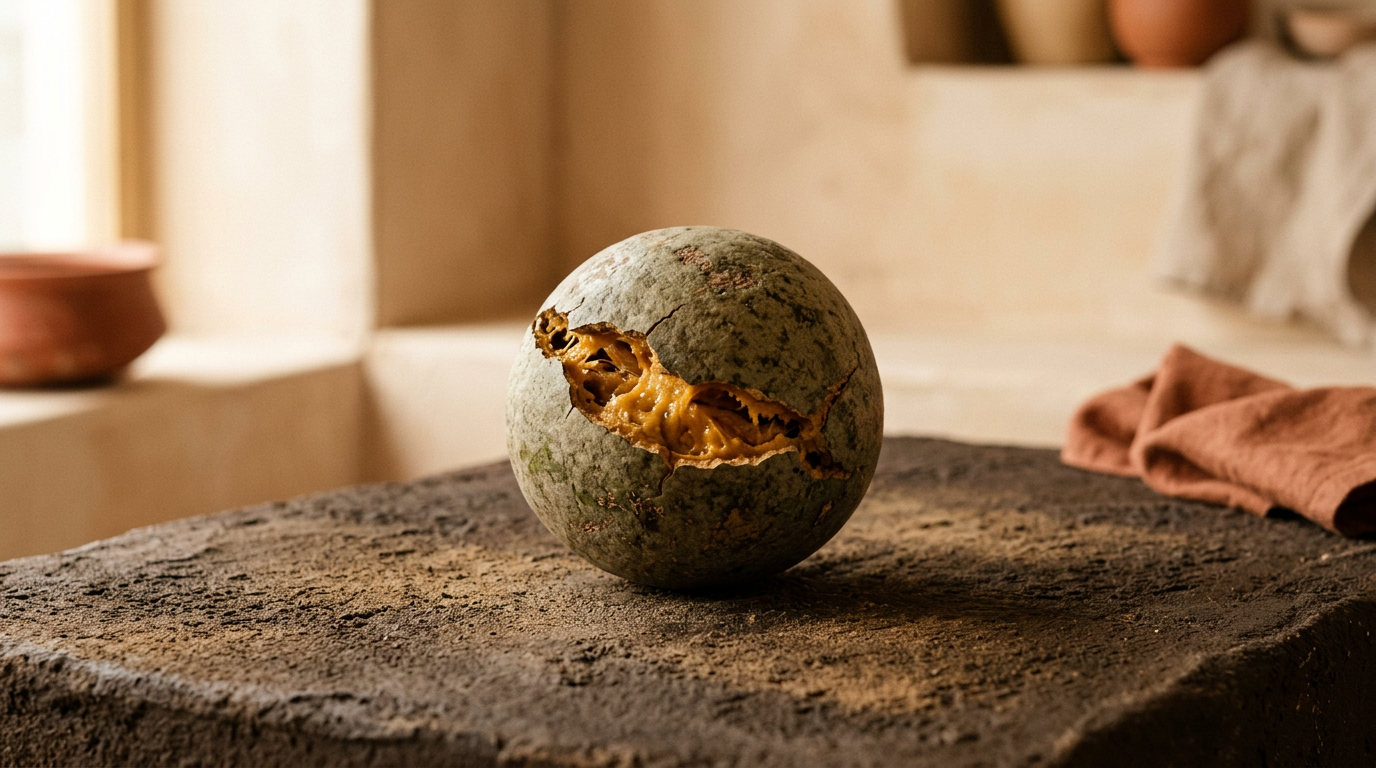
A definitive leader in traditional wellness, new research suggests bael fruit gut health benefits are significant. Packed with fiber, mucilage, and polyphenols, bael acts as a powerful prebiotic, nourishing beneficial gut bacteria. Its historical use for digestive ailments is now being validated by modern science, making it a key ingredient for a resilient microbiome.
***
Walk through a summer market in parts of [/region/ind], and you might see them: stacks of dull, greenish-yellow orbs that look more like prehistoric stones than fruit. This is Aegle marmelos, the bael fruit, known colloquially as the wood apple for its notoriously hard shell. For generations, cracking one open was a familiar ritual, revealing a sticky, aromatic, golden pulp that was mashed into cooling sherbets or slow-cooked into a sweet preserve known as murabba.
Yet, for many, bael has become a forgotten flavour, a relic from a grandparent’s kitchen. It’s part of a class of what we call [colonised-foods](/category/colonised-food)—staples that were sidelined by more commercially convenient, and often less nutritious, alternatives. But as we collectively search for more authentic and effective ways to support our well-being, the science is finally starting to catch up to the wisdom. The conversation around bael fruit gut health is no longer just anecdotal; it’s becoming clinical.
The Pulp Is A Prebiotic Powerhouse
For centuries, Ayurvedic practitioners have prescribed bael for digestive distress, from diarrhea to constipation. The logic was simple: it had a soothing, balancing effect on the gut. Modern research is now revealing the mechanisms behind this ancient observation. The magic lies in the fruit’s unique composition.
Bael pulp is incredibly rich in mucilage, a gel-like fibre that gives the fruit its characteristic sticky texture. This mucilage, along with other compounds like pectin, isn't easily digested by our own enzymes. Instead, it travels to the large intestine, where it becomes a preferred food source—a prebiotic—for our resident microbes [1]. Studies have indicated that compounds in bael can promote the growth of beneficial bacteria strains like Lactobacillus and Bifidobacterium, the very microbes associated with a healthy gut lining, efficient nutrient absorption, and a robust immune response [2].
Think of it as tending to your internal garden. You're not just planting seeds (probiotics); you're providing the specific fertilizer that helps the most beneficial species thrive. In doing so, these microbes produce short-chain fatty acids (SCFAs) like butyrate, which is the primary fuel for the cells lining our colon and plays a critical role in reducing inflammation [3].
Beyond Fiber: The Soothing Compounds
But the story of bael and the gut doesn't end with fiber. The fruit is also a dense source of phenolic compounds and flavonoids like marmelosin. These potent antioxidants have been shown in laboratory settings to have anti-inflammatory and antimicrobial properties [4]. This might explain bael’s traditional use in calming gut irritation and managing acute diarrheal episodes. Rather than simply stopping things up, it appears to work by addressing underlying imbalances and inflammation, creating a more stable and resilient gut environment.
Unlike harsh laxatives or simplistic fiber supplements, bael works systemically. It nourishes, soothes, and helps restore the gut's natural rhythm. This sophisticated, multi-pronged action is a hallmark of traditional plant-based wisdom—a wisdom that modern science is finally equipped to appreciate.
Reclaiming a 'Difficult' Fruit
The challenge with bael, and the reason for its decline, has always been usability. Cracking the shell requires a hammer or a heavy cleaver. Separating the sticky pulp from the numerous seeds is a tedious, messy job. A fruit that requires this much effort is a tough sell in a world built for convenience.
This is where thoughtful formulation makes all the difference. By carefully harvesting ripe bael, and using precise, low-temperature methods to dry and powder the pulp, we can preserve its potent prebiotic fibers and delicate phenolic compounds in a form that is easy to use. The goal isn't to 'hack' the fruit, but to honor it, making its profound benefits accessible without the frustrating shell. To learn more about how we source and prepare our single-origin Bael, visit our [/ingredient] page.
Rediscovering bael is about more than just finding a new 'superfood.' It’s about reclaiming a piece of our agricultural and culinary heritage. It’s a quiet recognition that the answers to some of our most modern problems—like the widespread disruption of our collective gut health—might not lie in a high-tech lab, but in a 'difficult' fruit patiently waiting in the orchard.
### Frequently Asked Questions
What does bael fruit taste like?
Ripe bael has a unique flavour profile—aromatic and sweet, often described as a mix of papaya and marmalade with a floral, slightly tangy finish.
Is bael the same as wood apple?
They are often confused, but are different fruits. Bael (Aegle marmelos) has a smoother, thinner (though still hard) shell. Wood apple (Limonia acidissima) has a rougher, thicker, bark-like shell and a more acidic, funky flavour.
How can I incorporate bael into my diet?
Traditionally, the pulp is used in drinks (sherbet) or preserves (murabba). A high-quality bael powder can be easily stirred into water, smoothies, yogurt, or oatmeal for a simple prebiotic boost.
Are there any side effects?
Bael is considered safe for most people when consumed in normal food amounts. Due to its traditional use in managing blood sugar, those on diabetes medication should consult a healthcare provider before using it regularly [5].
Sources & citations
- Sharma, P. C., Bhatia, V., Bansal, N., & Sharma, A. (2007). A review on Bael tree. Natural Product Radiance, 6(2), 171-178. Sourced via CSIR - National Institute of Science Communication and Policy Research.
- Gautam, M. K., Ghatule, M., Singh, A., & Purohit, V. (2014). A review on medicinal perspective of Aegle marmelos. Ancient Science of Life, 33(3), 159–164. https://www.ncbi.nlm.nih.gov/pmc/articles/PMC4213989/
- Rastogi, S., Pandey, M. M., & Rawat, A. K. S. (2016). Traditional herbs: a remedy for cardiovascular disorders. Phytomedicine, 23(11), 1082-1089. https://pubmed.ncbi.nlm.nih.gov/
- Maity, P., Hansda, D., Bandyopadhyay, U., & Mishra, D. K. (2009). Biological activities of crude extracts and chemical constituents of Bael, Aegle marmelos (L.) Corr. Indian Journal of Experimental Biology, 47(11), 849-861.
- Britannica, The Editors of Encyclopaedia. "Bael". Encyclopedia Britannica, 28 Feb. 2024, https://www.britannica.com/plant/bael.