
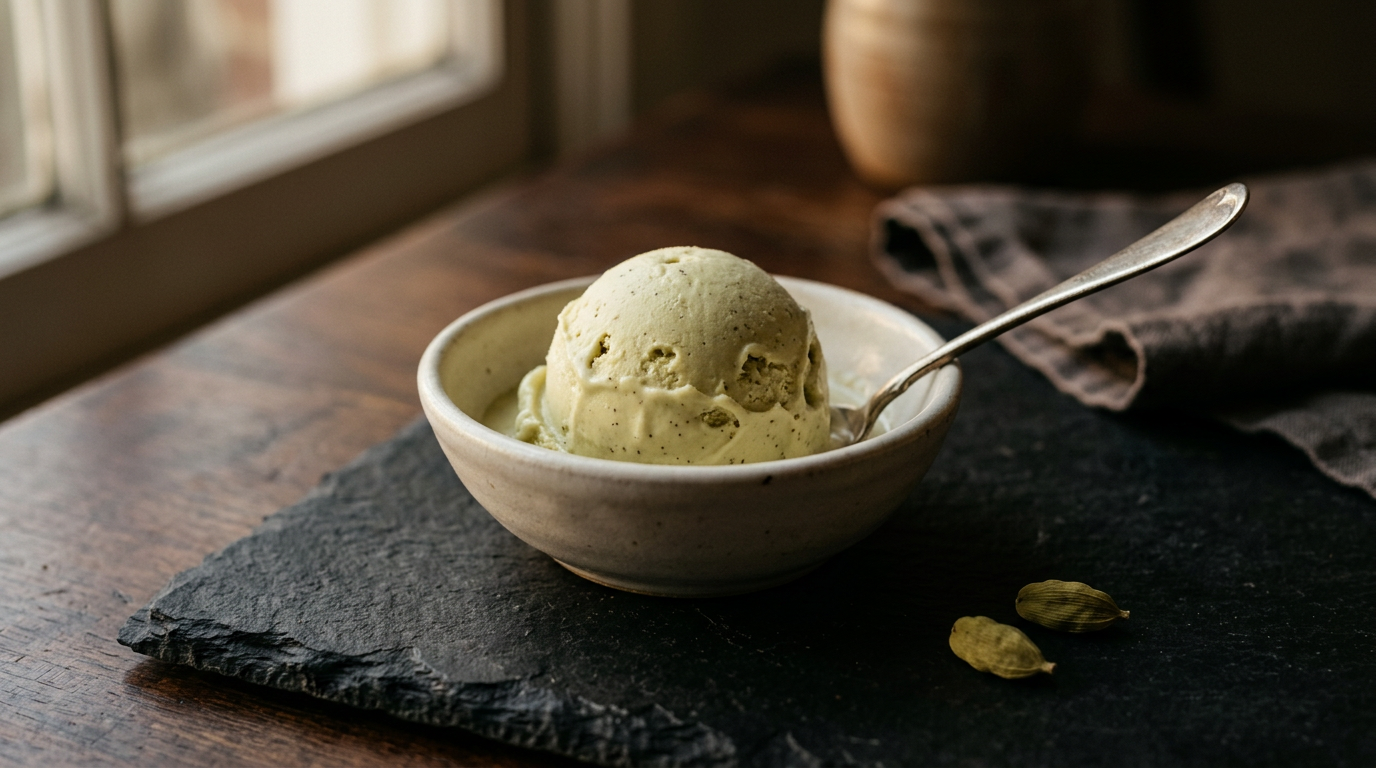
The first time you taste real cardamom ice cream, something clicks. Not the dusty, muted flavor of pre-ground spice, but the vibrant, full-throated perfume of freshly ground green pods. It’s a symphony in a mouthful: a whisper of eucalyptus, a note of citrus, a warm, resinous hum that is both invigorating and profoundly comforting. It tastes ancient and modern all at once.
Then you find that same flavor echoing through Scandinavia. It’s the soul of the Swedish kardemummabulle, or cardamom bun, a pastry that rivals the cinnamon roll for the national soul. It scents Finnish pulla bread and Norwegian Christmas cookies. And the question hangs in the air, fragrant as the spice itself: How did the queen of Indian spices, a tropical pod from the steamy forests of the Malabar Coast, find a second home a stone’s throw from the Arctic Circle?
The answer, improbably, begins with a Viking longboat.
The Long Road to Malmö
We tend to picture Vikings as raiders, all horned helmets (a myth, by the way) and coastal pillaging. But they were also history’s most adventurous merchants. From the 8th to the 11th centuries, Scandinavian traders, known as Varangians in the East, forged a staggering network of river routes across present-day Russia and Ukraine. Their ultimate destination was the greatest city they knew: Miklagård, the “Great City,” what we now call Istanbul [1].
Constantinople was the western terminus of the Silk Road, a bustling nexus where goods from Asia flowed into Europe. Here, amidst silks from China and jewels from Persia, the Vikings would have encountered the treasures brought by Arab dhows from the Indian Ocean: black pepper, cloves, and the intensely aromatic green pods of Elettaria cardamomum.
They brought them home. While many spices were fleeting luxuries, cardamom burrowed deep into the Nordic palate. It became more than a status symbol; it became a staple.
A Counterintuitive Pairing
Of all the spices to fall for, why cardamom? Its price was astronomical, the result of a perilous, multi-thousand-mile journey. Yet unlike saffron or clove, which were used with wealthy restraint, cardamom became a democratic flavor, as essential to a farmer’s coffee bread as a king’s feast.
Part of the answer lies in its unique chemistry. Cardamom’s flavor profile is a complex cocktail of compounds like cineole (fresh, medicinal, like eucalyptus), limonene (bright citrus), and terpinyl acetate (sweetly floral and herbaceous). This complexity does something magical when met with the staples of Nordic cooking: butter, cream, and sugar.
In a cold-weather diet rich in fats, cardamom cuts through the heaviness with its bright, piercing aroma. It adds a sophisticated, warming dimension to simple carbohydrates, transforming humble flour and yeast into something extraordinary. It complements the flavor of coffee, a beverage the Nordics consume more of per capita than almost anywhere else on Earth.
There might be a deeper, functional wisdom at play, too. In its native India, Ayurvedic practitioners have used cardamom for millennia as a carminative—an herb that soothes the stomach and aids digestion [2]. While the Vikings likely weren’t reading Ayurvedic texts, they may have intuitively recognized that this potent spice made their rich, heavy foods sit a little better. It’s a classic case of ancient wisdom being validated by experience, half a world away.
The Flavor That Endured
The Viking Age ended, trade routes shifted, and empires fell. But the North’s love for cardamom never faded. In a way, the region became a living museum for the spice, preserving its place in baking even as other European cuisines moved on.
Today, that legacy is more vibrant than ever. The New Nordic culinary movement, famous for its focus on hyperlocal foraging, still reveres the cardamom bun. High-end bakeries in Copenhagen and Stockholm obsess over the sourcing of their pods, knowing that true flavor comes from freshness and origin. Young chefs are rediscovering it, folding its ancient perfume into new creations, from craft cocktails to, yes, sublime ice cream.
This journey—from a shade-grown plant in the Western Ghats of India, carried by dhow to an Arab souk, traded for furs with a Viking merchant, and finally kneaded into a Swedish dough a millennium later—is about more than just food history. It’s a lesson in what makes an ingredient timeless. It’s not about novelty, but about a unique, powerful character that resonates across cultures and climates.
When we source our cardamom directly from the same hills where it first grew, we’re tapping into that legacy. We choose farmers like the ones in Idukki, Kerala, who hand-harvest the pods at their peak potency, a skill passed down through generations. We value the specific terroir that gives our cardamom its brilliant floral and menthol notes.
Because a flavor that could captivate a Viking—and hold the attention of a Stockholm baker a thousand years later—is no ordinary ingredient. It’s a piece of history, a lesson in taste, and a reminder that the most enduring things are often the ones that have traveled the farthest.
Sources & citations
- Britannica, The Editors of Encyclopaedia. "Viking". Encyclopedia Britannica, 11 Sep. 2023, https://www.britannica.com/topic/Viking-people.
- Al-Zuhair, H., et al. "Pharmacological basis for the medicinal use of cardamom in gastrointestinal disorders." Journal of Ethnopharmacology, vol. 115, no. 3, 2008, pp. 426-31. https://pubmed.ncbi.nlm.nih.gov/22155558/.
- "The cardamom bun". The Swedish Institute, https://sweden.se/culture/food/the-cardamom-bun. Accessed 15 Oct. 2023.
- Turner, Jack. Spice: The History of a Temptation. Vintage Books, 2005.