
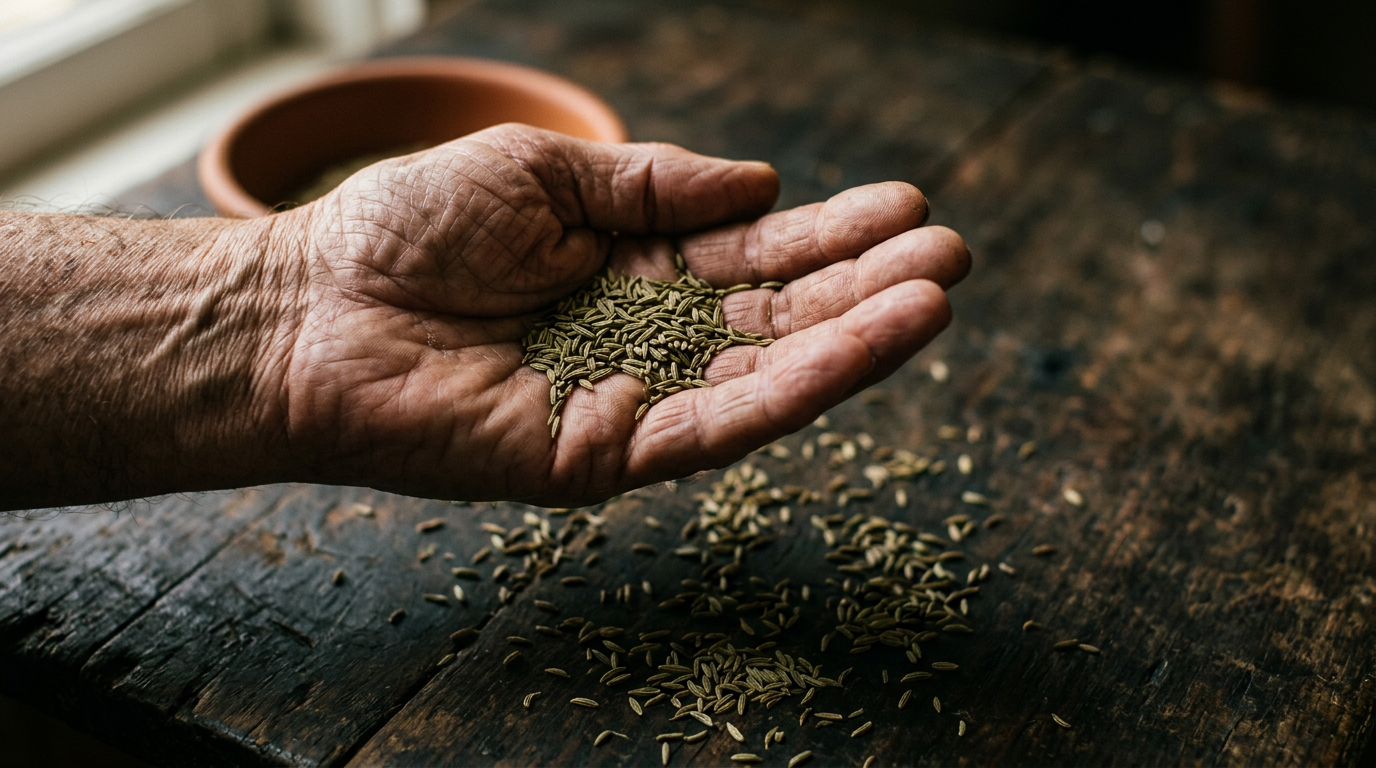
We’ve all done it. Rushing through the grocery store, we grab a small, familiar jar from the spice aisle. Cumin, maybe. It’s $2.19. We toss it in the cart without a second thought.
It feels like a small miracle of modern logistics. A plant grown, harvested, dried, and processed on the other side of the world can land in our kitchen for less than the price of a cup of coffee. But this isn't a story about efficiency. It’s a story about economics, and whose accounts get settled.
Let's follow the money—all two dollars and nineteen cents of it—backwards from the checkout counter to the farmer’s hands.
The Retailer's World
First, the grocery store where you bought the jar takes the largest slice. To secure a spot on that shelf, brands pay 'slotting fees'. The retailer then takes a margin of anywhere from 30% to 50% on the final sale price. They provide the real estate, the lights, the labor. For their part in the journey, they claim roughly a dollar from your purchase.
Running Total:
- Retailer: ~$1.00
- Remaining: $1.19
The Brand and the Middlemen
Next up is the brand whose name is on the label, and the network of importers and distributors they work with. This cohort is responsible for a dizzying array of tasks: ocean freight, customs, inland trucking, warehousing, marketing, and sales. They are masters of the spread, buying low from exporters in origin countries and building in their costs and profits.
Together, the U.S.-based brand, importer, and distributor might account for another dollar of the final price. Their primary risk is inventory. Their primary value is moving boxes and building a recognizable name, even if they never touch the spice itself.
Running Total:
- Retailer: ~$1.00
- Brand & Importer/Distributor: ~$1.00
- Remaining: $0.19
From the Port to the Farm
Now we're down to nineteen cents, and the spice is still sitting in a port city like Mundra, India. Our nineteen cents have to cover the Indian exporter’s operations: buying the raw commodity from local markets, running it through sorting machines, and grinding it into powder. It also has to cover the cost of sterilization—a critical step.
To meet the low price demanded by the global market, high-volume processors often use cheap, effective methods like ethylene oxide (EtO) gas. The problem? The U.S. Environmental Protection Agency considers EtO a known human carcinogen, and its use on food products is banned in the European Union [1]. The residue it can leave behind is a hidden cost to our long-term health. Safer methods, like steam sterilization, cost more and are often skipped.
After the exporter's costs and margin, and the local aggregator who bought the spice from dozens of small farmers at the mandi (regional market), we are left with maybe six cents.
Running Total:
- Retailer: ~$1.00
- Brand & Importer/Distributor: ~$1.00
- Exporter, Processor, Aggregator: ~$0.13
- Remaining: $0.06
The Farmer's Six Cents
That six cents is what’s left for the person who started it all. A farmer in, say, Gujarat, who spent months tending a delicate crop. Cumin is risky. It’s susceptible to frost, blight, and volatile weather. The harvest is done by hand, with families cutting the plants, stacking them to dry, and then threshing them to release the seeds.
For a year's work and risk, the farmer receives a tiny fraction of the final value—often less than 3% of the price you pay [2]. That's six cents from your $2.19 jar.
When the compensation is this low, the pressure to produce quantity over quality is immense. This can lead to the use of harsh pesticides and, further up the chain, economically motivated adulteration. Cumin powder is notoriously cut with undeclared fillers like sawdust, chalk powder, and even ground peanut shells—a terrifying prospect for anyone with a nut allergy [3].
This is the paradox. We buy cumin for its flavor and its well-documented wellness benefits, from aiding digestion to its antioxidant properties [4]. Indigenous wisdom and modern science both recognize the value held within the pure seed. But the race to the bottom ensures that the powder in that $2 jar may be compromised, its potency diluted, its safety questionable.
The cheap jar of cumin isn’t a bargain. It’s a bill deferred. It's a system that transfers risk to the farmer and the eater, while extracting value in the middle. The true value of a spice isn't found in its low price, but in its ability to support the health of the land, the livelihood of the farmer, and the well-being of the person who eats it. And that is worth far more than two dollars.
Sources & citations
- The Guardian. "Spices sold in US contaminated with 'shocking' levels of heavy metals, report finds." https://www.theguardian.com/us-news/2023/may/15/spices-herbs-ethylene-oxide-cancer-risk
- Fairfood International. "Reports and Publications." Reports from organizations like Fairfood consistently show the small share of retail price returning to farmers in global commodity chains. https://www.fairfood.org/our-work/knowledge-hub/reports-and-publications/
- Food Safety Magazine. "Economically Motivated Adulteration of Spices." https://www.food-safety.com/articles/7311-economically-motivated-adulteration-of-spices
- Srinivasan, K. "Cumin (Cuminum cyminum) and black cumin (Nigella sativa) seeds: traditional uses, chemical constituents, and nutraceutical effects." Food Quality and Safety, Volume 2, Issue 1, February 2018. https://pubmed.ncbi.nlm.nih.gov/30264069/