
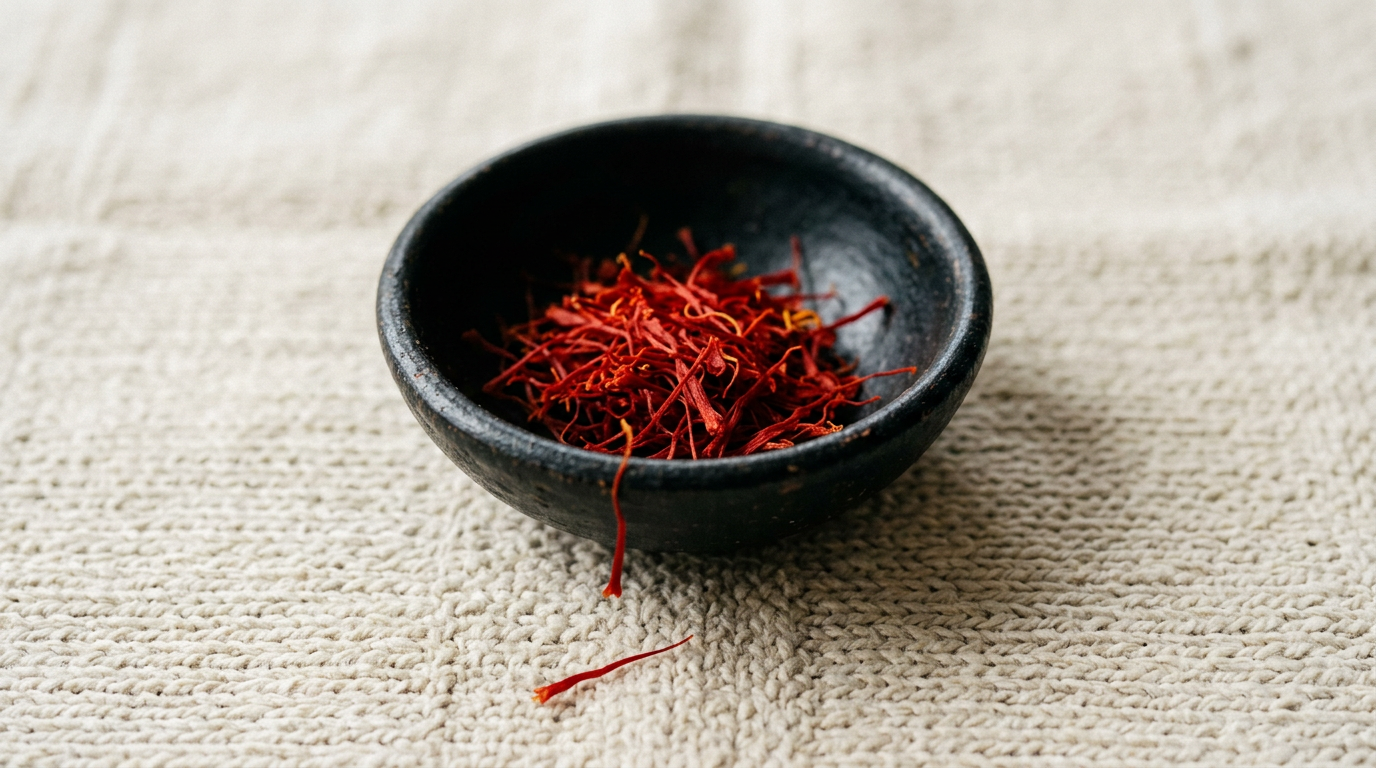
The expected [saffron price per gram in 2026](/spice/saffron) will continue to make it the world's most expensive spice, a title earned thread by painstaking thread. This cost isn't arbitrary; it’s a direct reflection of immense manual labor, a fleeting harvest window, and the plant's unique biology. As communities prepare for traditions like [Ashura](/festival/ashura-1448), understanding this price is understanding the value of authenticity.
The Math of a Single Thread
Each saffron thread is a stigma from the Crocus sativus flower. Every flower produces just three of these delicate threads, and they must be harvested by hand. The harvest season is a frantic, three-week period in autumn when all the flowers bloom at once, an event called the "saffron flush" [1].
Consider the labor:
- It takes about 150 flowers to produce a single gram of saffron.
- A kilogram requires harvesting between 150,000 and 200,000 individual flowers, which translates to over 400 hours of intense manual labor—from picking the blossoms at dawn before they wilt to carefully tweezing out the three stigmas inside [2].
This isn't work that can be automated. The delicacy of the threads and the need to separate them from the flower without damage demands a human touch. This is the first, and most significant, factor in its price. It’s a cost born of time, skill, and sheer human effort.
A Global Web of Red Gold
From the fields, the threads are toasted—a critical step that removes moisture and locks in the precious aromatic compounds. The quality of this drying process determines the saffron's final grade and market value. High-grade saffron, like Persian Negin or Kashmiri Mogra, consists of only the deep red stigma tips, trimmed of the paler yellow style, concentrating the flavor and color.
This is where regional character comes into play. In the spice souks of the [Gulf](/region/gulf), particularly Dubai or Riyadh, saffron is a cornerstone of hospitality, famously used to infuse gahwa, or Arabic coffee. Its value is understood not just in riyals or dirhams but in its role as a marker of welcome and generosity. In Iraq, the spice lends its golden hue and earthy notes to Qaymeh, a chickpea and meat stew traditionally prepared and shared during Muharram, especially on the day of Ashura, which in 1448 AH falls on July 25, 2026.
Meanwhile, in Pampore, India, Kashmiri saffron holds a coveted Geographical Indication (GI) tag, a legal recognition of its unique terroir. Local traders still sometimes use the traditional measure of a tola, roughly 11.6 grams, a unit that speaks to a long history of valuing this spice like the precious metal it rivals in price [3].
The Science of Spotting a Fake
The high saffron price per gram in 2026 makes it a prime target for adulteration. Untrustworthy vendors may mix in safflower (the far cheaper "bastard saffron"), corn silk fibers, or even beet-dyed threads to add weight and defraud customers. For the buyer, this means you're not just getting a subpar product; you're missing out on the very compounds that give saffron its culinary and therapeutic value.
Fortunately, you don't need a lab to perform a basic purity test. Science and tradition offer simple methods.
| Test | Authentic Saffron | Adulterated Saffron |
|---------------|---------------------------------------------------------------------------------|------------------------------------------------------------------------|
| Water Test | Threads bleed color slowly, turning the water a uniform golden yellow. The thread itself retains most of its red color. | Color bleeds instantly and aggressively. Water turns a murky red/orange, and the fake thread loses its color. |
| Touch Test | Dry, brittle, and matte. When rubbed between fingers, it should feel delicate. | Can feel slightly sticky, soft, or even greasy due to added oils or glycerin to increase weight. |
| Taste Test | A slightly bitter and astringent taste. It should never be sweet. | If it tastes sweet, it has likely been treated with honey or sugar to add weight. |
For us, these home tests are just the first line of defense. True quality assurance requires clinical precision. Saffron is graded internationally by the ISO 3632 standard, which measures the concentration of three key compounds: crocin for color, picrocrocin for taste, and safranal for aroma [4]. This is non-negotiable. It’s how we ensure every thread is potent and pure, delivering the character that centuries of tradition have celebrated.
As you think about the fluctuating saffron price per gram in 2026, remember what it truly represents: the dawn harvest, the steady hands of farmers, the precise science of grading, and the cultural heritage carried in every thread. When you buy authentic, high-grade saffron, you are not just paying for a spice; you are investing in an entire ecosystem of quality and tradition that simply cannot be discounted.
### FAQ
### What is a fair saffron price per gram in 2026?
While market rates fluctuate, a fair retail price for high-grade, lab-tested saffron (like Negin or Sargol) will likely range from $15 to over $25 per gram. Anything significantly lower should be treated with suspicion, as it may be old, low-grade, or adulterated.
### How can I test saffron for purity at home?
The simplest way is the cold water test. Drop a few threads into a glass of cold water. Real saffron will slowly release a golden hue while the thread itself stays red. Fakes will quickly dye the water red and the thread will lose its color.
### Why is saffron used during Ashura?
In many cultures, especially in Iraq and the Gulf, saffron is used in communal dishes and drinks prepared for religious observances. During Muharram and Ashura, it's used in commemorative meals like Qaymeh stew, symbolizing community, tradition, and the sharing of precious resources.
### What's the difference between Sargol and Negin saffron?
Both are high grades of saffron. Sargol means "top of the flower" and consists of the red stigma tips. Negin ("jewel") is a slightly longer cut that includes a tiny amount of the orange style, making it visually striking, but is trimmed to have no yellow. Both are far superior to lower grades that include the entire tasteless style.
Sources & citations
- University of Vermont Extension. (n.d.). Growing Saffron. Retrieved from https://www.uvm.edu/extension/horticulture/commercial
- Gresta, F., Cardone, G., & Avola, G. (2020). Saffron (Crocus Sativus L.), the King of Spices: An Overview. Scientia Horticulturae, 272, 109560. https://doi.org/10.1016/j.scienta.2020.109560
- Encyclopaedia Britannica. (n.d.). Saffron. Retrieved from https://www.britannica.com/plant/saffron
- Khorasany, A. R., & Hosseinzadeh, H. (2016). Therapeutic effects of saffron (Crocus sativus L.) in digestive disorders: a review. Iranian Journal of Basic Medical Sciences, 19(5), 455–469. Retrieved from https://www.ncbi.nlm.nih.gov/pmc/articles/PMC4993470/