
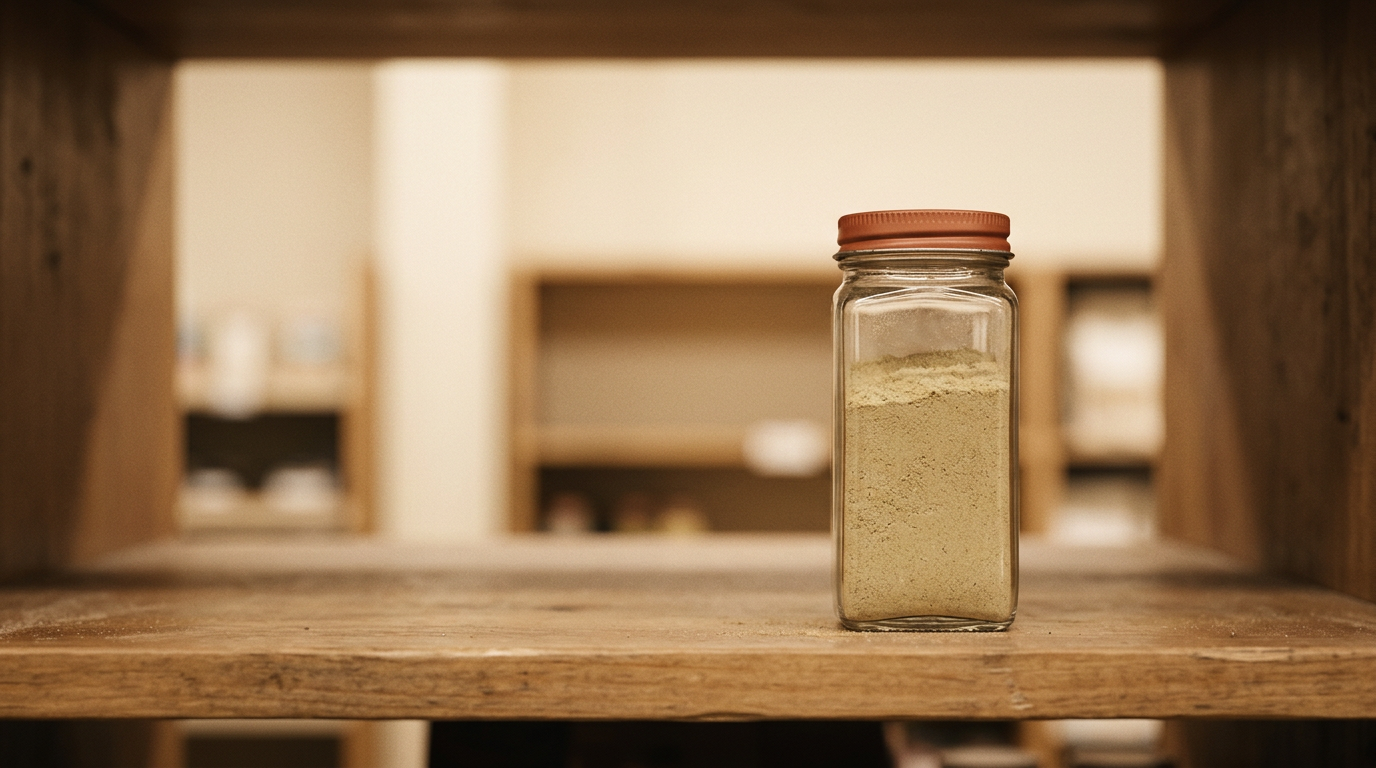
It’s a familiar scene in any UK supermarket come late June. The aisles are flush with red and yellow tags, a seasonal invitation to stock up and save. You see it on the spice rack: ground cumin, usually a few quid, now half off. It feels like a small, smart victory—a pantry staple secured for a song.
But this bargain is often an illusion. That little jar of discounted dust may be the most expensive purchase you make, because it has been stripped of the one thing you’re paying for: its vibrant, aromatic soul.
The Invisible Thief
Spices are agricultural products, but more than that, they are delicate capsules of chemical information. Their magic lives in volatile oils, the fragrant compounds that define their character. The enemies of these compounds are simple and universal: oxygen, light, and heat.
Think about the journey of that sale-priced spice jar. The cumin was likely harvested more than a year ago in India or Syria. It was processed, packaged, and shipped across continents. It sat in a central distribution hub, then a regional warehouse, and finally, the stockroom of your local store. Now, consider the timing. Why is it on sale in summer? Often, it’s to clear old inventory before the new season’s harvests begin to trickle in later in the year.
This means it has likely spent the hottest months of the year waiting in a warehouse that, even in the temperate UK, can reach surprisingly high temperatures during a summer heatwave [1]. While we might be enjoying the sun, that jar of spice is quietly being robbed.
A Portrait of Cumin
To understand what’s lost, we need to appreciate what’s there to begin with. The defining aroma of cumin (Cuminum cyminum) comes from a potent aldehyde called, fittingly, cuminaldehyde. It is responsible for that uniquely warm, earthy, slightly musky profile that is essential to countless dishes, from a Mexican mole to a North Indian daal.
Cuminaldehyde is a marvel of nature, but it is also fragile. Heat acts as a catalyst, dramatically speeding up chemical reactions. When exposed to warmth and oxygen over time, the cuminaldehyde in ground cumin oxidizes. It transforms into cuminic acid—a far less aromatic and flavourful compound. The scent doesn’t just fade; it changes, becoming flat and dull. What was once a powerful spice becomes little more than brownish powder.
Scientists who study this degradation have found that the loss is rapid, especially in ground spices, which have an exponentially larger surface area exposed to oxygen than whole seeds do [2]. After just a few months in warm, suboptimal storage, a significant percentage of the signature volatile compounds can be gone forever.
The False Economy of Bad Spice
The sticker price on that jar is misleading. You’re not saving 50%; you’re paying for a ghost. When you get it home, you’ll find yourself using two, even three teaspoons to achieve the depth of flavour one fresh, well-preserved teaspoon would provide. The dish still falls flat. The aroma doesn’t fill the kitchen. You’ve bought a failed promise.
This is the false economy of the industrial spice supply chain, which prioritizes logistics and shelf life over sensory integrity. The clear glass jars, so lovely on a color-coordinated shelf, are a terrible choice for preservation, as they allow light to penetrate and accelerate photo-oxidation [3]. The long, slow, and often warm journey from a farm on the other side of the world to a European supermarket shelf is designed for efficiency, not for celebrating the delicate chemistry of a sun-dried seed. Explore more about the specifics of sourcing in our region here: [/region/europe](/region/europe).
This isn't just about flavour. The same volatile oils that create aroma are often the source of a spice’s celebrated health benefits. The bioactive compounds that have been studied for their antioxidant and digestive properties are subject to the exact same degradation from heat, light, and air [4]. A stale spice isn't just less delicious; it's less potent.
A Chain of Custody for Flavour
There is a different way. It’s a model built on respecting the ingredient. It means sourcing from harvests that are months, not years, old. It means storing whole spices in cool, dark, climate-controlled environments until the last possible moment. It means using opaque, airtight packaging that protects from light and oxygen. It means grinding in small batches, so the time between the whole seed being cracked and it arriving in your kitchen is as short as possible.
This is simply modern science confirming ancient wisdom. For millennia, cooks have known to buy spices whole, store them carefully away from the stove, and grind them just before use. It wasn’t superstition; it was sensory science, passed down through generations.
So the next time you’re tempted by a summer sale, pause. Ask yourself not what it costs, but what it's worth. True value in the kitchen isn’t found on a discount sticker. It’s found in the explosive, room-filling fragrance of a spice that still remembers the soil and the sun.
Sources & citations
- Singh, R. K. T., & Khatkar, B. S. (2005). Kinetics of quality changes in ground cumin. Food Chemistry, 91(2), 277–282.
- Tainter, D. R., & Grenis, A. T. (2001). Spices and Seasonings: A Food Technology Handbook. John Wiley & Sons.
- University of Minnesota Extension. (2022). Storing spices and herbs. Retrieved from https://extension.umn.edu/preserving-and-preparing/storing-spices-and-herbs
- Peter, K.V. (Ed.). (2012). Handbook of Herbs and Spices (2nd ed., Vol. 1). Woodhead Publishing. Retrieved from https://www.elsevier.com/books/handbook-of-herbs-and-spices/peter/978-0-85709-039-3