
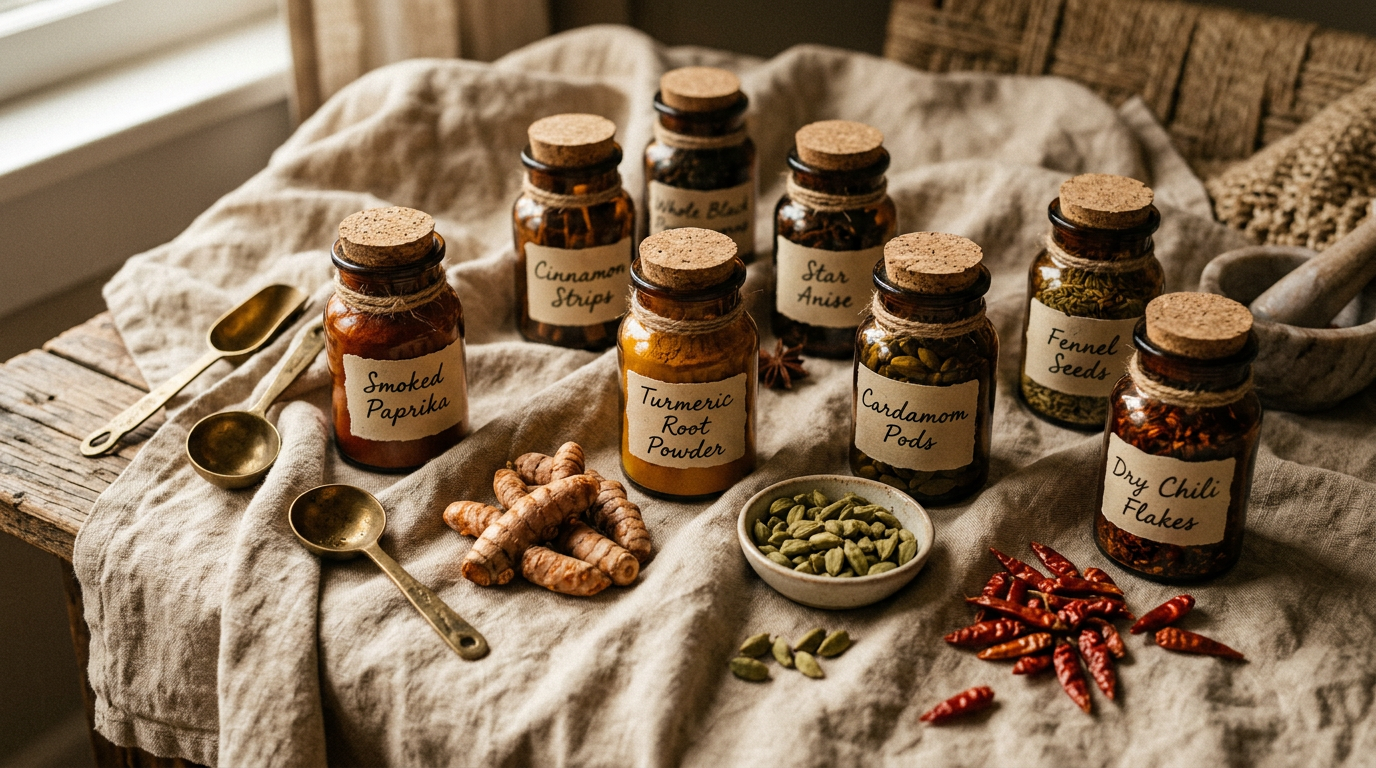
Walk down the spice aisle in any major supermarket. You’re greeted by a wall of uniform plastic bottles with familiar red caps. It’s a landscape of dusty consistency, where paprika is just… paprika. The jars are often undated, the contents muted, a ghost of their potential flavor. For decades, this has been our reality, a system dominated by a few giants who mastered the art of turning a vibrant agricultural product into a shelf-stable commodity.
This model, built for volume and logistics, often creates a less-than-flavorful experience. Spices typically travel through a complex network of brokers and distributors, sometimes sitting in warehouses for many months. The volatile oils that deliver aroma and flavor degrade over time, especially when exposed to light, heat, and air [1]. The system also contributed to inequities, where farmers growing these crops at commodity scale often received a very small percentage of the final retail price, as reporting on global spice markets indicates [2].
But a quiet revolution is underway. It’s not happening in corporate boardrooms, but in the fields of Kerala, the mountains of Afghanistan, and the kitchens of passionate founders. A new generation of CPG brands is rewriting the rules, and they’re starting with a radically simple idea: what if spices were treated with the respect they deserve?
The Founder-Led Uprising
Meet the new guard: Brands like Diaspora Co., Burlap & Barrel, and Pilon are not just selling spices; they're selling a point of view. They are founder-led, born from a desire to connect, disrupt, and decolonize a system many saw as broken.
Sana Javeri Kadri founded Diaspora Co. with a mission to build a more equitable and delicious spice trade, starting with a single source of high-curcumin Pragati turmeric. Her focus on the colonial legacy of the spice trade—which enriched empires while often creating difficult economic conditions for farmers—fueled a movement. Today, Diaspora Co. partners with numerous small, organic family farms across South Asia to source dozens of single-origin spices.
Similarly, Burlap & Barrel was started by two international development professionals, Ethan Frisch and Ori Zohar. After tasting unparalleled spices during their work abroad, they saw an opportunity. Their model shortens the supply chain, enabling them to source unique spices like Zanzibar Black Peppercorns and Royal Cinnamon directly from farmer cooperatives, often paying premiums for high quality [3].
These are not just businesses; they are correctives. They replace opacity with storytelling, celebrating the farmers and the land as core parts of their brand.
From Commodity to Terroir
The fundamental difference lies in their sourcing model. The old guard often buys on the commodity market, where spices are bulked and blended. The new wave champions the concept of terroir—the idea that, like wine or coffee, a spice’s flavor is inextricably linked to its specific environment: the soil, the climate, the cultivar.
This means a shift from “cinnamon” to “Royal Cinnamon from the mountains of Que Son, Vietnam.” It means harvest dates printed on the jar, an act of transparency that holds the brand accountable for freshness. It means paying farmers a price premium that reflects their skill and the quality of their product. Diaspora Co., for instance, reports paying its farm partners an average of several times the commodity price, a significant premium that can help farmers invest back into their land and communities [3].
By shortening the supply chain, these brands ensure two things: the farmer may earn a more dignified living, and the consumer gets a product of greater potency. The first time you open a jar of freshly harvested, single-origin spice, the difference is often not subtle. It’s a sensory shock, a reminder of what we’ve been missing.
Where Ancient Wisdom Meets the Lab
This is where tradition and science can beautifully intertwine. These brands are not just romanticizing the past; they are using modern science to validate and enhance age-old agricultural wisdom.
Many of their farm partners use regenerative, organic practices that have been passed down for generations. They cultivate heirloom seeds that are prized not for yield, but for flavor and potency. Diaspora Co. doesn’t just source “turmeric”; they source a specific variety, then send it to a lab to ensure its curcumin content—the active compound studied for its anti-inflammatory properties and responsible for its vibrant color—is exceptionally high [4].
This is the “Spiced with Science” ethos in action. Honoring the traditional knowledge that identifies the best cultivars, and then using scientific testing to verify and communicate that quality. The lab data doesn’t replace the story of the land and the farmer; it reinforces it. It suggests that the unique notes in Burlap & Barrel’s Cloud Forest Cardamom aren’t just marketing copy—they may be the result of specific volatile compounds preserved through careful harvesting and a swift journey to your kitchen.
The Revolution is on Your Shelf
This shift is more than just a win for adventurous home cooks. For founders and investors, it’s a powerful case study in a new kind of consumer brand: one that is transparent, equitable, and potentially very successful. It suggests that consumers are hungry for authenticity and will pay a premium for a product that delivers on quality and purpose.
For too long, the spice trade has sometimes been a story of extraction. Now, it’s becoming a story of connection. The next time you’re in the spice aisle, look past the red caps. Seek out the brands telling a real story, the ones with a harvest date on the jar. Open it, take it in. You’re not just holding a spice; you’re holding a piece of a farm, a farmer’s livelihood, and the delicious, potent future of flavor.
Sources & citations
- "Herbs and Spices," University of Minnesota Extension, 2018. https://extension.umn.edu/preserving-and-preparing/store-herbs-and-spices
- "Markets and Trade: Spices and culinary herbs," Food and Agriculture Organization of the United Nations. https://www.fao.org/markets-and-trade/commodities/spices/en/
- Tejal Rao, "The New Spice Rack," The New York Times Magazine, March 9, 2021. https://www.nytimes.com/2021/03/09/magazine/spices-diaspora-co-burlap-barrel.html
- Susan J. Hewlings and Douglas S. Kalman, "Curcumin: A Review of Its Effects on Human Health," Foods (via NCBI), October 22, 2017. https://www.ncbi.nlm.nih.gov/pmc/articles/PMC5664031/