
The Peppercorn at the Founding
On the Fourth of July, we gather for fireworks and cookouts, celebrating a story of independence defined by ideals and declarations. But underneath the familiar narrative of powdered wigs and revolutionary fervor lies another story—one of risk, trade, and a tiny, pungent fruit that helped secure the new republic's financial future.
It's a story that begins in Salem, Massachusetts, in the years just after the Revolutionary War. The fledgling United States was triumphant but broke. Its traditional trade routes to the West Indies, controlled by a bitter Great Britain, were severed. A new path to prosperity was desperately needed.
Enter Elias Hasket Derby, a Salem merchant who would become one of America’s first millionaires. Derby and his peers were not just shopkeepers; they were global venture strategists, operating in a world without instant communication or reliable maps. They built their fortunes by looking at the globe and asking: what do they have that we need, and where can we get it first?
The Secret of Sumatra
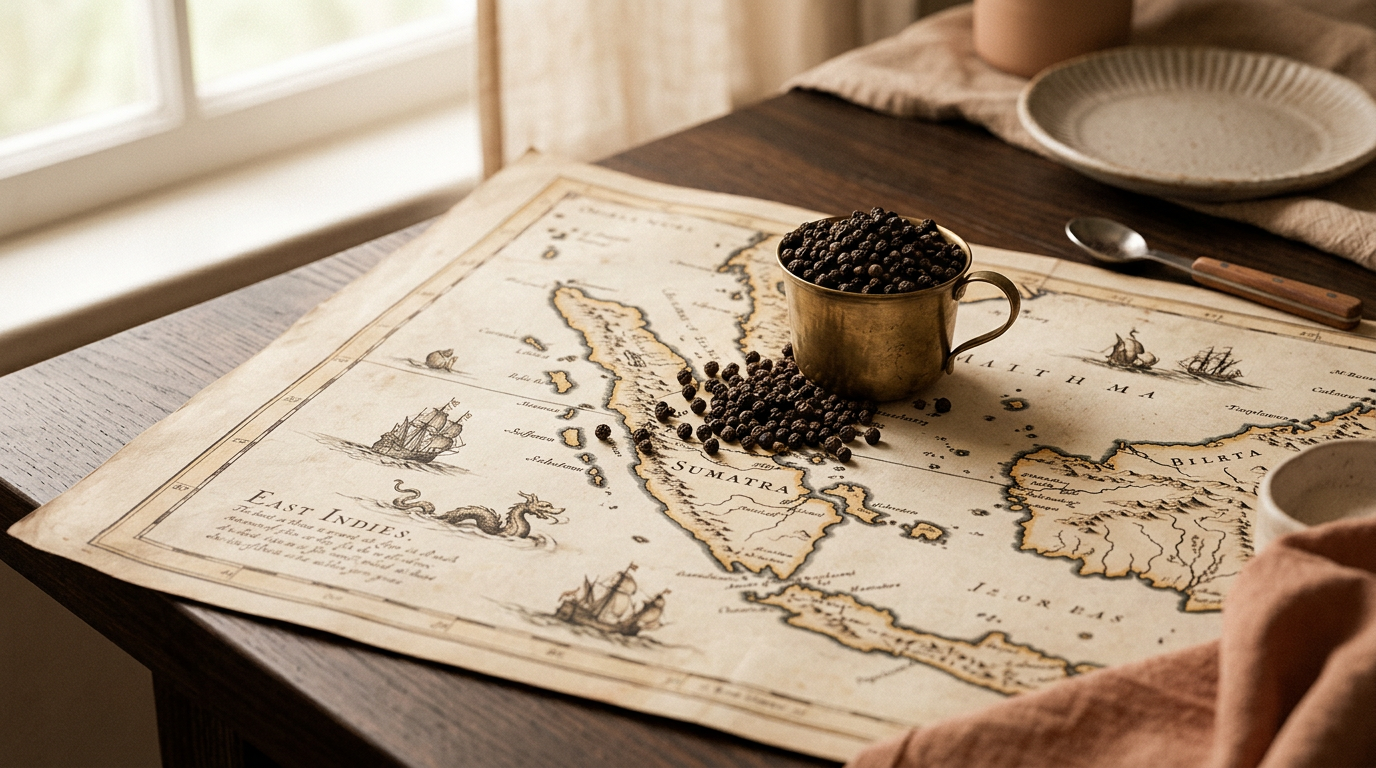
The answer, one of Derby's captains believed, was pepper. In the late 18th century, black pepper was still a high-value commodity, largely controlled by Dutch and British monopolies who bought it in India and sold it at a steep markup in Europe. But Captain Jonathan Carnes of Salem had heard whispers of another source: the northern coast of Sumatra, an island in modern-day Indonesia, where pepper grew wild and abundant.
In 1795, after a long, secretive voyage, Carnes returned to Salem harbor in his ship, the Rajah. Its hold was filled with 150,000 pounds of Sumatran black pepper, purchased directly from local growers at a fraction of the European-controlled price. The voyage yielded a staggering 700% profit, a windfall that electrified the port town [1].
Suddenly, Salem became the unlikely capital of the global pepper trade. For over a decade, the town's captains dominated the route, sailing directly to Sumatra and bypassing the old colonial powers. The duties paid at the Salem custom house on this pepper and other imported goods became a crucial source of revenue for the new federal government, funding its navy, infrastructure, and ambitions [4]. When you see the stately Federalist mansions that still line the streets of Salem, you are looking at houses built on pepper.
More Than a Spice
Why was this one spice worth such risk? We treasure pepper for the sharp, aromatic kick it gives our food. But before refrigeration, its value was far more fundamental. Black pepper is a powerful antimicrobial agent, a property it owes to its primary bioactive compound, piperine [2]. For centuries, this wasn't an abstract chemical fact; it was a kitchen reality. A pepper-crusted piece of meat was not just more flavorful, it was safer to eat and lasted longer. In an era when food spoilage was a constant threat, pepper was a form of technology.
The global demand was immense, and it funded empires. But the Salem traders did something different. They cut out the layers of middlemen that defined the old European spice routes. They sailed to the source, built relationships (however complicated and colonial they sometimes were), and brought the product directly to the American market. They understood that the greatest value was unlocked by closing the distance between grower and consumer.
The pepper boom didn't last forever. The War of 1812 and Jefferson's Embargo Act choked Salem's maritime trade. The secret of the Sumatra route got out, and competitors from New York and other ports flooded the market. But the short, brilliant era of the "Pepper Pot" fleet had already made its mark, demonstrating that the young nation could compete on a global stage not just with armies, but with commercial acumen.
The Taste of Independence
This Fourth of July, as you reach for the pepper grinder at a family barbecue, it's worth remembering this history. The story of the Salem pepper trade is a reminder that the foundations of this country are built not just on grand ideals, but on granular realities. On risk-takers who saw a new map of the world. On the tangible, preservative value of a well-sourced spice. And on a fundamental belief, still radical today, that going directly to the source is the most powerful move you can make. The pepper in your hand isn't just a condiment; it's a direct link to a story of how a nation was funded, one pungent peppercorn at a time [3].
Sources & citations
[1] "The Salem Pepper Trade," Peabody Essex Museum, accessed July 4, 2026. https://www.pem.org
[2] Tajkarimi, M. M., Ibrahim, S. A., & Cliver, D. O. (2010). "Antimicrobial activity of herbs and spices against foodborne pathogens: a review." Food Control, 21(9), 1199-1218. https://www.sciencedirect.com/journal/food-control
[3] "Pepper," Food and Agriculture Organization of the United Nations (FAO), accessed July 4, 2026. https://www.fao.org
[4] "Elias Hasket Derby, American Merchant," Encyclopædia Britannica, accessed July 4, 2026. https://www.britannica.com