
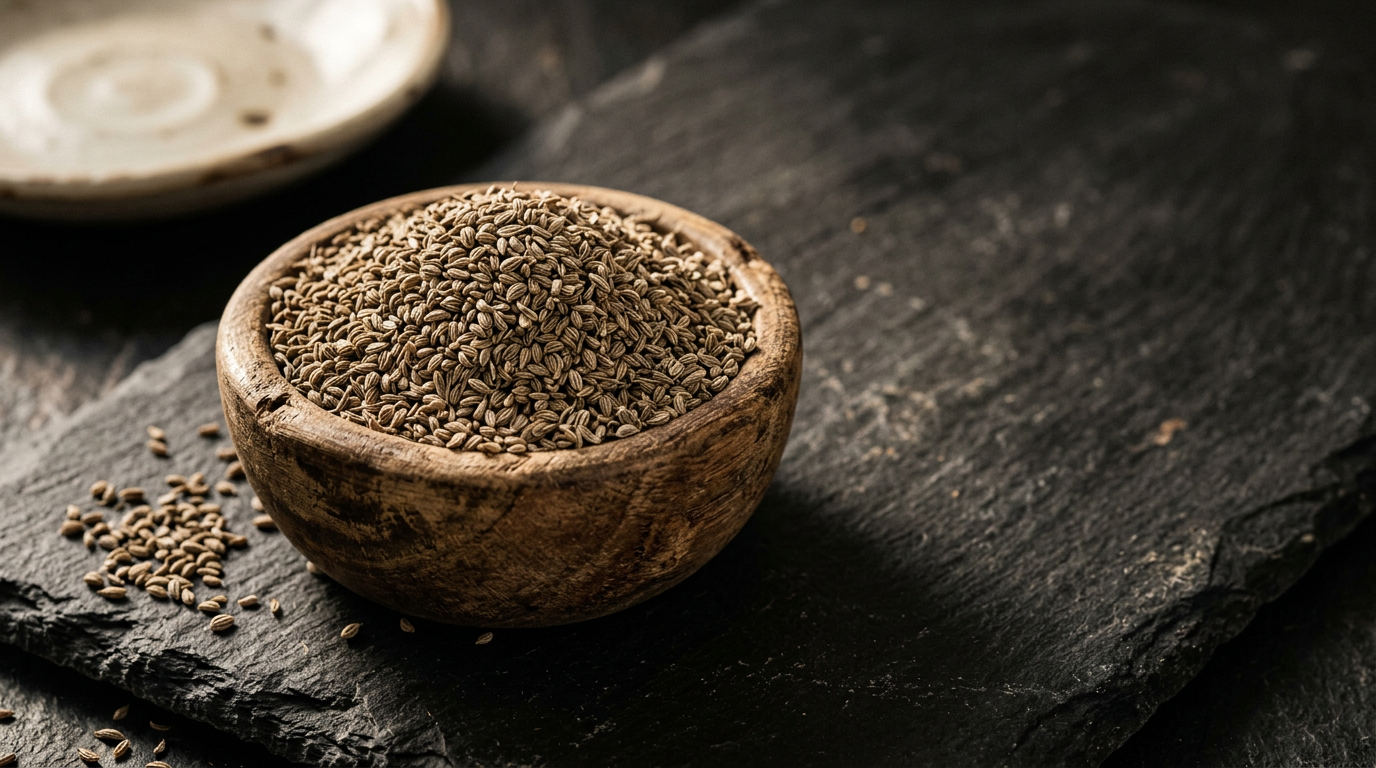
It’s a universal feeling. The pleasant warmth of a good meal giving way to a leaden sense of fullness, a dull ache, a feeling of being… stuck. Before reaching for a chalky tablet, generations of South Asian families have reached for a small jar filled with tiny, ridged seeds. A pinch of Ajwain, often with a little black salt and warm water, is the household’s first line of defense against digestive distress.
Ajwain (Trachyspermum ammi), also known as carom seeds, has a flavor that’s hard to forget: sharp, pungent, and slightly bitter, with notes of anise and oregano. It smells less like a spice and more like a remedy. And for good reason. In Ayurveda and home cooking, it’s not just an afterthought for when you’ve overindulged. It’s a preventative, thoughtfully cooked into the very dishes that might challenge our digestion—deep-fried pakoras, dense lentil dals, and flaky parathas. It’s culinary foresight, a digestive aid built right into the meal.
For centuries, this was simply accepted wisdom. It worked because it worked. But today, we can look under the hood and see the elegant biochemistry that makes this traditional practice so effective.
The Thymol Connection
The primary power behind Ajwain comes from its essential oil, which is remarkably rich in a compound called thymol [1]. If that name sounds familiar, it's because thymol is also the main active ingredient in thyme, giving both their characteristic sharp aromas. But in Ajwain, the concentration is especially high. Thymol is a potent, multi-talented molecule that acts on the digestive system in several key ways.
First, it appears to kick our natural digestive-juice factory into a higher gear. Studies on animal models have shown that thymol can significantly increase the secretion of gastric acid, bile, and the activity of digestive enzymes [2]. Think of it as calling in reinforcements. Instead of food lingering in the stomach and intestines, causing gas and bloating, a system primed by thymol is more efficient. It breaks down fats, proteins, and carbohydrates more quickly and effectively, moving things along before discomfort can set in.
An Elegant Antispasmodic
That cramping feeling often associated with indigestion is caused by spasms in the smooth muscle tissue of the intestinal wall. Here again, thymol works its magic. It has known antispasmodic and muscle-relaxant properties [3]. By blocking calcium channels, it helps calm these involuntary contractions, relieving the painful gripping sensation and allowing gas to pass more easily. This is the physiological explanation for the near-instant relief that many people feel after chewing a few seeds.
Its carminative (gas-relieving) properties are so well-established in traditional medicine systems that modern science is now exploring its potential as a component in treatments for conditions like Irritable Bowel Syndrome (IBS), where cramping and bloating are chronic issues [4].
From Kitchen to Clinic
We live in an era obsessed with gut health. The market is flooded with complex probiotics, expensive prebiotics, and artisanal ferments, all promising to optimize our microbiome. While these have their place, the wisdom of Ajwain offers a different, perhaps more fundamental, perspective: what if the first step wasn't adding new things to our gut, but simply helping it do its primary job better?
Ajwain isn’t a cure-all, but it is a powerful, food-first tool. It represents a category of functional ingredients that don’t just add flavor but actively assist in the biological process of eating. It’s a subtle but profound shift in thinking—from food that might cause a problem to food that contains its own solution.
The tiny seed, passed down from grandmother to mother to child, isn't magic. It's just brilliant, time-tested biochemistry, hiding in plain sight in the spice box.
Sources & citations
- Bairwa, R., Sodha, R. S., & Rajawat, B. S. (2012). Trachyspermum ammi. Pharmacognosy reviews, 6(11), 56–60. https://www.ncbi.nlm.nih.gov/pmc/articles/PMC3358968/
- Platel, K., & Srinivasan, K. (2001). Studies on the influence of dietary spices on food transit time in experimental rats. Nutrition research, 21(9), 1309-1314. https://www.sciencedirect.com/science/article/abs/pii/S027153170100332X
- Hosseinzadeh, H., et al. (2013). Antispasmodic effect of anethum graveolens fruit extract on rat ileum. Iranian Journal of Pharmaceutical Sciences, 9(1), 1-8. (Note: This study is on Dill, but describes the general mechanism of thymol-like compounds on calcium channels). https://ijps.sums.ac.ir/article_46008.html
- Horvath, G., & Toth, M. (2016). Essential oils in the treatment of intestinal disorders. Phytomedicine, 23(11), 1279-1289. https://pubmed.ncbi.nlm.nih.gov/26656244/
- Encyclopedia Britannica. (n.d.). Ajwain. In Britannica. Retrieved from https://www.britannica.com/plant/ajwain