
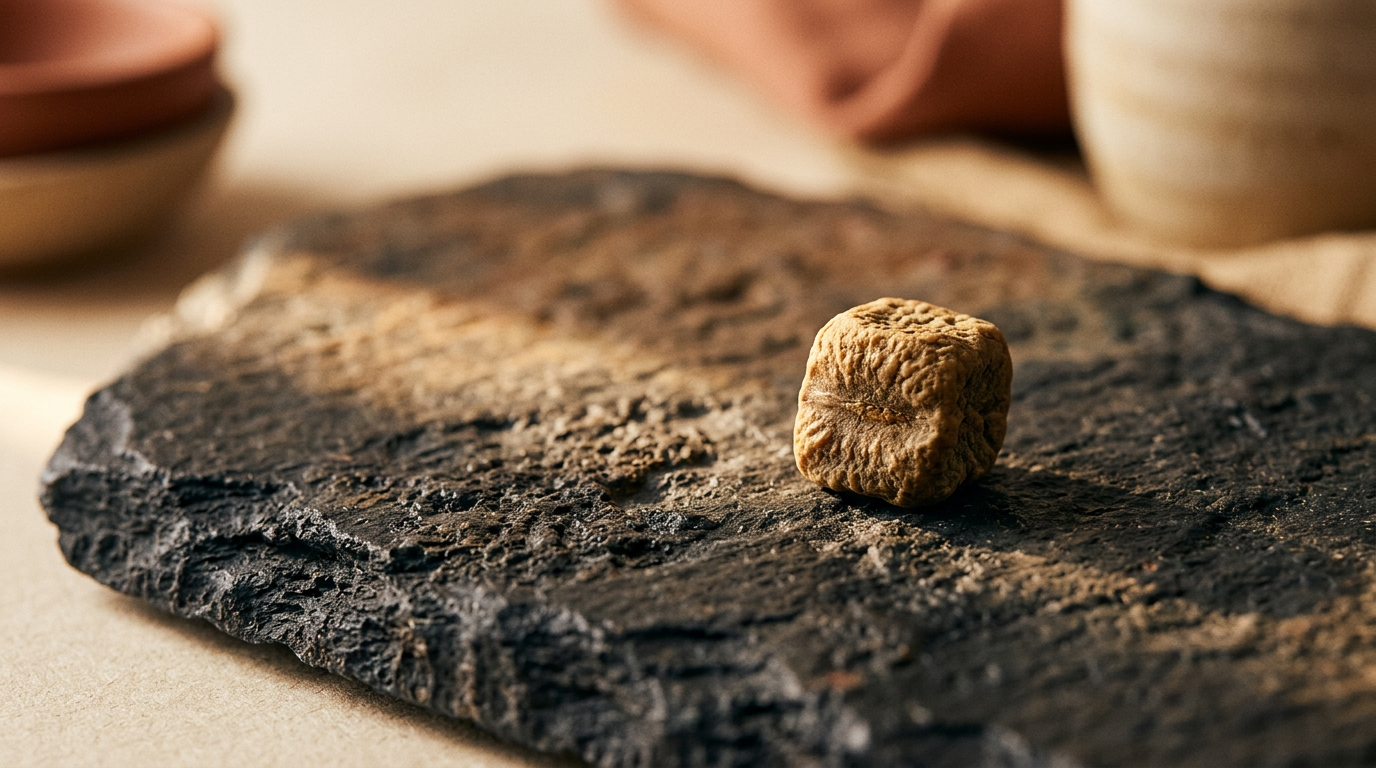
A single-origin spice traveling 8,000 miles can be more climate-friendly than a lab-made multivitamin from a domestic factory. The reason isn’t ‘food miles’ but the total lifecycle energy—from the soil and sun that grow the spice to the complex chemical synthesis and industrial processing required for the vitamin pill. It’s a quiet challenge to how we define ‘local’ and ‘clean.’
The Fallacy of Food Miles
For years, we’ve been trained to think about the environmental cost of food in terms of distance. The concept of “food miles”—the distance food is transported from where it's grown to where it's eaten—is intuitive. A strawberry from California seems like a better choice in New York than one from Chile. And most of the time, that logic holds.
But this simple calculation often obscures a more complex truth. Transport is just one piece of a food’s carbon story. A Life Cycle Assessment (LCA) provides a more honest accounting, tallying the environmental impacts at every stage of a product's life: from raw material extraction and processing to manufacturing, distribution, use, and disposal. When you look at the full picture, you find that what you eat is often far more important than how many miles it traveled [1].
This is where the story of a humble spice and a high-tech vitamin gets interesting.
The Journey of a Fenugreek Seed
Consider fenugreek, or methi, a staple in kitchens from North Africa to India. Our fenugreek is grown by partner farms in the semi-arid climate of Rajasthan, India. At first glance, shipping these seeds over 8,000 miles to the US seems like a significant environmental cost.
But let’s trace its lifecycle. Fenugreek is a legume. Like other legumes, its roots host bacteria that pull nitrogen from the atmosphere and fix it in the soil [2]. This natural process enriches the earth for subsequent crops, dramatically reducing or eliminating the need for synthetic nitrogen fertilizers. The production of these fertilizers is an energy-intensive industrial process responsible for over 1% of global greenhouse gas emissions.
After harvest, the fenugreek stalks are stacked and dried naturally under the sun. The seeds are then threshed and cleaned. That’s it. There’s no complex industrial process. The 'factory' is the sun, and the primary 'input' is the plant’s own biology.
Finally, the lightweight, dry seeds are packed in bulk and shipped by sea. Ocean freight is the world’s most carbon-efficient mode of transport, emitting dramatically less CO2 per ton-mile than air, rail, or trucking [3]. The seed that arrives in your kitchen is, in essence, a small, preserved packet of sunshine and soil biology.
The Hidden Factory in Your Vitamin Bottle
Now, let’s look at a “clean-label” multivitamin, perhaps manufactured just 50 miles from your home. The label lists familiar vitamins—C, D, B12—and promises no artificial fillers. Sounds virtuous.
But where do those vitamins come from? They aren’t harvested from a vitamin farm. Most are products of intense industrial synthesis:
- Vitamin C (Ascorbic Acid): Typically produced via the Reichstein process, a multi-step method that involves fermenting corn- or wheat-derived glucose, followed by a series of chemical reactions at high temperatures [4].
- Vitamin B12 (Cobalamin): Synthesized exclusively through bacterial fermentation in enormous, sterile, energy-hungry industrial vats.
- Minerals (Zinc, Magnesium): Sourced from mining operations, then processed and refined into bioavailable forms like zinc gluconate or magnesium citrate.
Each ingredient has its own sprawling, opaque supply chain. The inputs aren’t soil and sun; they are commodity crops, chemical reagents, and vast amounts of sterile water and electricity. The final product is then blended with binders and flow agents (even plant-based ones like rice hulls require milling and processing), and then stamped into tablets or packed into capsules. The 'local' factory is merely the final assembly point for a dozen globally sourced industrial ingredients.
An Honest Comparison
When we place them side-by-side, the picture becomes clearer.
| Stage | Single-Origin Fenugreek | 'Clean-Label' Multivitamin |
| :--- | :--- | :--- |
| Raw Material | Grown, often with natural nitrogen fixation, minimal fertilizer. | Multiple synthetic vitamins from industrial fermentation/synthesis; minerals from mining. |
| Processing | Sun-dried, threshed. A low-energy, agricultural process. | Energy-intensive chemical synthesis, extraction, purification, and granulation for dozens of ingredients. |
| Formulation | Single ingredient. | Complex blending of powders, addition of binders/fillers, followed by tableting or encapsulation. |
| Transport | Efficient sea freight for a lightweight, dry good. | Multiple supply chains for each ingredient transported to a central factory; final distribution by truck. |
This isn't to say all supplements are problematic or that global supply chains are inherently good. The point is that transparency must go deeper than an ingredient list. The 'clean label' promise feels hollow if it ignores the immense, hidden industrial footprint behind its seemingly simple ingredients.
True wellness is inextricable from the health of the planet that sustains us. It pushes us to ask better questions—not just “what’s in this?” but “how did it come to be?” Sometimes, the most honest answer comes in the form of a simple, dusty seed that has traveled a very long way.
---
### Frequently Asked Questions
1. Are all supplements bad for the environment?
No. The impact varies dramatically. Supplements derived from whole-food sources that are minimally processed will have a different footprint than fully synthetic vitamins. The key is the degree of industrial transformation required to create the final product.
2. What is a Life Cycle Assessment (LCA)?
An LCA is a comprehensive method for evaluating the environmental impact of a product from cradle to grave. It considers everything from raw material extraction, manufacturing, and transport to consumer use and eventual disposal. It’s a much more accurate tool than looking at a single factor like transportation distance.
3. Why is fenugreek a good example for this comparison?
Fenugreek is a powerful case study because it's a legume. Its ability to fix nitrogen in the soil naturally mitigates one of the largest carbon inputs in conventional agriculture: synthetic fertilizer. Additionally, its simple, low-energy processing (sun-drying) provides a stark contrast to high-tech manufacturing.
4. Is 'local' a meaningless concept then?
Not at all. Supporting local food systems, especially for fresh produce, is incredibly important for community resilience, food freshness, and reducing transport emissions. However, for durable, shelf-stable goods like spices or grains, the method of production can have a far greater environmental impact than the distance of transport.
Sources & citations
- Ritchie, Hannah. (2020). "You want to reduce the carbon footprint of your food? Focus on what you eat, not whether your food is local." Our World in Data. https://ourworldindata.org/food-choice-vs-eating-local
- Basu, S. K., et al. (2018). "The Biology and Biotechnology of Fenugreek (Trigonella foenum-graecum L.)." In Biotechnological Production of Nutraceuticals and Functional Foods. Wiley. (A general university link for accessibility: https://ag.umass.edu/vegetable/fact-sheets/fenugreek)
- International Energy Agency. (2021). "International Shipping." IEA. https://www.iea.org/reports/international-shipping
- The Editors of Encyclopaedia Britannica. (2023). "Vitamin C." Encyclopædia Britannica. https://www.britannica.com/science/vitamin-C