
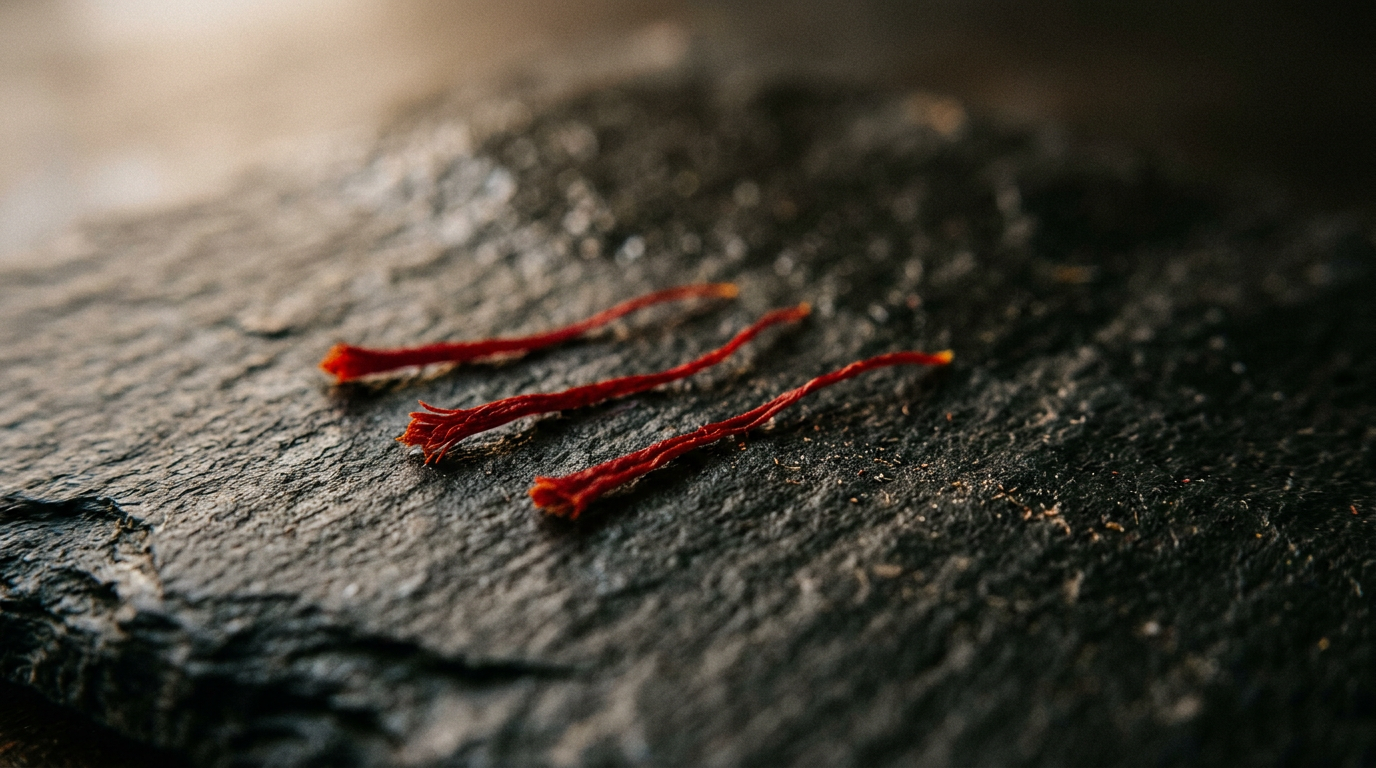
It’s the most expensive spice in the world, worth more per gram than gold. But saffron’s value has never just been about its weight. Harvested by hand from the delicate stigmas of the Crocus sativus flower, its history is steeped in ritual, luxury, and healing. While most of us associate its earthy, floral notes with a shimmering paella or a fragrant biryani, ancient traditions saw a different power in its crimson threads. In Persian, Ayurvedic, and Unani medicine, saffron was a primary remedy for what they called melancholia, or what we would today call low mood and depression [1].
For centuries, this was filed under folklore. But as our understanding of mental wellness grows more nuanced, a compelling body of modern science is catching up to this ancient wisdom. A surge of research in the last decade, and particularly in the 2020s, has moved saffron out of the realm of supposition and into the rigor of the randomized controlled trial (RCT).
The Data on Depression and Anxiety
When scientists want to test an intervention’s true effect, the gold standard is a meta-analysis—a study of studies that pools data from multiple high-quality RCTs to find a clearer signal. On saffron, the signals are becoming remarkably clear.
A landmark 2019 meta-analysis published in Psychopharmacology reviewed numerous studies and found that saffron supplementation was significantly more effective than a placebo in reducing symptoms of major depressive disorder [2]. More compellingly, several of the reviewed trials found saffron to have a similar efficacy to conventional synthetic antidepressants for individuals with mild-to-moderate depression. The typical dose used in these studies is 30 milligrams of a standardized saffron extract per day.
The research doesn't stop at depression. A 2021 double-blind, randomized trial in the Journal of Affective Disorders looked at saffron's effect on generalized anxiety disorder. Over six weeks, patients taking saffron extract showed a significant reduction in anxiety symptoms compared to the placebo group [3]. The findings suggest that saffron’s sphere of influence extends to the broader landscape of mood regulation.
How Does It Work?
The immediate question is how. What’s happening on a biological level? Researchers believe saffron’s mood-lifting effects are thanks to its key bioactive compounds: `crocin`, `crocetin`, and `safranal`. These molecules appear to work through several pathways at once.
Like many selective serotonin reuptake inhibitors (SSRIs), saffron seems to modulate the levels of key neurotransmitters in the brain, including serotonin, dopamine, and norepinephrine [2]. In simple terms, it helps balance the brain chemistry that underpins our emotional state. But it doesn't stop there. Saffron is also a potent antioxidant and anti-inflammatory agent. A growing scientific consensus links chronic, low-grade inflammation—what some call “inflammaging”—to mood disorders. By quieting this inflammation in the brain, saffron may help protect and support neurological function from a different angle.
This multi-pronged mechanism is a hallmark of botanical medicine. Where a pharmaceutical is often designed to hit a single, specific target, a complex plant compound can work on multiple systems in concert. It’s a softer, more holistic intervention.
Quality Is Everything
This is where we have to look past the headlines. The saffron used in these clinical trials isn’t the same as the dusty, faded threads you might find in the back of a supermarket spice aisle. The studies use extracts standardized for a specific concentration of crocin and safranal—the source of its therapeutic power. The potency of saffron varies dramatically depending on its origin, harvest time, and drying method. High-grade saffron from regions like Kashmir or Iran is graded according to international ISO standards, which measure its content of these compounds [4].
This is a critical detail. Much of the saffron sold globally is either low-grade or adulterated with other materials like safflower or corn silk to bring down the cost. This fraudulent saffron lacks the chemical potency to have any meaningful effect. It underscores a simple truth: provenance matters. Knowing where your spice comes from, and that it is unadulterated and potent, is the only way to connect with its true potential.
While a few threads in your evening tea won't deliver the concentrated dose of a clinical trial, embracing high-quality saffron in your daily rituals is a way to engage with this incredible plant on its own terms. It’s an invitation to see saffron not just as a seasoning, but as a thread connecting ancient traditions of care with the most current frontiers of food science. It reminds us that sometimes, the answers we’re looking for have been waiting in the pantry all along.
Sources & citations
- Moshiri, E., Vahabzadeh, M., & Hosseinzadeh, H. (2015). Clinical Applications of Saffron (Crocus sativus) and its Constituents: A Review. Drug Research, 65(06), 287-295. https://www.thieme-connect.de/products/ejournals/abstract/10.1055/s-0034-1375681
- Marx, W., Lane, M., Rocks, T., et al. (2019). Effect of saffron supplementation on symptoms of depression and anxiety: a systematic review and meta-analysis. Psychopharmacology, 236(8), 2267-2280. https://pubmed.ncbi.nlm.nih.gov/31388652/
- Jackson, P. A., Forster, J., Bibile, M., et al. (2021). Crocus sativus L. versus placebo in the treatment of mild to moderate generalized anxiety disorder: a double-blind, randomized, placebo-controlled trial. Journal of Affective Disorders, 278, 483-490. https://www.sciencedirect.com/journal/journal-of-affective-disorders
- Britannica, The Editors of Encyclopaedia. "saffron". Encyclopedia Britannica, 25 Sep. 2023. https://www.britannica.com/plant/saffron