
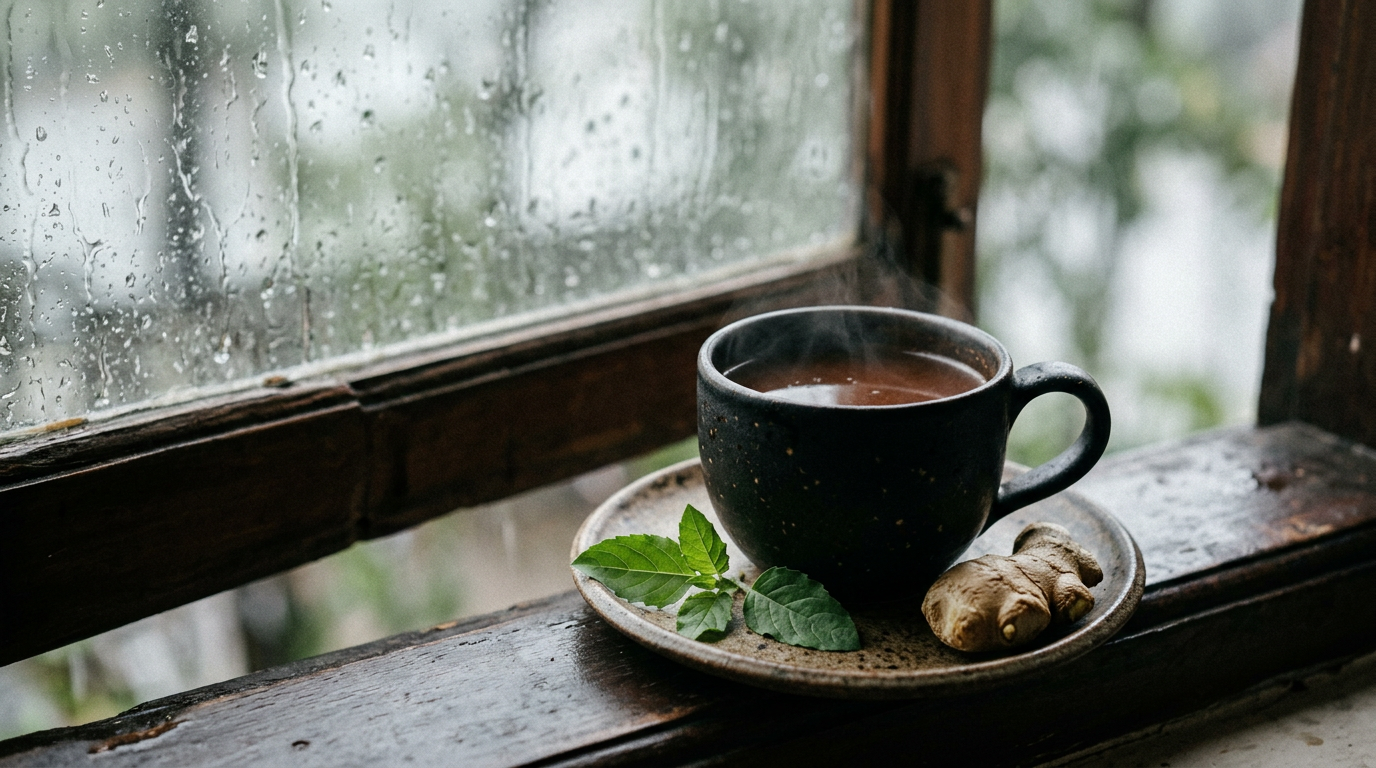
This monsoon kadha recipe for immunity is a definitive household remedy for India's rainy season. Brewed with just five ingredients—tulsi, ginger, black pepper, clove, and jaggery—this decoction is a masterclass in culinary synergy. It’s a simple, potent practice for bolstering your body’s defenses against the damp chill, rooted in thousands of years of Ayurvedic wisdom.
As the skies over the subcontinent turn a heavy, promising grey, the air grows thick with the scent of petrichor—rain hitting dry earth. This is the backdrop for India’s Independence Day. By August 15th, the monsoon is in full command, a season of potent growth and quiet introspection. It’s a time when the body craves warmth and resilience. In kitchens across the country, from bustling city apartments to quiet village homes, a familiar ritual begins: the simmering of a kadha.
This isn't just a recipe; it's a decision. A decision to lean on the quiet intelligence of plants over the quick fix of a pill. It’s a choice to engage with five humble spices that, together, create something far greater than the sum of their parts.
The Five Pillars
Each ingredient in this decoction is a powerhouse. But the real wisdom lies not in their individual strengths, but in their collaboration.
1. Tulsi (Holy Basil): In [India](/region/ind), a pot of tulsi on a doorstep is a near-universal sight, a quiet emblem of wellbeing. More than a garnish, Holy Basil (Ocimum sanctum) is a revered adaptogen, a class of herbs that helps the body adapt to stress and maintain balance. Clinical studies point to its ability to modulate the immune system, preparing it to be more effective and responsive [1]. When you pluck a few leaves for your kadha, you’re participating in a tradition that sees the kitchen as an apothecary.
*2. Ginger (Adrak):* That familiar, spicy warmth you feel from a slice of fresh ginger comes from compounds like gingerol and shogaol. These are not just about flavor; they possess significant anti-inflammatory and antioxidant properties [2]. For the damp chill that seeps into your bones during the monsoon, ginger is the perfect antidote. In the US, you can find tender young ginger at farmers' markets like the one in Union Square, NYC; its skin is so thin you don't even need to peel it, offering a milder, brighter heat.
*3. Black Pepper (Kali Mirch):* Pepper’s role here is subtle but crucial. It’s not primarily for heat, but for amplification. Black pepper contains piperine, a remarkable compound known to dramatically increase the bioavailability of other nutrients and plant compounds [3]. A few crushed peppercorns act like a key, unlocking the full potential of the other four ingredients and ensuring your body can absorb their benefits more efficiently. In the UK, sourcing high-quality Tellicherry peppercorns from a dedicated London spice merchant makes a world of difference in potency and aroma.
*4. Clove (Laung):* The sweet, penetrating aroma of clove is unmistakable. That scent comes from eugenol, an aromatic compound that has been studied for its antimicrobial and analgesic effects [4]. It’s why clove oil has been a go-to for soothing toothaches for centuries. In a kadha, it helps soothe a scratchy throat while adding a deep, comforting flavor. The experience of buying whole cloves by weight from a spice souk in Dubai, where the air is thick with their fragrance, is a testament to their enduring power.
*5. Jaggery (Gud):* This is the decision that binds the brew. Instead of empty sweetness from refined sugar, unrefined jaggery brings a complex, molasses-like depth. Because it’s less processed, it retains trace minerals like iron and magnesium. It makes the potent, sometimes bitter flavors of the spices palatable, transforming the decoction from a harsh medicine into a comforting drink.
Monsoon Kadha Recipe for Immunity
This isn't a strict formula but a starting point. Adjust to your own taste and what feels right.
Yields: 1 cup
Time: 10 minutes
Ingredients:
- 2 cups water
- 8-10 fresh Tulsi (Holy Basil) leaves
- 1-inch piece of fresh ginger, grated or crushed
- 4-5 whole black peppercorns, coarsely crushed
- 2-3 whole cloves
- 1-2 teaspoons grated or powdered jaggery (or to taste)
Instructions:
- Combine: In a small saucepan, add the water, crushed ginger, peppercorns, and cloves. Bring the mixture to a boil.
- Simmer: Once boiling, reduce the heat to low. Add the tulsi leaves. Let the decoction simmer gently for 5-7 minutes, uncovered. The goal is to reduce the liquid by about half, concentrating the flavors and active compounds.
- Sweeten: Turn off the heat. Add the jaggery and stir until it completely dissolves.
- Strain & Serve: Strain the kadha into a cup. Drink it while it’s warm.
As you sip this brew on the morning of August 15th, 2026, perhaps watching the rain fall, you’re taking part in a quiet act of self-reliance. This is the essence of freedom: the knowledge and ability to care for yourself and your loved ones with the simple, powerful tools that nature provides. It's a small, personal declaration of independence, one warm cup at a time. Explore more rituals around [India Independence Day](/festival/india-independence-day).
Frequently Asked Questions
1. What is the best time to drink this kadha?
It's best consumed on an empty or light stomach, typically in the morning to start your day or in the evening to soothe and warm you before bed.
2. Can I use dried herbs instead of fresh?
Fresh is always preferred for the highest potency and best flavor profile. However, if you only have dried ingredients, you can substitute them. Use about 1 teaspoon of dried tulsi powder and ½ teaspoon of ginger powder as a starting point.
3. Can I make a large batch and store it?
For maximum benefit, a kadha is best made fresh each time. The volatile compounds in the spices are most potent right after brewing. If you must, you can store it in the refrigerator for up to 24 hours and gently reheat it without boiling.
4. Is this recipe suitable for children?
Yes, in smaller quantities. For children over 5, you can serve a small, half-cup portion. You may want to make it slightly weaker or add a little extra jaggery to make it more palatable for them. As always, for very young children or specific health concerns, it's wise to consult a healthcare professional.
Sources & citations
- Mondal, S., Varma, S., Ghelani, D., & Mahapatra, D. (2011). Ocimum sanctum Linn. A reservoir of health and spiritual beliefs. Pharmacognosy Reviews, 5(9), 99–105. https://www.ncbi.nlm.nih.gov/pmc/articles/PMC3249909/
- Bode, A. M., & Dong, Z. (2011). The Amazing and Mighty Ginger. In Herbal Medicine: Biomolecular and Clinical Aspects. 2nd edition. CRC Press/Taylor & Francis. https://www.ncbi.nlm.nih.gov/books/NBK92775/
- Shoba, G., Joy, D., Joseph, T., Majeed, M., Rajendran, R., & Srinivas, P. S. (1998). Influence of piperine on the pharmacokinetics of curcumin in animals and human volunteers. Planta Medica, 64(4), 353–356. https://pubmed.ncbi.nlm.nih.gov/9619120/
- Batiha, G. E., Alkazmi, L. M., Wasef, L. G., Beshbishy, A. M., Nadwa, E., & Rashwan, E. K. (2020). Syzygium aromaticum L. (Myrtaceae): Traditional Uses, Bioactive Chemical Constituents, Pharmacological and Toxicological Activities. Biomolecules, 10(2), 202. https://www.ncbi.nlm.nih.gov/pmc/articles/PMC7072209/