
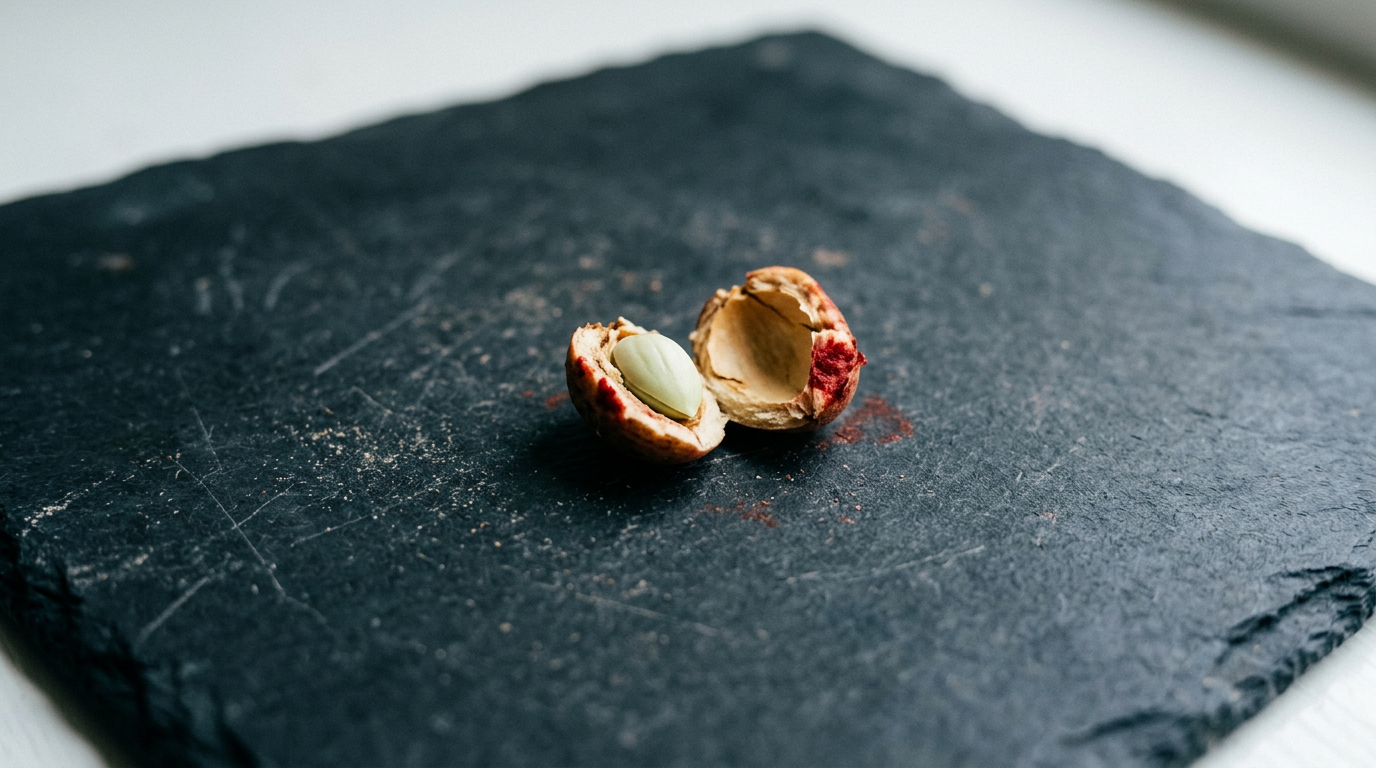
The disappearance of mahlab spice from Indian baking is a quiet story of colonial food shifts. Derived from St. Lucie cherry pits, its nutty, floral-bitter notes once graced Parsi and Mughal-influenced sweets. Today, its revival signals a reconnection with a more complex, pre-colonial pantry, moving beyond the simplified flavors that came to dominate the subcontinent's bakeries.
It’s a flavour half-remembered, a ghost in the machine of modern Indian baking. If you’ve ever tasted a truly traditional Parsi nankhatai or a vintage Goan baath cake and felt a note you couldn’t quite place—something between bitter almond and cherry, with a soft, floral finish—you may have encountered it. This is mahlab, or mahlepi, the aromatic kernel found inside the pit of the St. Lucie cherry (Prunus mahaleb).
For centuries, this spice was a cornerstone of baking not just in the Levant and Greece, but in the kitchens of communities across Western [/region/ind](India) with deep trade and migration ties to the Middle East [1]. Yet, ask for it at a general store today, from Mumbai’s Crawford Market to a grocer in the UK, and you’ll likely be met with a blank stare. It was replaced, slowly and then all at once, by something far simpler and more ubiquitous: almond and vanilla extracts. This wasn't an accident; it was a symptom of a larger flattening of the culinary landscape, where colonial trade routes prioritized easily transportable, mass-produced flavorings over nuanced, regional ones.
The Science of a Subtle Scent
What makes mahlab so unique is its delicate chemistry. The primary aroma compound is coumarin, which it shares with cassia cinnamon, tonka beans, and sweet clover [2]. Coumarin delivers a warm, vanilla-like fragrance that deepens with heat. But it’s balanced by traces of amygdalin, the same compound that gives bitter almonds their characteristic sharpness. When ground, mahlab releases these volatiles, creating a fragrance that is simultaneously sweet, nutty, bitter, and floral. It’s a complete, self-contained perfume.
This complexity is precisely what makes it irreplaceable. Artificial almond extract, derived from benzaldehyde, delivers a single, high-pitched note. Vanilla offers warmth but no nutty bitterness. Mahlab provides both, plus a subtle fruitiness that speaks of its cherry origins. It doesn't shout; it harmonizes, making butter taste richer and sugar seem less one-dimensional.
| Flavoring | Primary Compound | Flavor Profile | Common Use |
| :--- | :--- | :--- | :--- |
| Mahlab | Coumarin, Amygdalin | Nutty, floral, cherry, bittersweet | Traditional breads, pastries, milk puddings |
| Almond Extract | Benzaldehyde | Sharp, sweet, marzipan-like | Mass-market cakes, cookies, confections |
| Vanilla Extract | Vanillin | Warm, sweet, creamy | Ubiquitous in Western and global baking |
A Tale of Two Pantries
The story of mahlab spice in Indian baking is a story of substitution driven by empire. As British influence solidified, supply chains were reoriented. Wheat flour (maida), refined cane sugar, and vanilla from colonies in Madagascar and the Réunion Islands became standardized commodities. They were reliable, cheap, and formed the backbone of a new Anglo-Indian baking culture [3].
Spices like mahlab, which traveled along older, pre-colonial trade routes from Persia and the Levant, became harder to source and less fashionable. Why bother with a subtle, expensive cherry kernel when a splash of potent vanilla or almond essence would do? This shift is a classic example of how 'colonised food' isn't just about the introduction of new ingredients, but the disappearance and devaluing of existing ones.
Today, the rediscovery is happening in the diaspora. A young baker in London, trying to perfect their grandmother’s recipes, might source mahlab from a Turkish grocer on Green Lanes. An Indian family in the UAE, tasting the fragrant ma'amoul pastries their Lebanese neighbours share during Eid, recognizes a familiar flavor note from their own heritage. This cross-pollination is reintroducing the spice to a new generation.
This isn't just about nostalgia. It's about reclaiming precision. Modern food science affirms what our ancestors knew: complexity matters. The presence of coumarin also serves as a reminder of the importance of dosage and sourcing. While safe and delicious in culinary amounts, concentrated coumarin has been studied for its anticoagulant effects, underscoring the need for a trusted source that understands the line between a spice and a pharmaceutical [2]. This is the kind of defensible knowledge—part indigenous wisdom, part clinical science—that gets lost when we reduce our pantry to a few simple extracts.
By seeking out ingredients like mahlab, we do more than just make a better-tasting cake. We stitch together a broken thread in our food history. We choose complexity over convenience and rediscover a pantry that is more diverse, more interesting, and more truly our own. It's a small act of defiance, proving that not everything that is lost is gone forever.
And it reminds us that the future of food may lie in looking back, to a whole universe of flavours waiting in our shared culinary past. You can explore more of them in our growing `/ingredient` directory.
### Frequently Asked Questions
1. What does mahlab taste like?
Mahlab has a unique flavor profile that combines the nuttiness of almond, the floral sweetness of cherry, and a slight, pleasant bitterness. It's more complex and subtle than almond extract.
2. Can I substitute almond extract for mahlab?
You can, but it won't be the same. To approximate the flavor, you could try a mix of almond extract with a tiny drop of rosewater, but you will miss the characteristic nutty depth of true mahlab.
3. Is mahlab safe to eat?
Yes, in the small quantities used in baking, mahlab is perfectly safe. The primary flavor compound, coumarin, is also found in cassia cinnamon. As with any potent spice, it's meant to be used by the pinch, not the spoonful [4].
4. Where can I buy mahlab spice?
Today, you can find mahlab in Middle Eastern, Greek, or Turkish grocery stores, as well as from specialty online spice merchants. It is usually sold as whole kernels or pre-ground powder.
Sources & citations
- Farr, S. (2017). "The New Old-World Spice Cabinet." Whetstone Magazine, Issue 2. https://www.whetstonemagazine.com/
- Venugopala, K. N., Rashmi, V., & Odhav, B. (2013). "Review on natural coumarin lead compounds for their pharmacological activity." BioMed research international, 2013, 963248. https://www.ncbi.nlm.nih.gov/pmc/articles/PMC3730333/
- “Mahaleb cherry.” Britannica. https://www.britannica.com/plant/mahaleb-cherry
- Perry, L. "Prunus mahaleb." University of Vermont Extension, Department of Plant and Soil Science. https://www.uvm.edu/pss/p/