
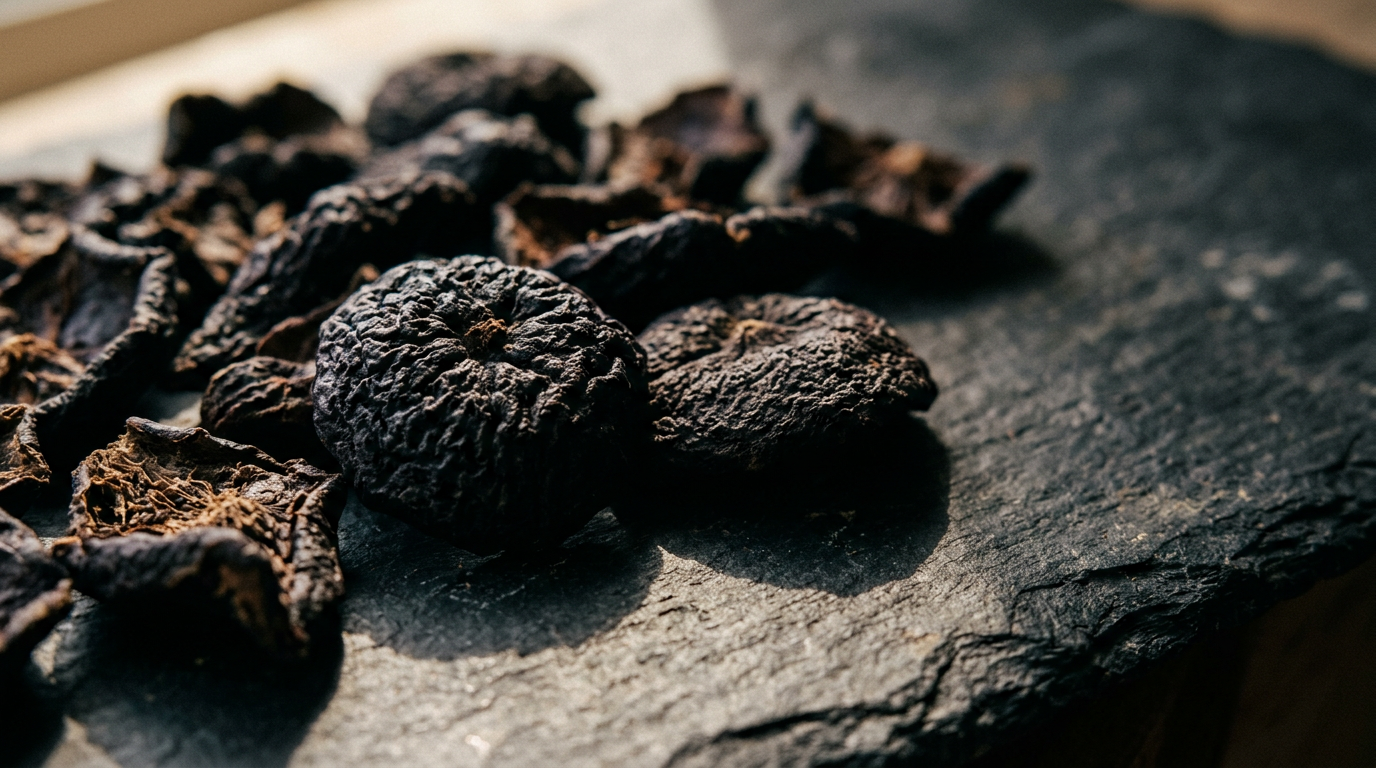
In the sweltering humidity of India's Western Ghats, long before the age of refrigeration and citric acid, cooks reached for a different kind of sour. They used the dried, leathery rind of a deep-purple fruit, Garcinia indica, known as kokum. Dropped into a simmering fish curry or a lentil dal, it lent a unique plummy tartness and a blush of pink. It was, and is, the soul of a regional cuisine.
Most famously, it's the star of solkadhi, a pastel-pink digestive drink made with coconut milk and kokum's crimson extract. Served chilled, it’s the traditional punctuation to a rich, spicy meal—a balm for the belly, a coolant for the system. For centuries, this was kokum's story: a beloved culinary staple, a piece of Ayurvedic folk wisdom for soothing acidity and inflammation.
But a new chapter is being written, not in a cookbook, but in the pages of clinical journals. Researchers are quietly taking a serious look at this coastal souring agent for its potential against a distinctly modern affliction: non-alcoholic fatty liver disease (NAFLD).
A Silent Epidemic
NAFLD is the most common liver disorder in the developed world, affecting an estimated one in four people [1]. It's a silent condition, driven by modern diets and sedentary lifestyles, where excess fat accumulates in the liver. Over time, this can lead to inflammation, scarring (cirrhosis), and serious liver damage. With limited pharmaceutical options, the medical community is increasingly focused on dietary and lifestyle interventions. And that’s where ingredients with a long history of safe, traditional use become compelling subjects of study.
Kokum's scientific intrigue lies in a potent compound found in its rind: garcinol. A member of the polyphenol family, garcinol is a powerful antioxidant and anti-inflammatory agent. Modern science is now testing what Ayurvedic practitioners seemed to observe through practice. In lab studies, garcinol has been shown to protect liver cells from oxidative stress—the cellular-level damage that inflammation leaves in its wake [2].
Some research suggests garcinol may work by influencing the pathways that regulate fat metabolism in the liver. By activating certain cellular signals, it appears to help prevent the accumulation of fat droplets that characterize the first stage of NAFLD [3]. The research is still emerging, moving from cell cultures to more complex models, but the direction is consistent. It points to a humble fruit with a sophisticated biological mechanism, one that may help shield the body’s primary metabolic engine from the pressures of the modern food environment.
A Tale of Two Garcinia's
If the genus Garcinia sounds familiar, it might be because of kokum's infamous cousin, Garcinia cambogia. In the 1990s, G. cambogia was sensationalized as a miracle weight-loss supplement, leading to a boom-and-bust cycle of hype, questionable products, and consumer skepticism. It's a classic story of a plant's complex chemistry being reduced to a single, marketable claim.
Kokum (G. indica) offers a different path. Its value isn't built on a single, isolated compound or an exaggerated promise sold in a pill. Its wisdom lies in its integration into a culinary tradition. The people of the Konkan coast weren't trying to bio-hack their livers; they were making delicious food and drinks that also happened to make them feel good. The solkadhi wasn't a 'shot' of garcinol, it was a whole, balanced beverage, with the fats from coconut milk potentially aiding the absorption of kokum's active compounds.
This is the difference between reductionist science and holistic food wisdom. The former isolates a molecule; the latter understands the symphony of the entire ingredient within a meal. The renewed focus on kokum isn't about finding the next miracle cure, but about appreciating the profound intelligence already present in our ancestral pantries.
The story of kokum is the story of a fruit from a biodiversity hotspot, cherished for its flavor for generations, that is now being explored by science for its potential to address a disease of civilization. It’s a quiet reminder that the future of wellness may not lie in a newly invented molecule, but in rediscovering the profound wisdom we simply forgot to look for in our own kitchens.
Sources & citations
- World Health Organization. (2022). "Tackling non-alcoholic fatty liver disease (NAFLD)." WHO. https://www.who.int/news-room/events/detail/2022/06/23/default-calendar/tackling-non-alcoholic-fatty-liver-disease-(nafld))
- Liao, C. H., Sang, S., Ho, C. T., & Lin, Y. W. (2021). "Mechanistic studies of garcinol in suppressing the cell growth of human liver cancer HepG2 cells." Food & function, 12(11), 5031–5043. https://pubmed.ncbi.nlm.nih.gov/34002773/
- Lim, Y., Kim, J. Y., & Han, C. (2014). "Garcinol-rich Garcinia indica extract attenuates fatty liver disease in high-fat-fed C57BL/6J mice." Journal of clinical biochemistry and nutrition, 54(3), 162–168. https://www.jstage.jst.go.jp/article/jcbn/54/3/54_13-138/_article
- Britannica. "Mangosteen." https://www.britannica.com/plant/mangosteen. (Kokum is in the same family, Clusiaceae, as the mangosteen).