
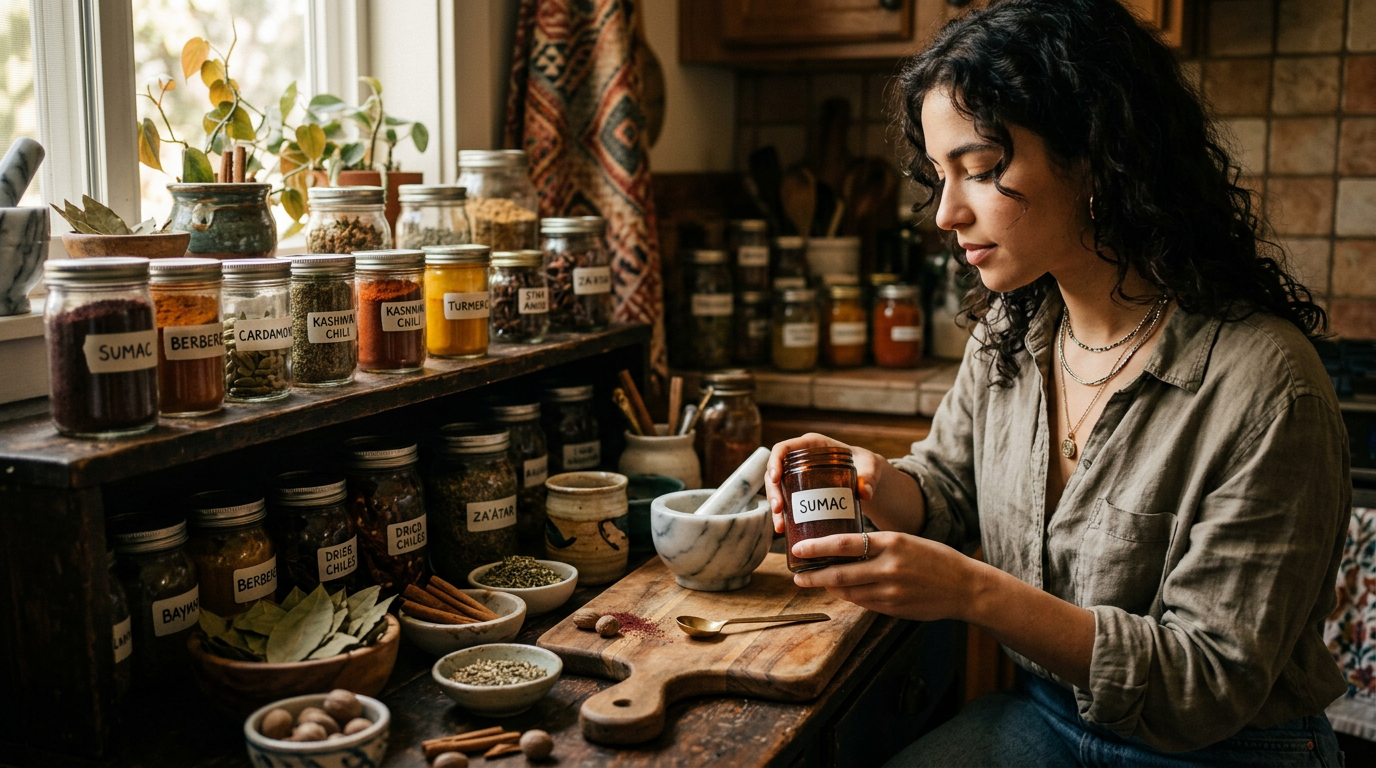
Take a look in your pantry. Behind the artisanal olive oil and small-batch hot sauce, there’s likely a row of spice jars from the supermarket. Their labels are familiar, but their contents are anonymous. Where did that paprika come from? Who grew this cumin? How long has it been sitting there? For decades, we haven't asked. The commodity spice trade trained us to accept dusty, flavorless powders as the norm. But a quiet revolution is taking place, led by a new generation of consumers and the visionary founders who serve them. The humble spice rack is getting a radical rebrand, and it tells us a lot about the future of food.
The Problem with Big Spice
For most of history, spices were the world's most valuable commodity, launching empires and defining global trade routes [4]. In a strange twist, the modern industrial food system turned them into a cheap afterthought. The journey for a typical jar of supermarket cinnamon is long and opaque. It likely involves dozens of middlemen, blending of harvests from countless farms (and multiple years), and long-term storage in massive warehouses. To ensure shelf stability, these spices are often sterilized with ethylene oxide or radiation, which can further degrade their flavor and aroma [5]. The result? The spice you buy is a pale imitation of its fresh, potent potential. It's a system that prioritizes shelf life over flavor and profit over people, with farmers at the bottom of the chain receiving a tiny fraction of the final retail price.
A New Generation of Spice Merchants
Enter a new wave of brands built on a simple, radical premise: what if we treated spices with the respect they deserve? Companies like Diaspora Co. and Burlap & Barrel are not just selling spices; they're selling a new model for how to do business.
Founded by Sana Javeri Kadri in 2017, Diaspora Co. is on a mission to decolonize a spice trade built on extraction and inequity. They partner directly with small, multi-generational farms across South Asia to source single-origin, heirloom spices. Take their flagship Pragati Turmeric. It’s a variety cultivated for decades, boasting a curcumin content—the compound responsible for many of its health benefits—double or triple that of its commodity counterparts. Diaspora Co. pays its farm partners an average of six times the commodity price, an investment that enables regenerative agricultural practices and ensures a living wage [1].
Similarly, Burlap & Barrel was founded by two former aid workers, Ethan Frisch and Ori Zohar, who saw firsthand how broken the traditional spice supply chain was for farmers. They travel the world to source unique spices directly from growers, from Flores Island Nutmeg in Indonesia to Royal Cinnamon in the mountains of Vietnam. Their model cuts out the layers of brokers and exporters, allowing them to pay farmers a premium while delivering spices so fresh you can smell the difference before you even open the jar [2]. The story of each spice—the place, the farmer, the process—is central to their brand.
It's Not Just About Flavor, It's About Values
This focus on radical transparency, farmer equity, and mind-blowing flavor is hitting a nerve, especially with younger consumers. Gen Z, now a major force in the CPG market, consistently demonstrates a preference for brands that align with their values. They are digital natives who research products before they buy, and they're willing to pay more for products that are sustainable, ethical, and authentic [3].
For these consumers, a $12 jar of turmeric from Diaspora Co. isn't an extravagance; it's an investment. It’s a vote for a more equitable food system. It’s a connection to a real person and a real place. The vibrant color and explosive flavor are almost a secondary benefit—the proof that a better way of doing things tastes better, too. These brands have mastered the art of storytelling, using beautiful packaging and compelling social media to bring the farmer and their harvest into the customer's kitchen. It transforms a simple transaction into a meaningful act of conscious consumerism.
The Future of the Pantry
What does this mean for curious eaters, founders, and investors?
For eaters, it’s an invitation to rediscover what spice can be. Single-origin sourcing reveals the concept of terroir in spices, just as it exists in wine or coffee. Cumin from Afghanistan has a different flavor profile than cumin from Turkey. This movement encourages us to cook with more intention and to appreciate the nuances that the commodity market erases.
For food founders, this is a masterclass in modern brand-building. Diaspora Co. and Burlap & Barrel prove that a business model rooted in social good can also be wildly successful and profitable. They have built loyal communities, not just customer bases, by leading with their mission. The lesson is clear: your supply chain is your story. In a crowded marketplace, radical transparency is a powerful differentiator.
For investors, this signals a durable shift in consumer priorities. The premiumization of the pantry is here to stay. Brands that can offer a superior product tied to a compelling, authentic mission are poised for long-term growth. The success of this new wave of spice companies is a blueprint for disrupting other stagnant CPG categories.
The spice rebrand is more than a fleeting trend. It’s a fundamental change in our relationship with flavor, sourcing, and the stories behind our food. It's a reminder that even the smallest items in our pantry can have a big impact. So next time you reach for that jar of cinnamon, ask yourself: do you know where it came from? If not, a whole new world of flavor and purpose is waiting for you.
Sources & citations
- Mishra, S. (2020, April 7). "The Woman Who Is Building a Better Spice Trade." The New York Times. https://www.nytimes.com/
- Zissu, A. (2022, November 28). "Burlap & Barrel Is Changing the Spice Game with Single Origin Sourcing." Food & Wine. https://www.foodandwine.com/
- Brodsky, K. et al. (2023, March 2). "Meet Generation Z: The new CPG-growth engine." McKinsey & Company. https://www.mckinsey.com/
- "Spice trade." (2023). Encyclopædia Britannica. https://www.britannica.com/topic/spice-trade
- "Storing Spices and Herbs." Purdue University Extension. https://www.extension.purdue.edu/foodlink/food-storage/storing-spices-and-herbs/