
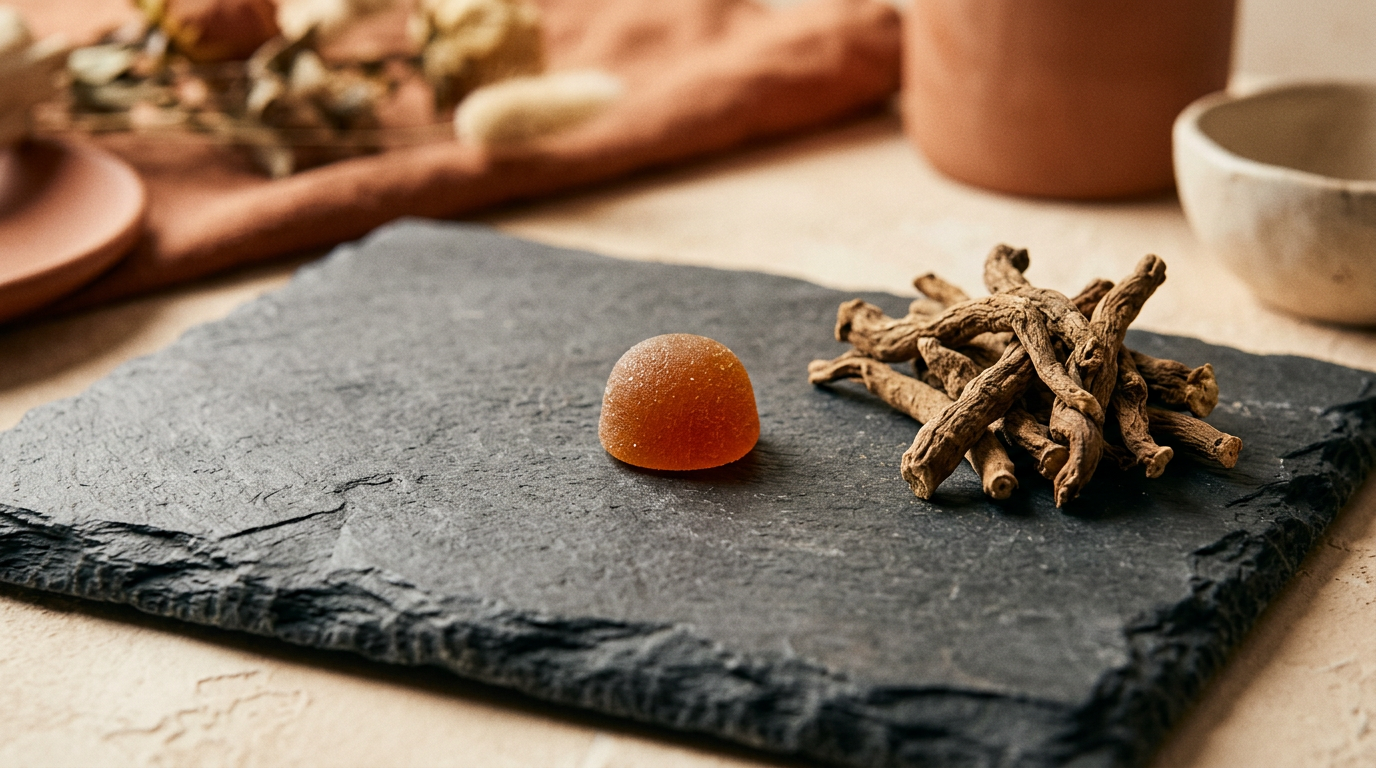
Ayurvedic gummies marketed as wellness shortcuts are frequently ultra-processed foods, laden with sugars and additives that undermine the very principles they claim to embody. By stripping beneficial herbs of their context, they deliver a dose of candy-like convenience that sidesteps the holistic wisdom of ancient practice. True well-being is not a confection; it’s a commitment to nourishing the body, not just placating a craving for an easy fix.
The wellness aisle has a new darling: glistening, fruit-flavored gummies promising the ancient power of Ayurvedic herbs. With a single chew, you can supposedly find calm, boost immunity, or enhance vitality. It’s a compelling proposition in a culture obsessed with bio-hacks and shortcuts. The problem is, this format often sacrifices the very integrity of the tradition it’s borrowing from, packaging profound plant wisdom into a form that has more in common with candy than with conscious consumption.
Let’s take one of Ayurveda’s most revered botanicals: Ashwagandha (Withania somnifera). For millennia, this adaptogenic root has been used to help the body manage stress, build strength, and promote restful sleep [1]. Traditionally, it’s consumed as a churna, a fine powder, often mixed into warm milk with a touch of ghee or honey. This is not just a delivery mechanism; it’s a ritual. The warmth, the fat, and the mindful preparation are all part of a holistic system designed to enhance the herb's bioavailability and its calming effect on the nervous system.
Now, let's deconstruct the gummy.
The Anatomy of a 'Wellness' Gummy
Turn over a bottle of brightly colored 'Ashwagandha' gummies, and the first one or two ingredients are rarely Ashwagandha. More often, you’ll find glucose syrup, sugar, or some other sweetener. These industrial ingredients are the foundation of most ultra-processed foods (UPFs), a category defined by the NOVA classification system as formulations of substances derived from foods, often with additives, that have little or no intact whole food in them [2]. The irony is stark: a product intended to manage stress begins with a flood of sugar, which can dysregulate the very systems you’re trying to balance.
Following the sugar, you’ll find water, pectin (a gelling agent), citric acid (for tartness), sodium citrate (a preservative and flavorant), “natural flavors” to mask the herb's earthy taste, and carnauba wax for a glossy, non-stick finish. These are the tools of industrial confectionary, not herbalism. They are engineered for shelf stability, predictable texture, and hyper-palatability—all goals that are secondary, if not contrary, to genuine wellness.
Somewhere down that list, you’ll find the Ashwagandha extract. Often, it’s a standardized extract, prized for a specific percentage of 'withanolides,' its primary active compounds. While this sounds scientific, it reflects a reductionist view of plant medicine. An herb is more than its most famous molecule; it’s a complex matrix of hundreds of compounds that work in synergy. Focusing on a single compound at the expense of the whole plant is like listening to a single violin and calling it a symphony.
A look at the two approaches side-by-side is telling:
| Feature | Traditional Ashwagandha (Churna) | 'Wellness' Gummy |
|----------------------|-----------------------------------------|-------------------------------------------------|
| Primary Ingredient | Whole, dried Ashwagandha root powder | Glucose syrup, sugar, water |
| Form | Minimally processed powder | Ultra-processed confection |
| Additives | None (or natural carriers like milk/ghee) | Gelling agents, acids, waxes, 'natural flavors' |
| Consumption Ethos | Mindful ritual, whole-plant synergy | Quick-fix snack, isolated-compound dosing |
| Flavor Profile | Earthy, bitter, authentic | Sweet, fruity, masked |
The Cost of Convenience
The real loss here isn't just nutritional; it's philosophical. Ayurveda is a system of living that emphasizes how we consume as much as what we consume. It asks us to engage our senses, to be present with the tastes—even the challenging ones—and to understand that health is not a passive transaction. Turning an herb like Ashwagandha into candy strips away this context, transforming a powerful botanical into just another ingredient in our snack-centric lives.
This trend isn't a celebration of ancient wisdom; it's the colonization of it by the CPG industry's worst habits. The demand for these traditions is surging, which speaks to a collective desire for deeper, more grounded approaches to health. But true value lies in authenticity, not just accessibility. It’s found in suppliers who honor the plant, who can tell you it was grown in the sandy loam soil of Rajasthan, and who use the whole root rather than just a fractionated extract.
Instead of a gummy, consider a finely milled Ashwagandha powder from a trusted source. Whisk it into warm milk before bed. Notice the earthy aroma, the slightly bitter taste. That experience—that moment of mindful preparation—is part of the medicine. True wellness can’t be found in a shortcut, especially one that leads right back to the sugar and additives we were trying to avoid in the first place.
### Frequently Asked Questions
1. Are all herbal gummies bad?
Not necessarily, but they require scrutiny. Look for gummies with minimal added sugar (or ones sweetened with whole fruits), no artificial additives, and a meaningful, transparent dose of a high-quality herb. However, they are almost always a less ideal format than whole powders or tinctures.
2. What is an ultra-processed food (UPF)?
A UPF is an industrial formulation made mostly or entirely from substances extracted from foods, with additives. According to the NOVA classification system, they are characterized by hyper-palatability, sophisticated packaging, and aggressive marketing [2]. Examples include most packaged snacks, sugary drinks, and, yes, many wellness gummies.
3. How can I tell if an herbal supplement is high quality?
Look for transparency. A reputable brand will tell you where the herb is from (provenance), what part of the plant is used (e.g., root, leaf), and provide third-party lab tests for purity and potency. The U.S. National Institutes of Health provides guidance on choosing dietary supplements [3].
4. Why is the whole herb sometimes better than an extract?
The “entourage effect” suggests that the many compounds in a whole plant work together synergistically, creating a greater and more balanced effect than a single isolated compound can. Traditional systems like Ayurveda were built on this principle of whole-plant wisdom [4].
Sources & citations
- Lopresti, A. L., Smith, S. J., Malvi, H., & Kodgule, R. (2019). An investigation into the stress-relieving and pharmacological actions of an ashwagandha (Withania somnifera) extract. Medicine, 98(37). https://www.ncbi.nlm.nih.gov/pmc/articles/PMC6750292/
- Food and Agriculture Organization of the United Nations. (n.d.). The NOVA food classification system. https://www.fao.org/home/en
- National Institutes of Health: Office of Dietary Supplements. (n.d.). Dietary Supplements: What You Need to Know. https://ods.od.nih.gov/
- Encyclopaedia Britannica. (n.d.). Ayurveda. https://www.britannica.com/science/Ayurveda