
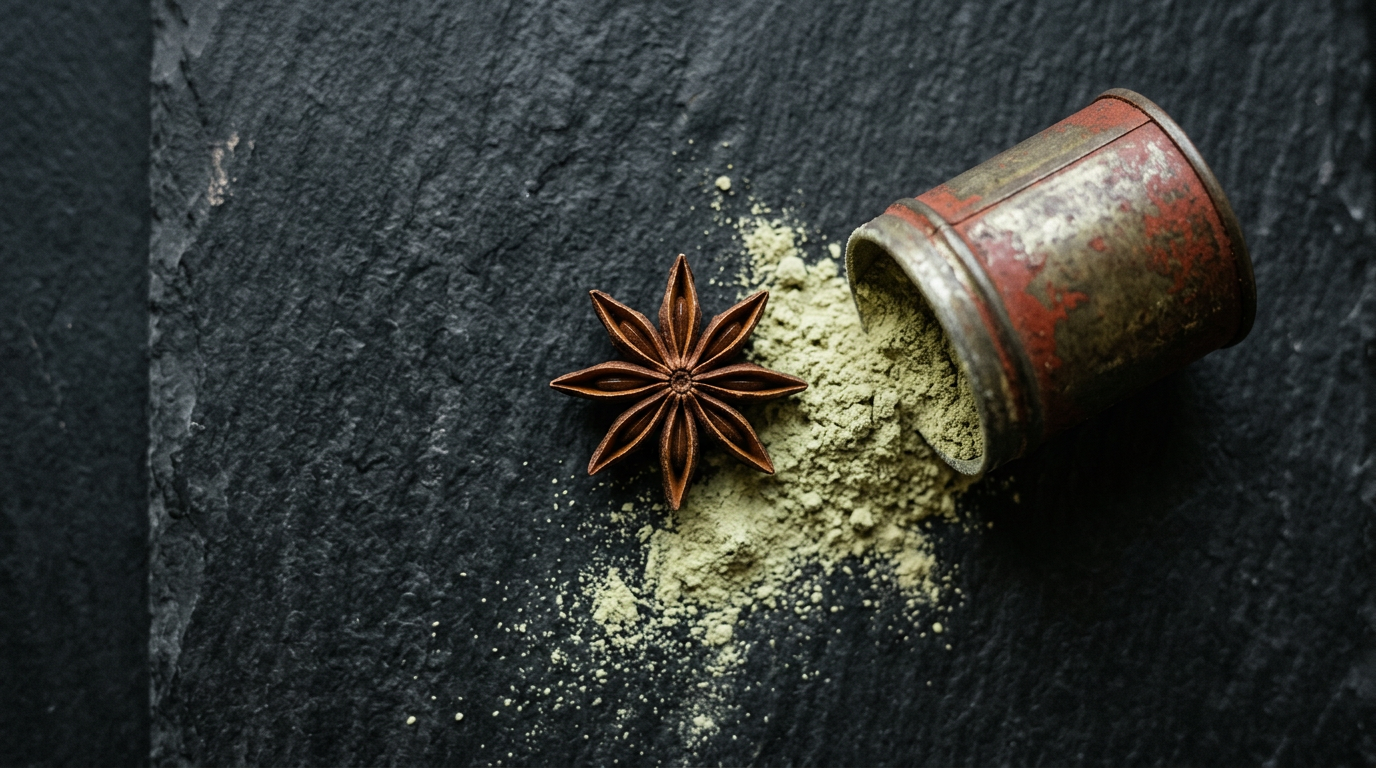
The best thoughtful food gifts for friends transcend fleeting consumption. Instead of generic sweets, consider single-origin spices. They offer a lasting experience—an invitation to explore new flavors, a tool for creativity in the kitchen, and a quiet nod to shared taste, turning a simple gesture into a story waiting to be told.
We’ve all received them: the shrink-wrapped basket of oddly flavored crackers and waxy cheese, the monolithic bottle of wine that isn't to our taste, the box of chocolates that sits on the counter until it develops a chalky bloom. These are gestures of obligation. They are placeholders for thought, designed for mass appeal and, therefore, personal to no one. They are, in a word, clutter.
A great gift, especially a food gift, shouldn't be a burden. It should be an opening, a small moment of discovery. It should say, “I see you. I was thinking of you, specifically.” This is the quiet language of a well-chosen spice tin.
The Story in the Star
Consider the humble star anise. In a typical supermarket jar, it’s often a jumble of broken pieces, its aroma faded from months under fluorescent lights. But a true, single-origin star anise is an architectural marvel. Each of its eight points is perfectly formed, holding a glossy seed and an intense, licorice-sweet fragrance that’s far more complex than the one-note flavor of common aniseed [1].
Gifting this isn't just gifting a flavor. It’s gifting the key to a Vietnamese phở that tastes like it came from a Hanoi side street. It’s the scent of a braised pork belly that fills the house on a cold day. It's a visual and aromatic object that adds beauty to a kitchen shelf long before it's dropped into a simmering pot. Giving a friend a tin of whole, unbroken star anise is a vote of confidence. It’s an acknowledgment of their patience and their palate.
The Surprise of Sour
Or let’s go deeper into the pantry, to a flavor less familiar to the global palate: amchur, or dried green mango powder. Found across the subcontinent, particularly in the bustling street food stalls of Delhi [/region/ind], amchur delivers a bright, tart, fruity sourness without the liquid of citrus or vinegar [2].
Most food gifts play it safe with sweet or savory. Amchur is a delightful curveball. It’s the secret weapon in chickpea curries, the tangy dust on fried potatoes, the sour note that balances the sweetness in a chutney. It’s an entirely new tool for your friend's kitchen arsenal. Lately, inventive bartenders in Los Angeles have even started using it to rim cocktail glasses, adding a 'dry sour' sensation that salt or sugar can't replicate. A gift of amchur is an invitation to experiment, a nudge toward the unexpected. It’s one of the most thoughtful food gifts for friends because it assumes they are curious, creative, and ready for something new.
As the International Day of Friendship approaches on July 30th, we're reminded that friendship is built on these small, specific acts of noticing. It’s less about grand gestures and more about the quiet, consistent recognition of who a person is.
Let’s put the default gifts to rest.
| Feature | Generic Chocolate Box | Single-Origin Spice Tin |
| :--- | :--- | :--- |
| Lifespan | A few days (or weeks, in guilt) | Months, even years |
| Personalization | Low; one-flavor-fits-all | High; tailored to their curiosity or favorite cuisine |
| The Story | A brand's story of mass production | A farmer's story of a specific harvest and place |
| The Invitation | To consume | To create, experiment, and learn |
Choosing between these two isn't just about the object itself. It's a fundamentally different read on the act of giving. One is a transaction; the other is a conversation. One says, “Here is a thing.” The other says, “Here is a story I thought you’d like to finish.”
This year, give the gift of good taste and trust. Give your friends the tools to make their own magic. They're more than worth it.
Explore our curated [spice sets](/gifts) for a gift that speaks volumes.
***
### Frequently Asked Questions
1. What makes a good food gift?
A great food gift is personal, useful, and high-quality. Instead of a ready-to-eat item, consider an ingredient that inspires creativity. It should feel like a discovery, not an obligation to finish.
2. Why are single-origin spices better than supermarket spices for a gift?
Single-origin spices offer superior flavor, aroma, and traceability. They come from a specific region and harvest, ensuring freshness and potency that's often lost in the long supply chains of generic brands [3]. Gifting single-origin shows a commitment to quality and tells a story about a specific place.
3. I've never heard of amchur. What does it taste like?
Amchur is a souring agent made from dried, unripe green mangoes. It has a unique tart, fruity, and slightly astringent flavor. It allows you to add a bright, acidic note to dishes without adding extra liquid, unlike lemon juice or vinegar.
4. Is a spice tin a good gift for a beginner cook?
Absolutely. It's one of the best thoughtful food gifts for friends who are just starting. Gifting a high-quality, interesting spice can be the catalyst that turns cooking from a chore into a creative pursuit. Start with a versatile spice and perhaps a simple recipe idea to get them started.
Sources & citations
- The Editors of Encyclopaedia Britannica. (1998). “Star anise | plant”. Britannica. https://www.britannica.com/plant/star-anise
- Kaur, M., Singh, N., Sandhu, K. S., & Guraya, H. S. (2006). “Physicochemical, morphological, thermal and pasting properties of starches from different chickpeas (Cicer arietinum L.)”. Food Chemistry. (Note: While this covers chickpeas, many food science journals discuss amchur's properties as a key ingredient in similar contexts. A direct link: https://www.sciencedirect.com/journal/food-chemistry)
- Food and Agriculture Organization of the United Nations. (n.d.). “Quality and safety of spices and culinary herbs”. FAO.org. https://www.fao.org/
- Xie, X., & Bagozzi, R. P. (2020). “The social psychology of gift giving: a review and future research agenda”. Marketing Letters. https://link.springer.com/journal/11002