
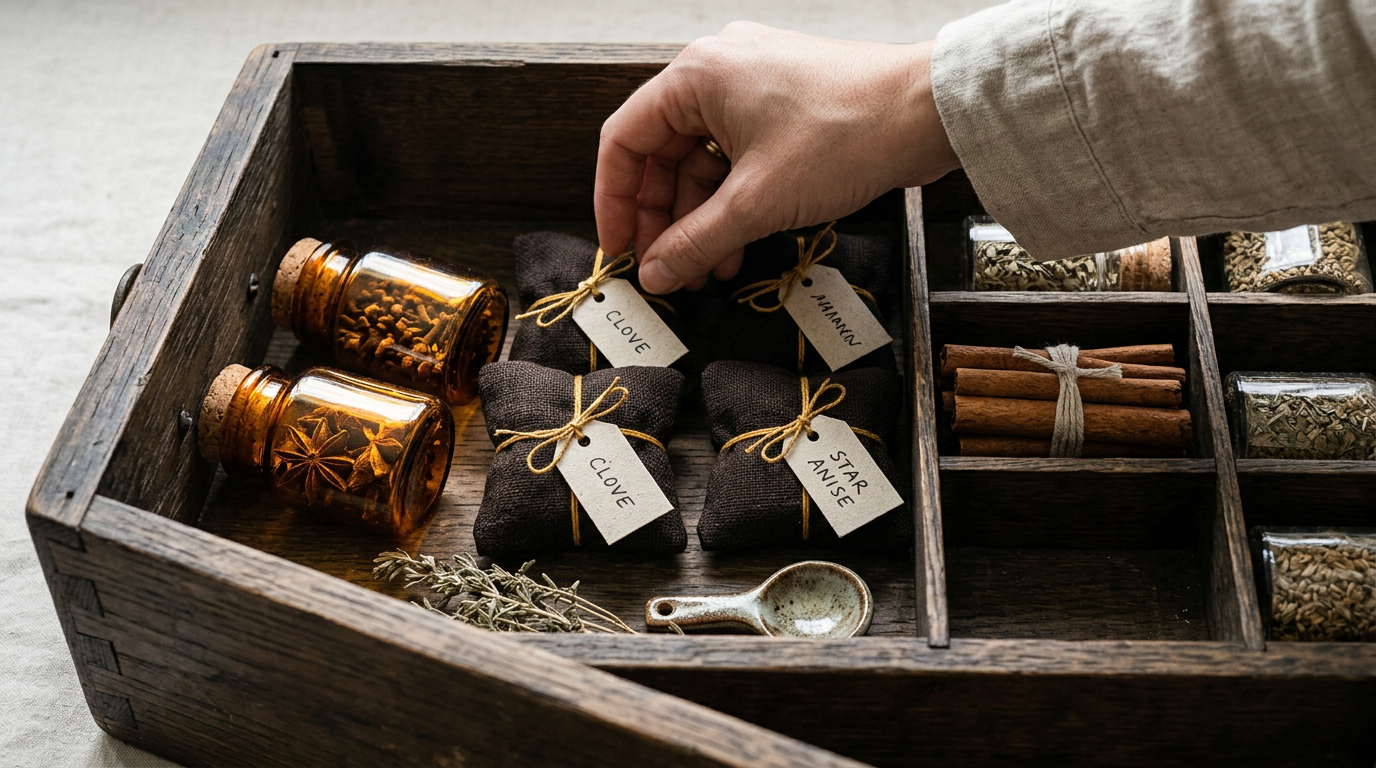
The instinct is universal. As summer wanes, we feel a pull to prepare for the season ahead. For many, this means a new coat or fresh notebooks. But the most meaningful preparation for the academic year isn't about the wardrobe; it's the spice drawer refresh back to school. This simple act sets the stage for months of nourishing meals, aromatic kitchens, and quiet, daily wellness.
As the calendar turns toward the end of August 2026, consider this a new [back-to-school ritual](/festival/back-to-school-2026): a thoughtful audit of the small jars that hold the biggest flavors. It's a practice of rediscovery and a potent act of care for yourself and your family.
The Silent Expiration of Flavor
Spices don't spoil like milk, but they do have a shelf life. What they lose is not safety, but their very essence: the volatile aromatic compounds that give them their distinctive flavor, aroma, and functional properties. Over time, exposure to oxygen, light, and heat causes these compounds to degrade and dissipate. A two-year-old jar of ground clove isn't the same as a fresh one; it's a ghost of its former self.
Think of it this way: a spice drawer full of old powders is like a library of books with faded ink. The stories are still technically there, but they’ve become illegible. The conversation your food could be having with your senses is reduced to a whisper.
A Ritual Audit, from Dubai to Detroit
Turning this chore into a ritual is a matter of perspective. Open each jar. What do you smell? Is the color vibrant or dusty? This isn't just about decluttering; it's about reconnecting with the building blocks of flavor.
Whether you bought your spices by the ounce at a Bay Area co-op in the [/region/us](US) or by the gram from a grocer on London's Green Street, their potency has a half-life. The same is true for the neatly stacked jars in a German Gewürzregal (spice rack), or the vibrant-looking mounds in a Dubai spice souk. The initial aroma is one thing; the stability of the compounds once packed and stored is another.
Two spices we always check as autumn approaches are clove and star anise. If their sharp, sweet, medicinal aromas don't immediately fill your nose, it's time to replace them. And here's why it matters more than you think.
The Hidden Science of Clove and Star Anise
These are not just 'baking spices' for the holidays. They are deeply functional ingredients, and their power lies in chemical compounds that are most present when fresh.
Clove (Syzygium aromaticum) is the unopened flower bud of an evergreen tree native to the Maluku Islands in Indonesia. Its signature warmth comes from eugenol, a compound that constitutes 70–90% of its essential oil. Clinical research has explored eugenol for its potent antioxidant and antimicrobial properties, making it a powerful ally for the indoor season [1]. But when a clove's aroma fades, it's a sign that the eugenol content has diminished, taking its functional benefits with it.
Star Anise (Illicium verum) is the fruit of a small evergreen tree from southwest China. It is our primary global source of shikimic acid. This may not sound familiar, but it's the chemical starting block used to synthesize the antiviral drug oseltamivir, better known as Tamiflu [2]. While eating star anise isn't the same as taking a pharmaceutical, it speaks to the profound and often overlooked biochemistry of our pantries. Its licorice-like flavor comes from anethole, another compound with studied antimicrobial effects.
Sourcing these spices from growers who prioritize careful harvesting and drying to preserve these compounds is non-negotiable. The potency you pay for is the very thing that degrades on the shelf.
| Attribute | Whole Spices | Ground Spices |
|---|---|---|
| Surface Area | Low | High |
| Volatility | Lower rate of volatile oil loss | Higher rate of volatile oil loss |
| Shelf Life | 1–3 years | 6–12 months |
| Best Use | Infusions, slow cooking, mulling | Quick recipes, baking, rubs |
A spice drawer refresh back to school is a small act with an outsized return. It reawakens your cooking and reconnects you to the quiet power of these ancient botanicals. It also makes for an uncommonly thoughtful [gift](/gifts) for a student leaving home—a starter kit for a kitchen filled with intention.
This year, let the reset begin in the kitchen. The rewards will last long after the new-school-year shine has worn off.
FAQ
1. How can I tell if my spices are old?
The best test is sensory. A fresh spice should have a vibrant color and a strong, distinct aroma that you can smell as soon as you open the jar. If the color is faded or the scent is weak and dusty, it's time to replace it.
2. What's the best way to store fresh spices?
Store spices in airtight containers, away from direct sunlight, heat, and moisture. A cool, dark cabinet or drawer is ideal—not the rack directly above your stove.
3. Is there a big difference between ground and whole spices?
Yes. Whole spices retain their volatile oils for much longer because they have less surface area exposed to air. Ground spices are convenient but lose their potency faster. For the best flavor and benefit, buy whole spices like clove, cumin, and pepper and grind them as needed.
4. Why are clove and star anise good for the autumn/winter season?
Both spices have warming aromatic profiles traditionally used in fall and winter cuisine. Scientifically, their primary compounds (eugenol in clove, anethole in star anise) have been studied for their antimicrobial properties, making them relevant botanicals during a season when we spend more time indoors [1, 3].
Sources & citations
- Kamkar, A., et al. (2024). "Eugenol: A Review of Its Phytochemistry, Pharmacology, and Toxicological Aspects." Molecules, 29(7), 1466. Available at: https://www.mdpi.com/journal/molecules
- Krämer, M., et al. (2022). "A sustainable and scalable route to the antiviral agent oseltamivir from shikimic acid." Organic Process Research & Development, 26(8), 2217-2224. Available at: https://pubs.acs.org/journal/oprdfk
- Machado, C. (2018). "How to properly store your herbs and spices." Michigan State University Extension. Available at: https://www.canr.msu.edu/news/how_to_properly_store_your_herbs_and_spices