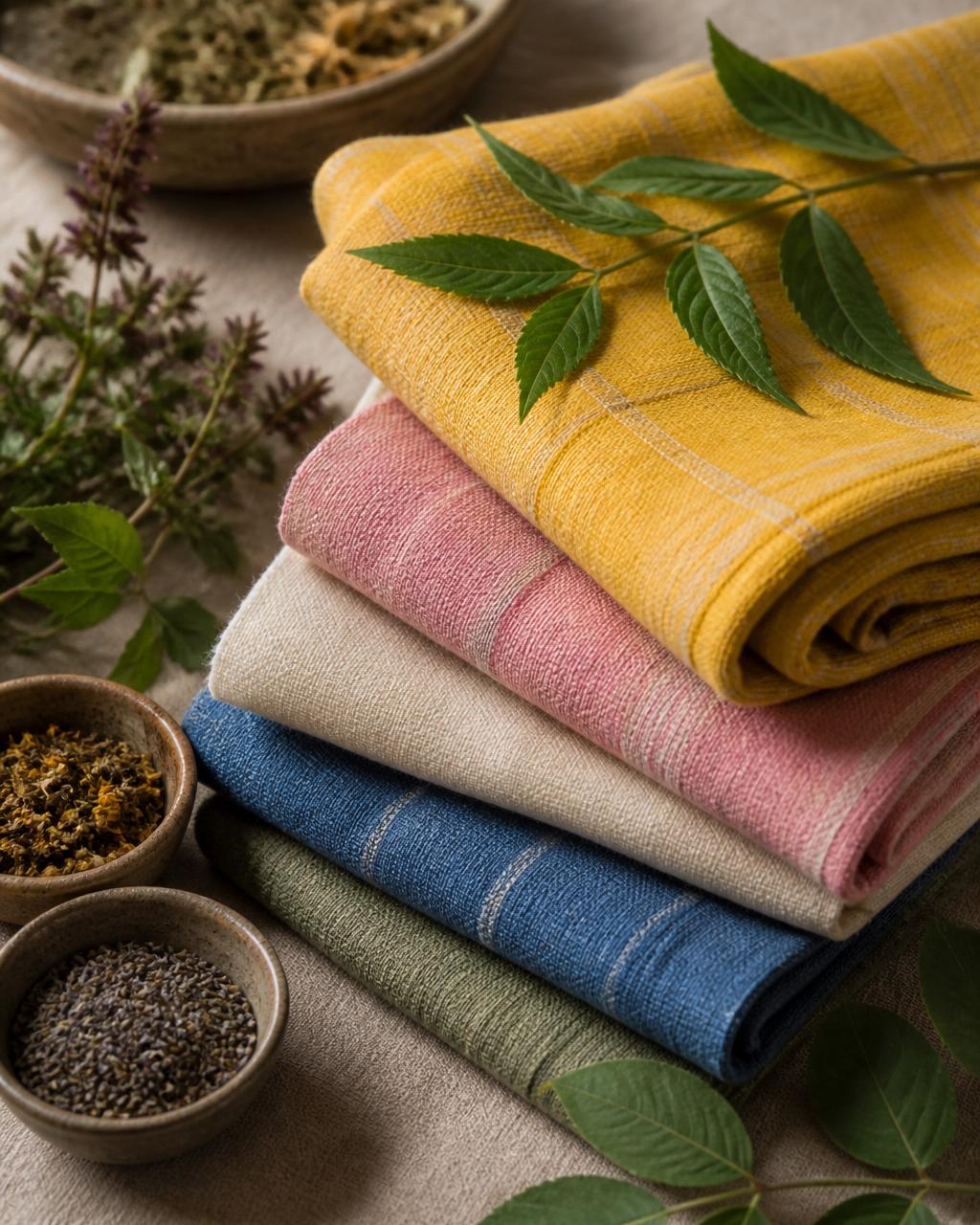
Hero N° 17 sits inside the textile category — one of eighteen launches in a portfolio built around modern science layered onto inherited ritual.
Each hero in the portfolio is a deliberate bet on a specific consumer shift: away from default Western formats, toward functional, ingredient-honest products with provable mechanisms. This page is the public-facing brief. The full thesis — formulation, unit economics, supply chain, founder background — lives behind the deal-room door.
The average adult spends roughly 6,800 hours per year in contact with clothing treated with synthetic dyes, formaldehyde finishes, and antimicrobial biocides. The clean-beauty consumer has replaced their serum but not their wardrobe.
The morning dressing ritual. The bedtime robe. The bedsheets against the skin. The largest organ in the body absorbs what it touches — and the wardrobe has been the last room in the house to be cleaned.
Sustainable fashion has focused on supply-chain ethics and carbon footprint. The next wave focuses on skin chemistry, bioactive textiles, and the Ayurvastra revival — clothing that treats instead of taxing.
The clean-beauty native who reads ingredient lists on skincare and is now starting to ask what their clothes are made of.
We do not invent rituals. We replace the product inside one. Each hero in the portfolio sits on a specific, repeatable moment in the consumer's day — one the incumbent has owned for a generation and is now losing.
01
07:00
The dressing ritual
The first layer against the skin sets the tone for the day. A bioactive textile turns the morning routine into a passive treatment.
02
22:00
The wind-down
Bedding and sleepwear spend eight hours in direct skin contact. The night is when the body repairs — the fabric should assist, not resist.
03
Weekly
The wash
Natural-dyed textiles age differently from synthetics. Each wash softens the fibre and renews the surface bioactivity rather than degrading it.
The incumbent shelf
- —Fast fashion (Zara, H&M)
- —Mass-market organic (Pact, Boody)
- —Luxury synthetics (Lululemon, Athleta)
- —Heritage craft without scale
The new wave
- +Bioactive Ayurvastra textiles
- +Zero-chemical natural-dye houses
- +Farm-to-garment traceability
- +Clinically tested skin-contact fabric
"The next frontier of clean living is not what you put on your skin, but what you wrap it in."
$1.8T global apparel market; $89B in sustainable/ethical fashion; $12B premium wellness lifestyle apparel segment.
The clean-beauty migration has been skin-first, makeup-second, and wardrobe-last. The next logical step is the closet itself. No scaled player has built a clinically tested, premium Ayurvastra house with modern editorial positioning and full herb-to-garment traceability.
The product specifics — the proprietary formulation, the brand architecture, the channel strategy, the unit economics — are deliberately not on this page. We don't publish the recipe to the open internet.
- Full formulation & ingredient stack
- Clinical and mechanism-of-action references
- Founder thesis and category positioning
- Unit economics and pricing model
- Supply chain and manufacturing partner
- Go-to-market plan and channel mix
- Does natural dye last?
- Ayurvastra dyes are mineral- and plant-based and bond to cellulose at the molecular level. Colourfastness is comparable to reactive dyes in wash tests; the difference is what washes out — plant polyphenols, not petrochemical residue.
- Is this scalable?
- Small-batch vat-dyeing is the starting point. The deal-room includes a phased scale-up through partner ateliers in India and Portugal, with QC and bioactivity testing at every batch.
- Who pays a premium for this?
- The same consumer who already buys $180 botanical serums and $400 organic mattresses. The wardrobe is the last category in their clean-living migration.
The next move.
The investor deck, unit economics, and a direct line to the founder live behind the deal-room door. Or stay close to the portfolio with a monthly subscriber drop — first look on every new SKU.